BJP counters Congress on SIR 'deletions': 13 crore voters flagged, not removed
Synopsis
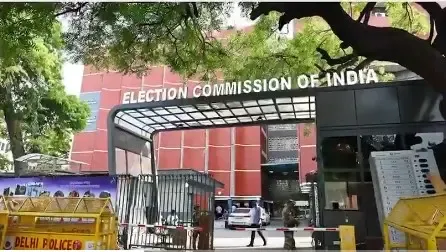
BJP General Secretary Vinod Tawde has released a detailed explainer pushing back against Congress claims that the Election Commission's SIR drive deleted 13 crore voters. The BJP's response breaks down each category of flagged entries — deceased, absent, shifted, duplicate — and argues that final deletions only happen after due process. The move escalates a high-stakes electoral roll battle ahead of future polls.
Key Takeaways
BJP General Secretary Vinod Tawde released an explainer on 4 October 2026 rejecting Congress's '13 crore deletions' charge against the Election Commission's SIR drive.
The 13 crore flagged entries break down as: 2.6 crore deceased, 3 crore absent, 6.3 crore shifted, and 1 crore duplicates — none formally deleted yet.
BJP says 20 lakh booth-level agents of all parties were informed of the detailed category-wise data.
The party claims Form-6 changes had approval from all three Election Commissioners and the Supreme Court .
2.3 crore new Gen-Z voters have been added under SIR, bringing the total to 17.3 crore .
SIR drives in Bihar and West Bengal were upheld by the Supreme Court , according to the BJP.
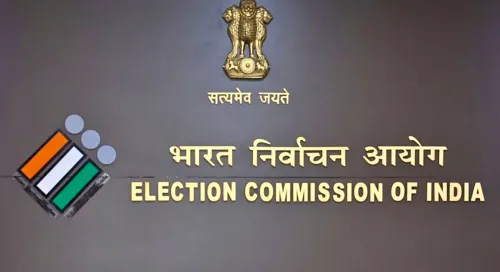
The Bharatiya Janata Party (BJP) on Sunday, 4 October 2026, issued a point-by-point rebuttal of Opposition charges over the Election Commission of India's (ECI) Special Intensive Revision (SIR) exercise, accusing the Indian National Congress (Congress) of 'fearmongering' over alleged voter list discrepancies. The BJP's response came amid mounting criticism that the SIR drive had resulted in the deletion of 13 crore voters from electoral rolls — a charge the party categorically rejected.
What the BJP Explainer Claims
BJP General Secretary Vinod Tawde, recently appointed as the party's Uttar Pradesh In-charge, shared a detailed 'explainer' video on his X account to counter the allegations against both the Election Commission and the ruling party. The video addresses a range of contentious issues, including the reported 13 crore voter deletions, alleged changes to Form-6, and modifications to the ECINET format.
'The 13 crore names were not deleted — they were flagged for verification in categories such as deceased, absent, transferred, or duplicate. The final action takes place after the processing of claims, objections, and appeals,' Tawde said.
Breakdown of the Flagged Entries
According to the explainer, the 13 crore flagged entries in draft electoral rolls break down as follows: approximately 2.6 crore voters recorded as deceased; 3 crore found absent at their registered address; 6.3 crore who have permanently shifted to different locations; and 1 crore identified as duplicate registrations. The BJP maintained that detailed information on these categories was shared with around 20 lakh booth-level agents of all political parties.
On Form-6 and Structural Changes
Addressing Congress's charge that Form-6 was altered to disadvantage voters, the explainer claimed that 'no changes were made to alter Form-6,' and that additional details incorporated into the form were approved by all three Election Commissioners in agreement and had the sanction of the Supreme Court. The video also rejected allegations of centralisation, asserting that no structural change was made to the existing framework and that local Election Commission staff, including Electoral Registration Officers (EROs), retained full authority to handle voter requests at the local level.
Gen-Z Voters and the SIR Objective
Countering the 'vote chori' narrative, the BJP said the SIR drive's stated objective is inclusion, not disenfranchisement. According to the explainer, 2.3 crore new Gen-Z voters have been added since the SIR drive commenced, bringing the total Gen-Z voter count to 17.3 crore. The party also noted that SIR drives conducted in states that went to polls — specifically Bihar and West Bengal — were upheld by the Supreme Court.
BJP vs Congress: The Political Stakes
Tawde accused Congress of using the SIR controversy as a political tool, urging citizens to rely on facts rather than what he called the Opposition's 'lies and fakery.' This comes amid a broader pattern of electoral roll disputes that have periodically surfaced before major state and national elections, with Opposition parties frequently challenging the Election Commission's methodology. Notably, the BJP's move to release a public explainer — rather than simply issue a press statement — signals an effort to shape the narrative directly with voters ahead of future electoral cycles. The controversy is unlikely to subside soon, with Opposition parties expected to continue pressing the Election Commission for greater transparency in the SIR process.
Point of View
That figure requires a robust, verifiable methodology to withstand scrutiny. The Opposition's political motives do not automatically invalidate the underlying concern about transparency in voter list revision. The Election Commission's credibility ultimately rests not on a party's explainer but on whether the SIR's verification process is independently auditable — something neither side has yet demonstrated to the public.
NationPress
4 Oct 2026
Frequently Asked Questions
What is the Election Commission's Special Intensive Revision (SIR)?
The Special Intensive Revision (SIR) is a periodic exercise by the Election Commission of India to clean up and update electoral rolls by identifying and verifying entries of deceased, absent, shifted, and duplicate voters. It is conducted to ensure that the voter list accurately reflects the eligible electorate before elections.
Did the Election Commission delete 13 crore voters from electoral rolls?
According to the BJP's explainer, the 13 crore entries were flagged for verification — not formally deleted. The party states that final deletions can only occur after claims, objections, and appeals are processed, and that the breakdown includes 2.6 crore deceased, 3 crore absent, 6.3 crore shifted, and 1 crore duplicate entries.
Why is Congress opposing the SIR drive?
Congress and other Opposition parties have described the SIR as 'flawed and partisan,' alleging it could lead to large-scale disenfranchisement, particularly of marginalised and migrant voters. They have demanded greater transparency and accountability from the Election Commission.
What changes were made to Form-6 under the SIR?
The BJP's explainer claims no changes were made to alter Form-6 and that additional details added to the form had the approval of all three Election Commissioners and the Supreme Court. Congress has alleged the modifications could make it harder for certain categories of voters to register.
How many new voters have been added under the SIR drive?
According to the BJP's explainer, 2.3 crore new Gen-Z voters have been added since the SIR drive began, bringing the total Gen-Z voter count to 17.3 crore.