CM Mohan Yadav Backs NSAP Extension to 2030-31
Synopsis
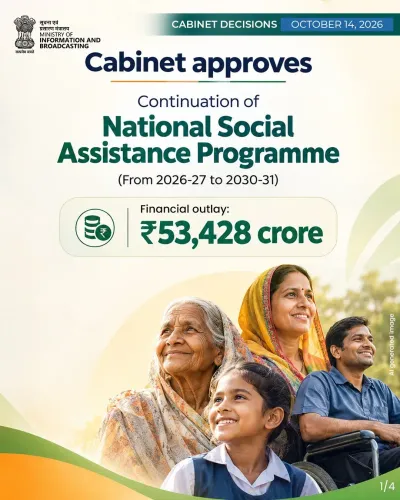
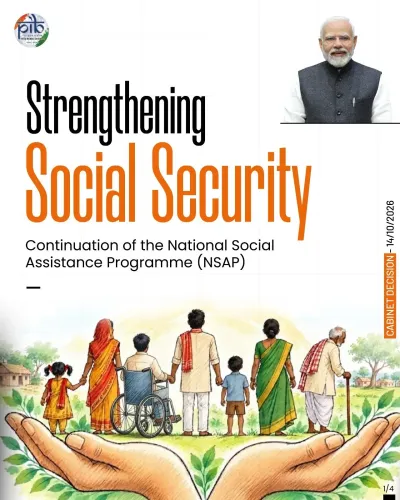
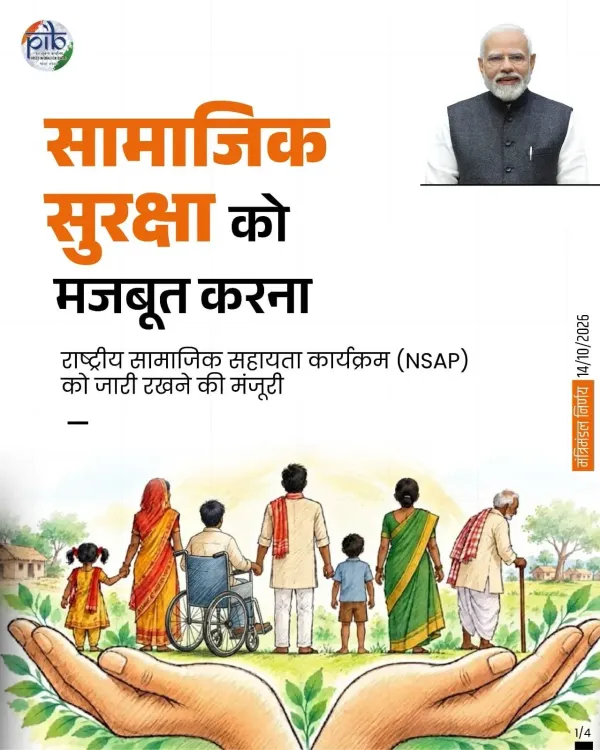
The Union Cabinet has approved extending the National Social Assistance Programme to 2030-31 with a ₹53,428 crore outlay for 3.20 crore beneficiaries, while lowering the disability pension threshold to 40% and scrapping the minimum age limit — a move Madhya Pradesh CM Dr. Mohan Yadav publicly welcomed.
Key Takeaways
NSAP extended by the Union Cabinet until 2030-31 under PM Narendra Modi's chairmanship.
Total scheme outlay of ₹53,428 crore to benefit 3.20 crore people nationwide.
Disability pension eligibility threshold lowered to 40% disability , expanding the potential beneficiary pool.
Minimum age limit for disability pension abolished , removing a key exclusion barrier for younger persons with disabilities.
NSAP was first launched in August 1995 and covers elderly, widows, and persons with disabilities from poor households.
Madhya Pradesh CM Dr.
Mohan Yadav welcomed the decision as a step toward more dignified social security for disabled citizens.
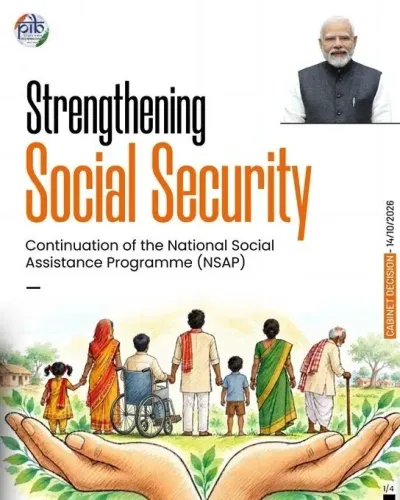
A social safety net built for India's most vulnerable just got a longer lease on life — and a wider door. The Union Cabinet, chaired by Prime Minister Narendra Modi, has approved the continuation of the National Social Assistance Programme (NSAP) through 2030-31, with Madhya Pradesh Chief Minister Dr. Mohan Yadav welcoming the decision on Wednesday, October 14, 2026 as a milestone in dignified welfare delivery.
₹53,428 Crore Lifeline for 3.20 Crore Beneficiaries
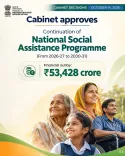
The cabinet's approval commits a total outlay of ₹53,428 crore to keep the programme running until the end of financial year 2030-31. At full coverage, the scheme is set to reach 3.20 crore people across the country — the elderly poor, destitute widows, and persons with disabilities who depend on these non-contributory pensions as a primary or supplementary income floor.
NSAP, first launched in August 1995, operates through three core components: pensions for aged persons (Indira Gandhi National Old Age Pension Scheme), widows (Indira Gandhi National Widow Pension Scheme), and disabled individuals (Indira Gandhi National Disability Pension Scheme). Over three decades, successive central governments have revised its outlay and eligibility criteria, with states often layering additional top-up amounts on top of the central pension.
Disability Pension Threshold Drops to 40% — Age Floor Scrapped
The more structurally significant shift lies in the revised disability pension rules. The cabinet has expanded the eligibility threshold to include persons with 40% disability, lowering the bar from the previously higher benchmark and bringing in a significantly larger pool of applicants. Equally important: the minimum age requirement for disability pension has been abolished entirely, meaning younger persons with disabilities are no longer excluded by a technical age floor.
CM Dr. Mohan Yadav described these changes as giving disabled citizens 'saamajik suraksha ka sambal' — the support of social security — and making their lives 'adhik sammanpoorn', or more dignified. He expressed personal gratitude to Prime Minister Modi for what he called sensitive and public-welfare-oriented decisions.
A Three-Decade Programme Grows Wider With Each Cycle
NSAP's trajectory tracks a consistent pattern: periodic extensions paired with incremental liberalisation. Each renewal cycle has typically brought revised outlay figures, relaxed eligibility, and nudges for states to align their own pension structures. The removal of the minimum age ceiling for disability pensions, if implemented smoothly, could be one of the more consequential access reforms in the programme's recent history — it directly addresses the gap where young adults with severe disabilities previously fell through.
For Madhya Pradesh, a state with a large rural poor population and significant tribal and backward-class communities, the expanded NSAP coverage is expected to translate into a meaningful uptick in beneficiary numbers once state-level notifications align with the new central guidelines.
The next test is implementation: state governments will need to issue revised orders under the new disability guidelines, and any supplementary state budget provisions will determine how quickly the expanded benefits reach the ground.
Point of View
Elderly, and marginalised communities — ahead of state and national cycles. Lowering the disability threshold to 40% is a technically meaningful reform: it aligns the pension scheme more closely with the Rights of Persons with Disabilities Act, 2016, which already uses that benchmark for legal recognition. The abolition of the minimum age floor is the sharper policy move; it acknowledges that disability-linked poverty does not wait for old age. Whether the gains are fully realised will hinge on how quickly states update their rolls and whether the central pension quantum — historically modest — is also revised upward.
NationPress
14 Oct 2026
Frequently Asked Questions
What is the National Social Assistance Programme (NSAP)?
NSAP is a centrally sponsored, non-contributory social pension scheme launched in August 1995 that provides monthly pensions to elderly persons, widows, and persons with disabilities from poor households across India.
How long has NSAP been extended and what is the outlay?
The Union Cabinet has approved continuing NSAP until 2030-31, committing a total outlay of ₹53,428 crore to cover 3.20 crore beneficiaries.
What is the new disability pension eligibility under NSAP?
The eligibility threshold has been lowered to 40% disability, and the minimum age requirement for receiving the disability pension has been removed entirely.
Who chairs the Union Cabinet that approved the NSAP extension?
Prime Minister Narendra Modi chairs the Union Cabinet that approved the NSAP extension on October 14, 2026.
What did Madhya Pradesh CM Mohan Yadav say about the NSAP decision?
CM Dr. Mohan Yadav welcomed the decision, saying it would give persons with disabilities the 'support of social security' and make their lives more dignified, and expressed gratitude to PM Modi for the move.