Khattar Reviews Coal Supply to Power Plants With Naik, Kishan Reddy
Synopsis
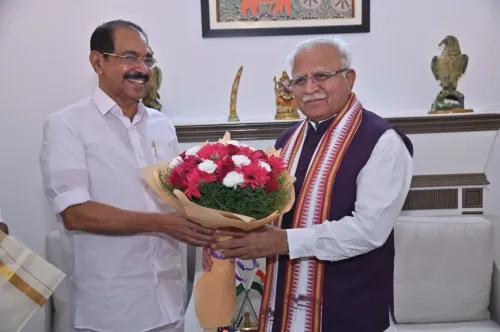
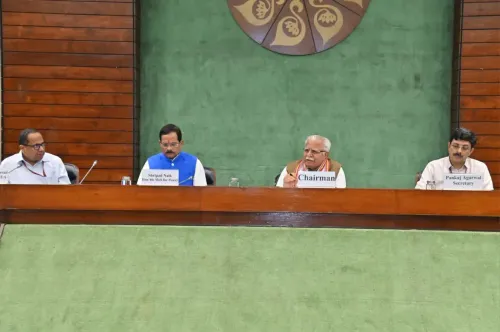
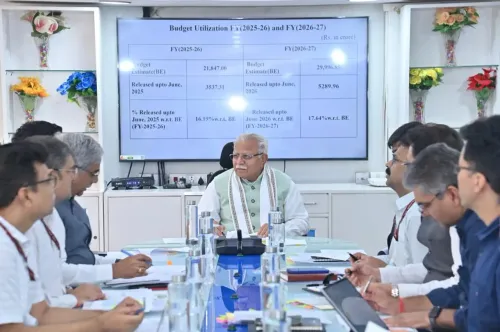
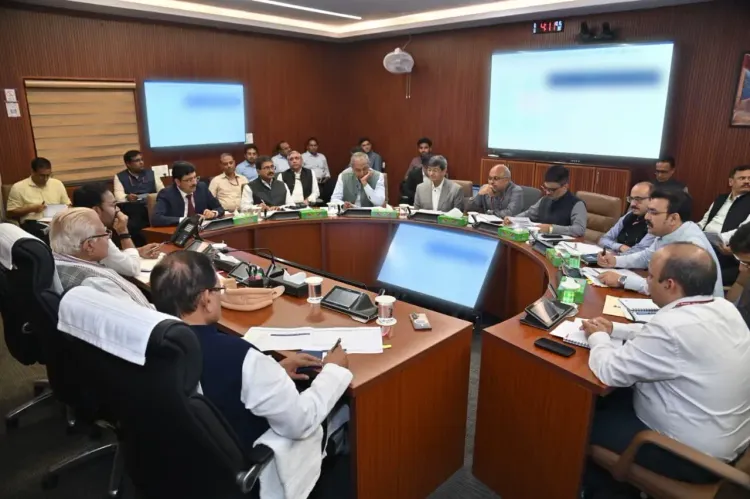
Union Power Minister Manohar Lal Khattar reviewed coal supply logistics to thermal power plants with Ministers Shripad Naik and G. Kishan Reddy on October 14, focusing on rake availability, production, stock levels, and daily coordination to ensure uninterrupted power generation ahead of winter.
Key Takeaways
Manohar Lal Khattar chaired a high-level review of coal supply to thermal power plants on October 14, 2026 .
The review included MoS Power Shripad Yesso Naik and Union Cabinet Minister G.
Key focus areas: coal production, railway rake availability , consumption patterns, and plant-level stock adequacy.
A daily monitoring mechanism was emphasised to ensure timely inter-ministerial coordination.
The oversight reflects a standing post- 2021-22 coal crisis protocol of proactive stock and logistics management.
India's thermal power plants remain the backbone of grid stability as renewables continue to scale up.
India's coal-to-power pipeline got a high-level check-up on Wednesday, October 14, 2026, as Union Power Minister Manohar Lal Khattar convened a focused review of coal supply logistics to thermal power plants alongside two cabinet colleagues — flagging coordination, proactive planning, and daily monitoring as non-negotiables for keeping the lights on across the country.
Three Ministers, One Table, One Mandate
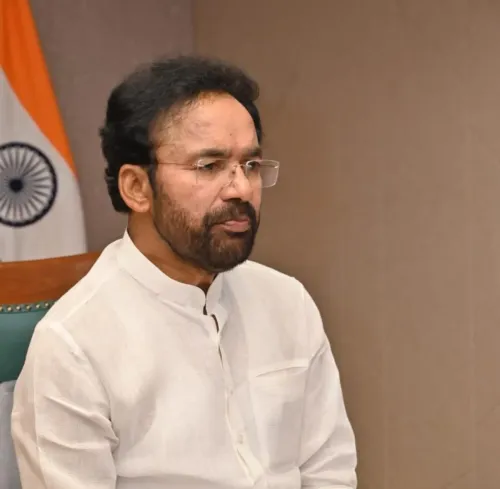
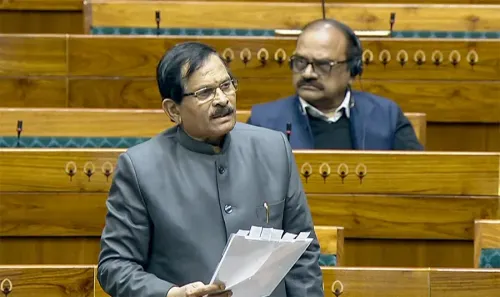
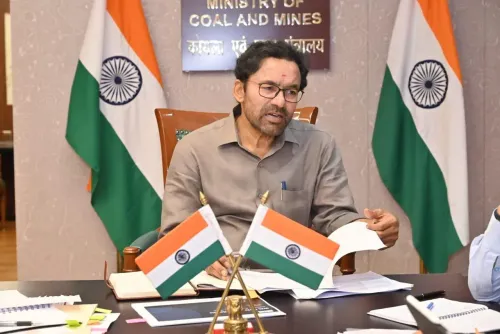
Khattar was joined by Minister of State for Power Shripad Yesso Naik and Union Cabinet Minister G. Kishan Reddy for the review. The meeting zeroed in on three interlocking pressure points: coal production volumes, railway rake availability, and consumption patterns at plants — the same trio of variables that has historically determined whether power stations run at capacity or sputter into deficit.
The minister's post underlined a clear operational mandate: 'strengthening coal production, streamlining logistics and ensuring adequate coal stocks at power plants,' backed by a daily monitoring mechanism to catch bottlenecks before they cascade into supply failures.
Why Rake Availability Is the Pinch Point
India's thermal power sector is almost entirely fed by domestic coal moved on Indian Railways. When rake allocation falls short — due to seasonal freight competition, infrastructure constraints, or maintenance backlogs — stockpiles at power stations drain fast. The 2021-22 coal supply crisis, which pushed plant inventories to dangerously low levels across several states, was a watershed moment: it forced the Ministry of Power to institutionalise daily inter-ministerial coordination loops with the Coal and Railways ministries, a practice this review explicitly reinforces.
The fact that three senior ministers are personally overseeing this in October 2026 signals that the pre-winter period remains a structurally sensitive window — demand climbs as industrial activity peaks, and any slack in the logistics chain gets amplified quickly.
Coal's Stubborn Grip on India's Grid
Despite rapid capacity additions in solar and wind, coal-fired generation continues to anchor India's electricity grid, shouldering the bulk of baseload demand while renewables scale up. The Ministry of Power's persistent emphasis on coal stock management reflects this dependence: until storage and grid-balancing technologies mature at scale, thermal plants cannot be allowed to run thin on inventory.
'Ensuring reliable, uninterrupted power supply remains our top priority,' Khattar affirmed in the post — a line that doubles as both operational directive and political signal to consumers and industry alike.
The question now is whether this review translates into measurable improvements in rake turnaround times and plant-level stock positions before peak winter demand sets in — and whether the daily monitoring mechanism delivers the early warnings it was designed to.
Point of View
Uninterrupted power supply carries outsized political salience — outages in the run-up to colder months have historically punished incumbents at the state level. The public nature of the post also serves as accountability framing, committing the Ministry to measurable follow-through on rake availability and stock targets.
NationPress
14 Oct 2026
Frequently Asked Questions
Why did Manohar Lal Khattar review coal supply to power plants?
Khattar convened the review to ensure uninterrupted power generation by addressing coal production, railway rake availability, logistics, and plant-level stock levels through close inter-ministerial coordination and daily monitoring.
Who attended the coal supply review meeting with Khattar?
The review was attended by Minister of State for Power Shripad Yesso Naik and Union Cabinet Minister G. Kishan Reddy , alongside Union Power Minister Manohar Lal Khattar .
What is the role of railway rakes in India's coal supply to power plants?
Railway rakes are the primary mode of transporting coal from mines to thermal power stations across India. Shortfalls in rake allocation directly reduce plant inventories and can trigger power supply disruptions.
What was the 2021-22 coal supply crisis in India?
In 2021-22, India's thermal power plants saw critically low coal stocks due to supply chain bottlenecks, prompting the Ministry of Power to institute daily inter-ministerial monitoring with the Coal and Railways ministries — a practice that continues today.
Why does India still depend on coal for power despite expanding renewables?
Coal-fired plants provide stable baseload generation that solar and wind cannot yet fully replace due to storage and grid-balancing limitations. India continues to rely on thermal power to meet rising electricity demand while its renewable capacity scales up.