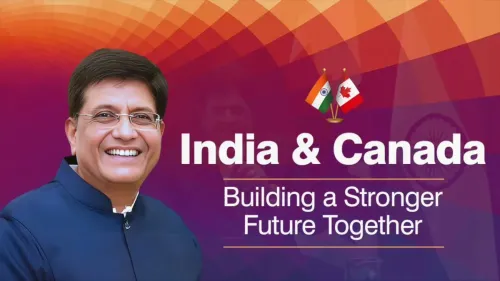
Piyush Goyal pitches India-Canada CEPA at Mumbai trade mission
Synopsis
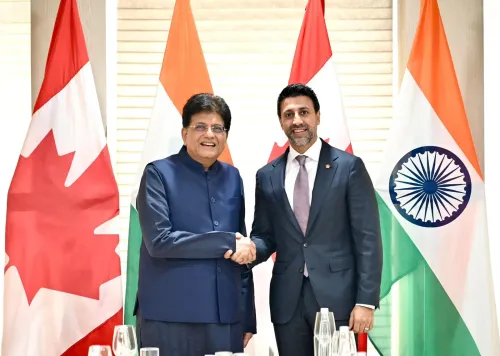
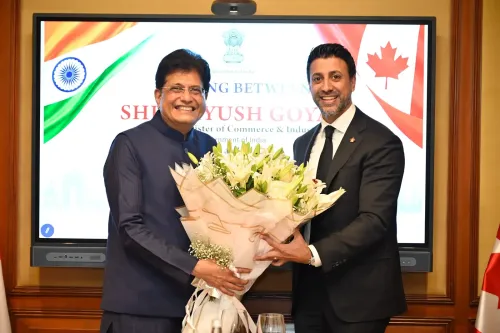
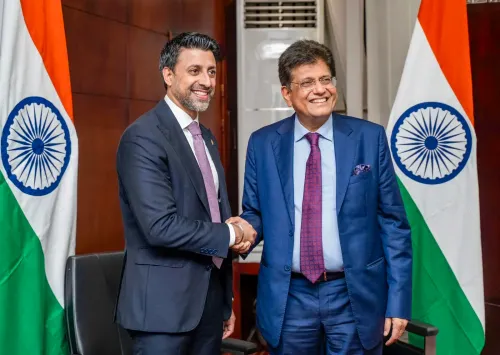
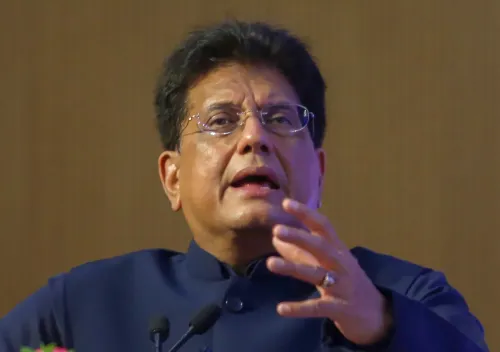
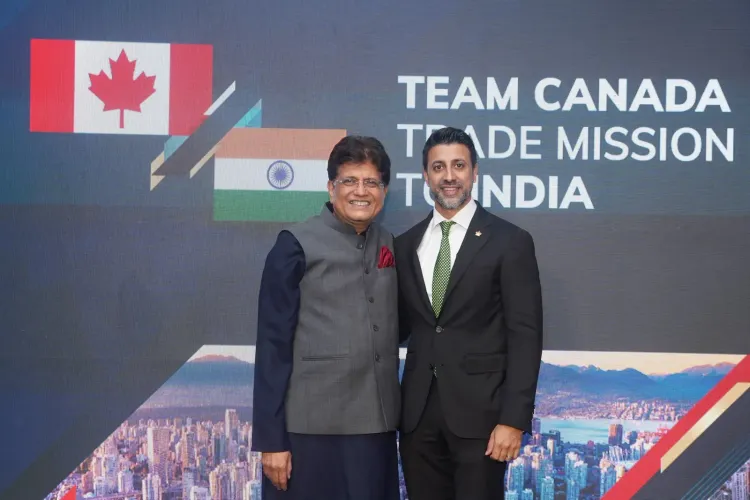
Union Commerce Minister Piyush Goyal addressed the nearly 300-delegate Team Canada Trade Mission in Mumbai alongside Canadian Trade Minister Maninder Sidhu, advocating the India-Canada CEPA as the cornerstone of a deeper bilateral economic relationship combining India's manufacturing scale with Canada's technology and resources.
Key Takeaways
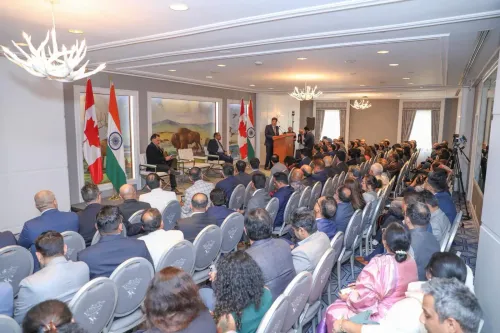
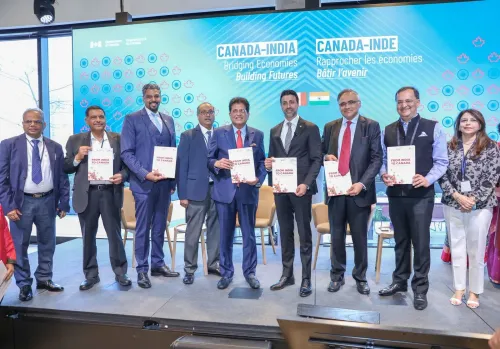
Union Commerce and Industry Minister Piyush Goyal addressed the 'Team Canada Trade Mission to India' event in Mumbai on October 14, 2026 .
Canadian International Trade Minister Maninder Sidhu led the mission, accompanied by nearly 300 business delegates .
Goyal identified the proposed India-Canada CEPA as a 'strong foundation' for expanding bilateral trade and investment.
India-Canada CEPA negotiations were originally launched in 2010 and have seen multiple rounds without a concluded deal.
Goyal cited India's manufacturing scale and workforce combined with Canada's technology, resources, and innovation as complementary strengths for supply-chain resilience.
Business leaders were directly invited to convert the mission's momentum into concrete partnerships .
Nearly 300 Canadian business delegates landed in Mumbai on Wednesday, October 14, 2026 — and Union Commerce and Industry Minister Piyush Goyal used the moment to make a pointed pitch: a Comprehensive Economic Partnership Agreement (CEPA) between India and Canada is the next big unlock for bilateral trade.
300 delegates, one clear signal from Ottawa
The sheer size of the delegation — led by Maninder Sidhu, Canada's Minister of International Trade — is itself the headline. A near-300-delegate trade mission is not a courtesy call; it is a statement of commercial intent. Goyal, addressing the 'Team Canada Trade Mission to India' event alongside Sidhu, called the turnout a reflection of 'immense potential for deeper engagement and confidence in building stronger partnerships.'
The symbolism cuts both ways. For Ottawa, sending one of its largest-ever trade delegations to India signals a deliberate pivot toward a market it has long under-leveraged. For New Delhi, the timing offers a chance to fast-track an economic architecture that has been in the works for over a decade.
The CEPA: sixteen years in the making
India and Canada first launched CEPA negotiations back in 2010, only to watch the talks stall, restart, and stall again through successive governments on both sides. The agreement has never quite crossed the finish line — making Goyal's decision to anchor Wednesday's address around it a deliberate signal that New Delhi wants momentum, not more delay.
The minister laid out the complementary logic plainly: India brings scale, manufacturing muscle, and a large skilled workforce; Canada brings technology depth, natural resources, and innovation capital. Put them together, Goyal argued, and you get more resilient supply chains and a wider deal pipeline for businesses in both countries. The formula is not new, but the political will to act on it has rarely been this visible.
Mumbai as the backdrop — and the message
Choosing Mumbai — India's financial capital — as the venue was deliberate. This was not a government-to-government briefing room in Delhi; it was a direct conversation with the business community Goyal explicitly invited to 'translate this momentum into concrete partnerships.' The call to action was unambiguous: institutional goodwill must now become signed deals.
India has pursued a string of bilateral economic pacts in recent years — with the UAE, Australia, and the UK among others — precisely to diversify trade partners and lock in supply-chain relationships that reduce dependence on any single corridor. A concluded India-Canada CEPA would slot into that same strategic architecture, adding a G7 economy with world-class resource and technology sectors to India's growing network of preferential trade partners.
The next test is whether the energy of 300 delegates in a Mumbai ballroom translates into negotiating text — because at CEPA's age, only a signed agreement moves the needle.
Point of View
Australia, and now a renewed push toward Canada. Goyal's decision to front-load the CEPA framing, rather than speak in generalities about 'friendship,' signals that New Delhi wants the talks to move from diplomatic warmth to treaty text. A concluded India-Canada CEPA would add a G7 economy with deep resource and technology strengths to India's preferential trade network, reinforcing the broader strategy of supply-chain diversification. The real measure of Wednesday's momentum will be whether the negotiating calendar accelerates in the months that follow.
NationPress
15 Oct 2026
Frequently Asked Questions
What is the India-Canada CEPA?
The India-Canada Comprehensive Economic Partnership Agreement (CEPA) is a proposed bilateral free-trade and investment pact. Negotiations were first launched in 2010 but have not yet been concluded, making it one of India's longest-running pending trade deal processes.
Who is Maninder Sidhu and why did he visit India?
Maninder Sidhu is Canada's Minister of International Trade. He led the 'Team Canada Trade Mission to India' to Mumbai in October 2026, accompanied by nearly 300 business delegates, to deepen bilateral trade and investment ties with India.
What did Piyush Goyal say at the Canada trade mission event?
Goyal said the India-Canada CEPA would provide a strong foundation for expanding bilateral trade and investment. He highlighted India's manufacturing scale and workforce alongside Canada's technology, resources, and innovation as complementary strengths, and invited business leaders to convert the mission's energy into concrete partnerships.
Why was the Team Canada trade mission held in Mumbai?
Mumbai, India's financial capital, was chosen to ensure the trade mission addressed the business and investor community directly rather than remaining a government-to-government exercise in New Delhi.
How does the India-Canada CEPA fit into India's broader trade strategy?
India has pursued a series of bilateral economic agreements in recent years to diversify trade partners and strengthen supply chains. A concluded India-Canada CEPA would add a G7 economy with significant technology and natural-resource strengths to India's growing network of preferential trade partners.