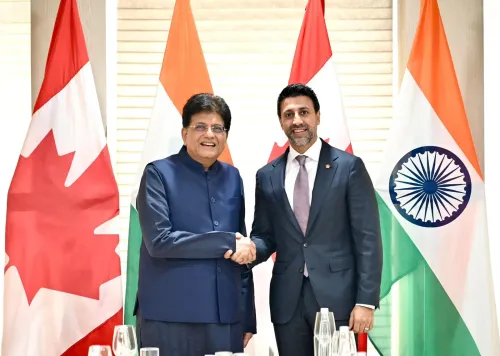
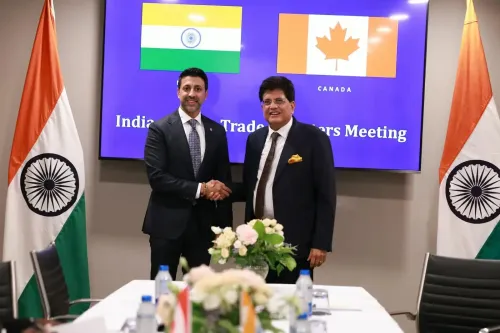
Piyush Goyal's Canada visit to fast-track CEPA trade deal talks

Synopsis
Commerce Minister Piyush Goyal's three-day Canada trip is more than a diplomatic courtesy call — it is a calculated push to lock in a CEPA framework that could redirect India's strategic import dependencies in energy and fertilisers while opening a high-value export corridor for pharma, gems, and steel. With the next formal round set for July in Ottawa, the window to close a deal is narrowing.
Key Takeaways
Commerce Minister Piyush Goyal began a three-day visit to Canada on 25 May 2025 to advance CEPA negotiations.
India and Canada are targeting $50 billion in bilateral trade by 2030 , up from current levels.
Top Indian imports from Canada in FY26 : yellow peas ($311.24 million) and lentils ($306.56 million) ; strategic imports include energy ($341.36 million) and fertilisers ($263.17 million) .
Indian exporters eye gains in pharmaceuticals ($548.27 million) , gems and jewellery ($380.46 million) , and iron and steel ($292.47 million) .
The second round of CEPA talks was held earlier in May; the next round is scheduled for July in Ottawa .
Civil nuclear cooperation has emerged as a key pillar of the bilateral energy partnership alongside the trade agenda.
Commerce and Industry Minister Piyush Goyal departed on Sunday, 25 May 2025 for a three-day visit to Canada, with negotiations for the proposed Comprehensive Economic Partnership Agreement (CEPA) between the two countries at the centre of the agenda. The visit is expected to accelerate bilateral trade discussions and rebuild economic ties under the Mark Carney government, as both sides push toward an ambitious target of $50 billion in bilateral trade by 2030.
Why This Visit Matters
The trip comes at a pivotal moment in India-Canada relations, which had grown strained in recent years. With the Carney administration signalling a fresh openness to engagement, New Delhi is moving quickly to capitalise on the diplomatic reset. Civil nuclear cooperation has also emerged as a key pillar of the bilateral energy partnership, adding strategic depth beyond trade.
The renewed momentum follows the second round of CEPA negotiations held earlier this month, during which both delegations held detailed discussions across chapters including Trade in Goods, Trade in Services, Intellectual Property, Rules of Origin, Sanitary and Phytosanitary Measures, and Technical Barriers to Trade.
Trade Complementarities and Strategic Imports
India and Canada share strong complementarities across agriculture, clean energy, critical minerals, food processing, education, and advanced manufacturing. A concluded CEPA could help India diversify import sources for strategic commodities currently under supply pressure due to the West Asia conflict.
India's top imports from Canada in FY26 included yellow peas ($311.24 million) and lentils ($306.56 million). A free-trade framework could also ease procurement of energy products ($341.36 million) and fertilisers ($263.17 million) — categories where supply disruptions have added to import costs.
Export Opportunities for Indian Industries
Indian industries are eyeing significant export gains under a potential CEPA. Key sectors anticipating improved market access include pharmaceutical products ($548.27 million), gems and jewellery ($380.46 million), iron and steel items ($292.47 million), organic chemicals ($234.41 million), and electrical equipment ($226.01 million).
The agreement is also expected to benefit MSMEs by streamlining trade procedures, improving market access, and fostering collaboration in technology and innovation-driven sectors — areas where Indian small businesses have historically faced non-tariff barriers.
Next Round of Talks Scheduled for July
Both sides have agreed to continue negotiations in a constructive and cooperative spirit. The next formal round of CEPA discussions is scheduled for July in Ottawa, with intersessional engagements to continue in the interim. The pace of progress will be closely watched given the backdrop of global supply chain realignments and tariff-related disruptions reshaping international trade alignments.
Goyal's visit signals that India views a strengthened trade relationship with Canada as a strategic hedge — one that can improve supply chain resilience while opening new markets for Indian exporters at a time of heightened global uncertainty.
Point of View
Lentils, fertilisers, and energy products are not luxury imports. The West Asia disruption has exposed how concentrated India's commodity sourcing remains. Yet the harder question is whether a deal can be concluded before domestic political calendars on both sides create new friction. Canada has its own agricultural lobby sensitivities, and India's pharma and services sectors will push hard on market access provisions that Ottawa has historically resisted. Goyal's visit sets a tone, but the July Ottawa round will reveal whether the political will translates into negotiating flexibility.
NationPress
14 Oct 2026
Frequently Asked Questions
What is the India-Canada CEPA that Piyush Goyal is negotiating?
The Comprehensive Economic Partnership Agreement (CEPA) is a proposed free-trade deal between India and Canada aimed at boosting bilateral trade to $50 billion by 2030. It covers goods, services, intellectual property, and regulatory standards, among other chapters.
Why is Piyush Goyal visiting Canada in May 2025?
Commerce and Industry Minister Piyush Goyal is on a three-day visit to Canada starting 25 May 2025 to accelerate CEPA negotiations and strengthen bilateral economic ties under the Mark Carney government. The visit follows the second round of formal CEPA talks held earlier in May.
What are India's key exports and imports in the India-Canada trade relationship?
India's top imports from Canada in FY26 include yellow peas ($311.24 million) and lentils ($306.56 million), along with energy products and fertilisers. Key Indian export sectors targeting Canada include pharmaceuticals ($548.27 million), gems and jewellery ($380.46 million), and iron and steel ($292.47 million).
When is the next round of India-Canada CEPA talks scheduled?
The next formal round of CEPA negotiations is scheduled for July 2025 in Ottawa, with intersessional engagements continuing in the interim. Both sides agreed after the May round to maintain a constructive and cooperative negotiating spirit.
Why does a Canada free-trade deal matter strategically for India?
A CEPA with Canada would help India diversify import sources for energy products and fertilisers — supplies currently under pressure due to the West Asia conflict — while improving market access for Indian MSMEs and exporters in pharma, chemicals, and manufacturing sectors.