India-Canada free trade pact talks: CEPA deal targeted by year-end
Synopsis
India and Canada are racing to close a free trade deal by year-end — a striking diplomatic turnaround after a prolonged period of bilateral friction. With two negotiating rounds done, Canada eyeing $300 billion in non-US export diversification, and India's Commerce Minister leading the largest-ever Indian business delegation to Ottawa, the CEPA push is as much about geopolitics as economics.
Key Takeaways
India and Canada are targeting conclusion of the Comprehensive Economic Partnership Agreement (CEPA) by end of 2025 .
Commerce Minister Piyush Goyal led the largest-ever Indian business delegation to Ottawa on 26 May .
Canadian PM Mark Carney called the deal 'a game changer for Canadian workers and businesses.' Two rounds of CEPA negotiations have already been completed, according to Trade Minister Maninder Sidhu .
Canada is seeking to unlock roughly $300 billion in additional non-US exports, with India as a key partner.
Both countries aim to sharply increase bilateral trade volumes by 2030 .
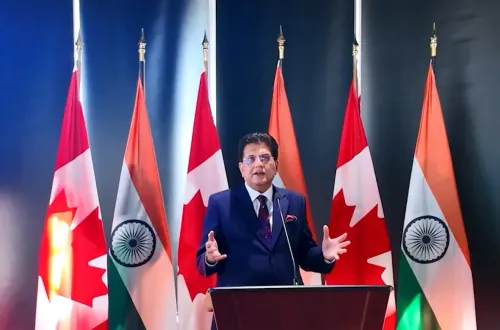
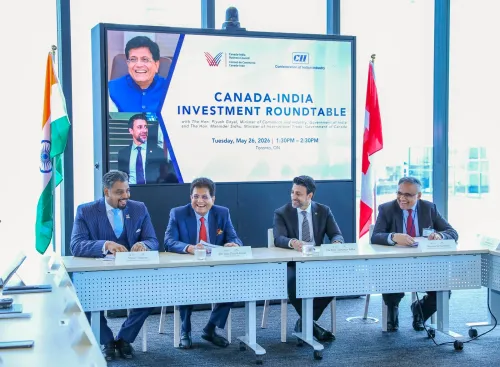
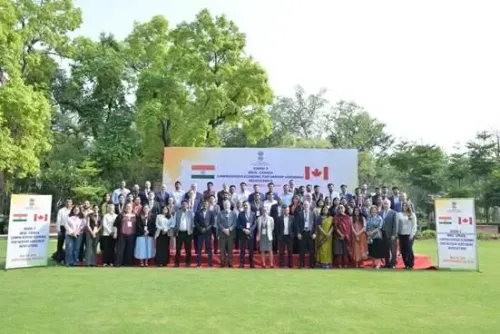
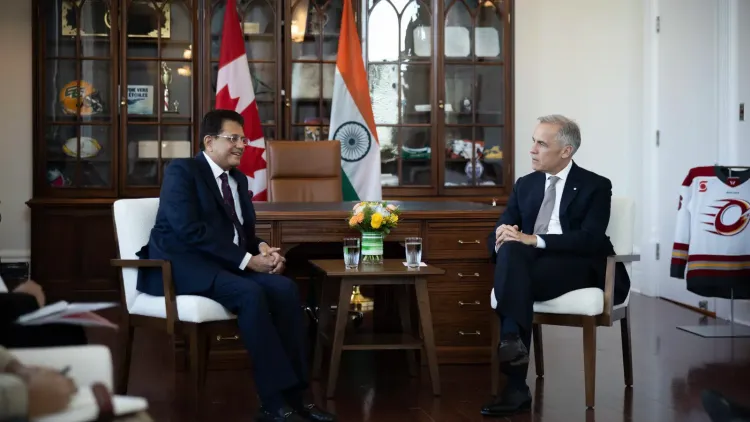
India and Canada have signalled a sharp acceleration in bilateral ties, with senior ministers from both countries expressing confidence that a long-pending Comprehensive Economic Partnership Agreement (CEPA) could be concluded by the end of 2025. The push came during high-level meetings in Ottawa on 26 May, as Commerce and Industry Minister Piyush Goyal led what Canadian officials described as the largest-ever Indian business delegation to Canada.
What Both Sides Said
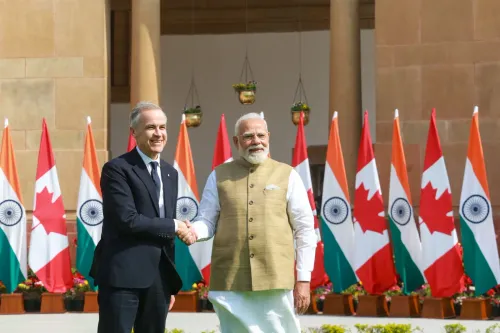
Canadian Prime Minister Mark Carney called the prospective free trade deal 'a game changer for Canadian workers and businesses — unlocking a massive new market,' in a social media post following his meeting with Goyal. Carney said the two sides reviewed progress in negotiations and explored cooperation in 'energy, agri-food, tech, and education.'
Goyal described the bilateral relationship as 'being reset very, very rapidly,' adding that the two Prime Ministers had tasked negotiators with completing 'the free trade agreement with a comprehensive outlook before the end of this year or earlier.' He also conveyed 'warm greetings' from Prime Minister Narendra Modi to Carney, citing the Canadian leader's recent visit to India as having 'imparted fresh momentum and renewed confidence to the India-Canada partnership.'
Key Developments in Ottawa
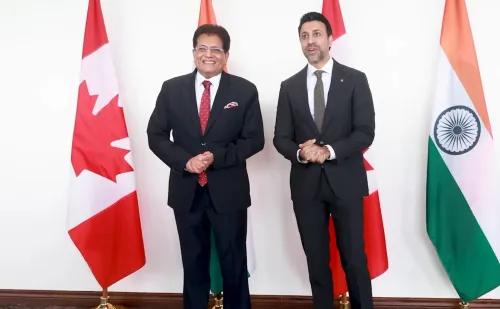
Canada's International Trade Minister Maninder Sidhu confirmed that two rounds of CEPA negotiations had already been completed and said both sides were 'moving fast.' Sidhu noted that Canada was looking to diversify its trade relationships and unlock 'roughly $300 billion of additional non-US exports,' positioning India as a central partner in that pivot.
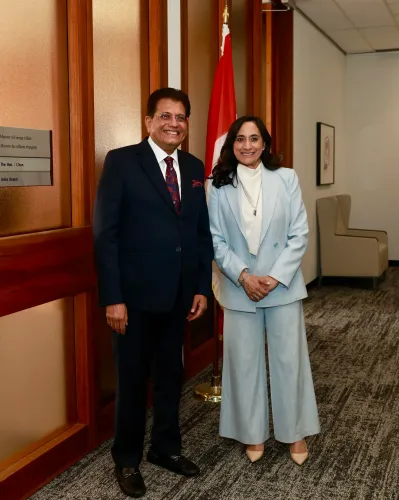
Goyal also held separate meetings with Canadian Foreign Minister Anita Anand and Agriculture Minister Heath MacDonald, covering trade, food security, agri-tech, sustainability, technology, and investment cooperation. Anand said discussions focused on 'strengthening and expanding our trade relationship to create new opportunities for businesses, workers, and investors in both our countries.'
Why This Reset Matters
The diplomatic warmth marks a notable turnaround from a period of acute friction between New Delhi and Ottawa, which had strained ties significantly. India-Canada bilateral trade has remained well below its potential, and both sides have now signalled a target of sharply raising trade volumes by 2030. Sidhu described India as 'one of the world's fastest-growing major economies,' underlining why strengthening ties with New Delhi is seen as economically consequential for Canada.
This comes amid a broader global shift, with Canada actively seeking to reduce its dependence on the United States following trade tensions. For India, a CEPA with Canada would open access to Canadian energy, agricultural commodities, and technology, while giving Indian businesses and professionals expanded entry into the Canadian market.
What Happens Next
With two negotiating rounds already concluded, both governments have indicated that talks will intensify through the remainder of the year. Goyal said negotiators feel 'empowered to make rapid progress to deliver results not only to businesses, but to the people of both countries.' Industry groups and diaspora business communities on both sides are expected to be closely consulted as the agreement takes shape.
Point of View
And the pivot to 'mission mode' language suggests both governments are using trade as a diplomatic circuit-breaker. For Canada, the $300 billion non-US export diversification target is an admission that Ottawa's US dependence is a structural vulnerability — and India is the most credible large-market alternative available. For India, the CEPA offers energy security and agricultural supply chain depth that no other G7 partner can match in quite the same configuration. The risk is that the political urgency outpaces the negotiating complexity: CEPA talks have stalled before, and the sticking points — dairy, professional mobility, intellectual property — have not disappeared. A year-end deadline is ambitious; whether it produces a full agreement or a framework with deferred annexes will be the real test.
NationPress
8 Oct 2026
Frequently Asked Questions
What is the India-Canada CEPA and why does it matter?
The India-Canada Comprehensive Economic Partnership Agreement (CEPA) is a proposed free trade deal that would significantly reduce tariffs and expand market access between the two countries. It matters because it could unlock major new opportunities in energy, agri-food, technology, and education, while helping Canada diversify away from US trade dependence.
When is the India-Canada free trade deal expected to be finalised?
Both governments have set a target of concluding the CEPA by the end of 2025. Commerce Minister Piyush Goyal said negotiators have been tasked with completing the agreement 'before the end of this year or earlier,' with two rounds of talks already completed.
Who represented India in the Ottawa meetings on 26 May?
Commerce and Industry Minister Piyush Goyal led the Indian side, heading what Canadian officials described as the largest-ever Indian business delegation to Canada. He met Canadian PM Mark Carney, Foreign Minister Anita Anand, Agriculture Minister Heath MacDonald, and Trade Minister Maninder Sidhu.
Why is Canada keen on a trade deal with India right now?
Canada is actively seeking to diversify its export base and reduce reliance on the United States. Trade Minister Maninder Sidhu said Canada wants to unlock roughly $300 billion in additional non-US exports, and described India as one of the world's fastest-growing major economies and a central partner in that strategy.
What sectors are being discussed under the India-Canada trade talks?
The two sides have identified energy, agri-food, technology, and education as priority areas for cooperation, along with food security, agri-tech, sustainability, and investment. These sectors featured prominently in meetings between Goyal and his Canadian counterparts in Ottawa.