India-Canada $50 billion trade target reaffirmed as Piyush Goyal wraps landmark visit

Synopsis
Commerce Minister Piyush Goyal just led the largest-ever Indian business delegation to Canada — over 100 companies — reaffirming a $50 billion trade target by 2030 against a current baseline of just $8.5 billion. With CEPA negotiations back on track and critical minerals, AI, and clean energy on the table, this visit marks a clear reset in a relationship that had gone cold.
Key Takeaways
Commerce Minister Piyush Goyal concluded a three-day Canada visit on 28 May 2025 , covering Ottawa and Toronto .
India and Canada reaffirmed their target of expanding bilateral trade from $8.5 billion to $50 billion by 2030 .
Goyal led the largest-ever Indian business delegation to Canada , with leaders from over 100 Indian companies .
CEPA negotiations were a central focus, identified as the key vehicle for hitting the trade target.
Goyal met Ontario Premier Doug Ford and discussed cooperation in critical minerals, clean energy, AI, and manufacturing .
Engagements also covered the Munk School of Global Affairs , Ontario Centre of Innovation , and Canada-India Tech Connect .
Commerce and Industry Minister Piyush Goyal concluded a landmark three-day visit to Canada on 28 May 2025, reaffirming both governments' commitment to scaling bilateral trade from the current $8.5 billion to an ambitious $50 billion by 2030. The visit, described as the most substantive high-level economic engagement between the two countries in recent years, came as negotiations for the India-Canada Comprehensive Economic Partnership Agreement (CEPA) gather fresh momentum.
Largest-Ever Indian Business Delegation
Goyal led the largest-ever Indian business delegation to Canada, comprising industry leaders from over 100 Indian companies. The three-day itinerary covered Ottawa on 25 May and Toronto from 26–28 May, with engagements spanning academia, government, institutional investors, regional business councils, and the Indian diaspora community. Officials described the schedule as a deliberate effort to signal the full revival of India-Canada economic relations after a period of diplomatic strain.
Innovation, AI, and Deep Tech on the Agenda
Goyal visited the Ontario Centre of Innovation (OCI), where he was briefed on its programmes supporting startups and industry-academia collaboration. He also held discussions with Canada-India Tech Connect on emerging technologies including Artificial Intelligence and Quantum Computing. Addressing the gathering, Goyal outlined how Canada can meaningfully partner with India in AI, cleantech, agritech, and deep tech — sectors where both countries reportedly possess complementary strengths.
Munk School Address and Academic Engagement
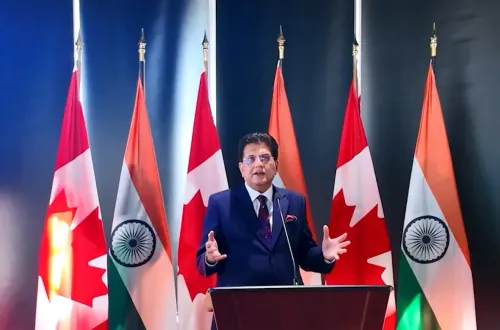
The minister delivered an address at the Munk School of Global Affairs and Public Policy, University of Toronto, speaking to faculty, researchers, and students about India's economic progress, structural reforms, and growing global standing. He emphasised the potential for deeper engagement between academia, industry, and policymakers to strengthen bilateral trade and people-to-people ties. Notably, this kind of academic outreach signals a broader diplomatic strategy — building institutional relationships beyond government-to-government channels.
Ontario Premier Doug Ford Meeting
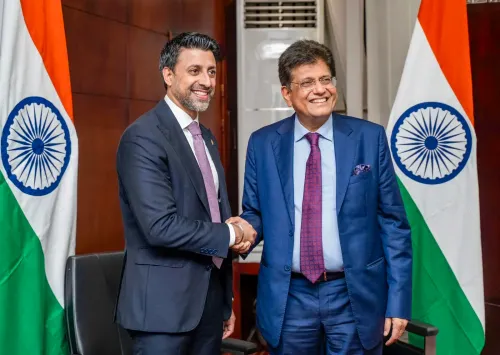
Goyal called on Ontario Premier Doug Ford and discussed avenues for deepening India-Ontario collaboration across manufacturing, technology, infrastructure, clean energy, food processing, and critical minerals. Both sides reaffirmed their commitment to strengthening trade and investment partnerships, according to an official Commerce Ministry statement. Critical minerals, in particular, represent a sector of growing strategic importance as India accelerates its clean energy transition.
CEPA Negotiations and What Comes Next
The visit reinforced sustained momentum in the India-Canada economic partnership, with CEPA negotiations identified as the primary vehicle for reaching the $50 billion trade target by 2030. Regional chamber representatives provided constructive feedback on boosting investment flows, which Goyal acknowledged as pivotal to the bilateral corridor. With both sides publicly committed to the target, the pace of CEPA progress in the months ahead will be closely watched by industry on both sides.
Point of View
But CEPA has been in negotiation for years without conclusion. The real test is whether this political momentum translates into a signed agreement — without that, the $50 billion figure risks becoming another aspirational headline.
NationPress
19 Sept 2026
Frequently Asked Questions
What is the current state of India-Canada bilateral trade?
India-Canada bilateral trade currently stands at approximately $8.5 billion, according to Commerce Minister Piyush Goyal. Both governments have committed to a shared target of scaling this to $50 billion by 2030, with CEPA negotiations serving as the primary mechanism.
What is CEPA and why does it matter for India-Canada trade?
The India-Canada Comprehensive Economic Partnership Agreement (CEPA) is a proposed free trade framework aimed at reducing tariffs and boosting investment flows between the two countries. It is central to achieving the $50 billion bilateral trade target by 2030, and Goyal's visit was partly aimed at accelerating ongoing negotiations.
What did Piyush Goyal do during his three-day Canada visit?
Goyal visited Ottawa on 25 May and Toronto from 26–28 May, leading a delegation of over 100 Indian companies. He met Ontario Premier Doug Ford, addressed the Munk School of Global Affairs, visited the Ontario Centre of Innovation, and held discussions on AI, Quantum Computing, cleantech, and critical minerals.
Which sectors are being prioritised in India-Canada economic cooperation?
Key sectors include Artificial Intelligence, Quantum Computing, cleantech, agritech, deep tech, manufacturing, infrastructure, clean energy, food processing, and critical minerals. Both governments view these as areas of complementary strength with high bilateral potential.
Why is this visit considered a landmark in India-Canada relations?
The visit is considered landmark because it included the largest-ever Indian business delegation to Canada and came amid efforts to fully revive economic ties after a period of diplomatic strain. It also marked a significant push to accelerate CEPA negotiations and broaden engagement across government, academia, and the private sector.