Rajasthan CM Bhajanlal deploys Gram Vikas Raths for farmer welfare
Synopsis
The Chief Minister's Office of Rajasthan highlighted on 1 June 2026 that Gram Vikas Raths — state-deployed mobile outreach vehicles — are being used to advance farmer welfare across the state under CM Bhajanlal Sharma, continuing a long-standing tradition of rural last-mile governance.
Key Takeaways
The Chief Minister's Office of Rajasthan announced on 1 June 2026 that Gram Vikas Raths are being used for farmer welfare across the state.
CM Bhajanlal Sharma , who took office in December 2023 , was directly tagged in the post, signalling his administration's ownership of the initiative.
Mobile outreach vehicles have been used by successive Rajasthan governments since the early 2000s to deliver welfare schemes to remote rural areas.
Primary beneficiaries are small farmers and rural households with limited access to fixed government offices.
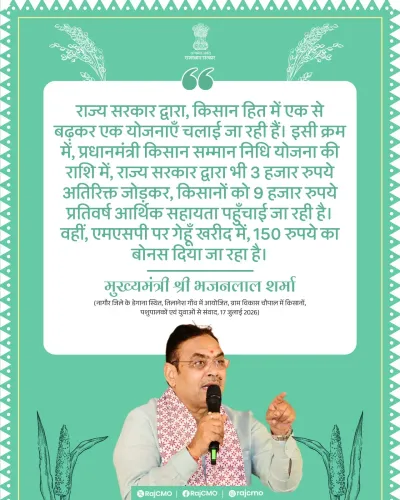
The initiative complements central schemes such as PM-KISAN , which provides direct income support to farmers.
Future state budget allocations and Rajasthan assembly discussions on rural outreach will determine the programme's expanded scope.
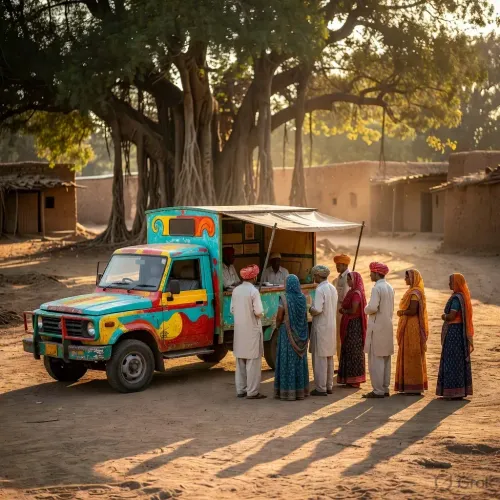
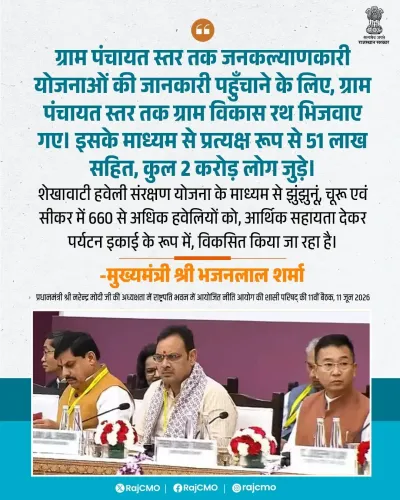
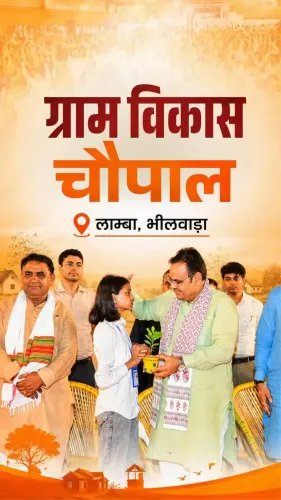
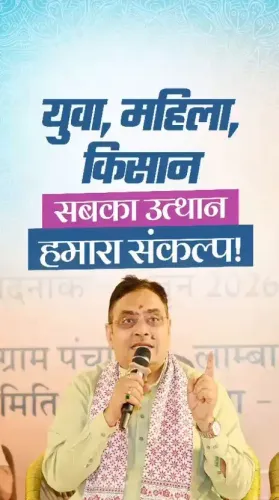
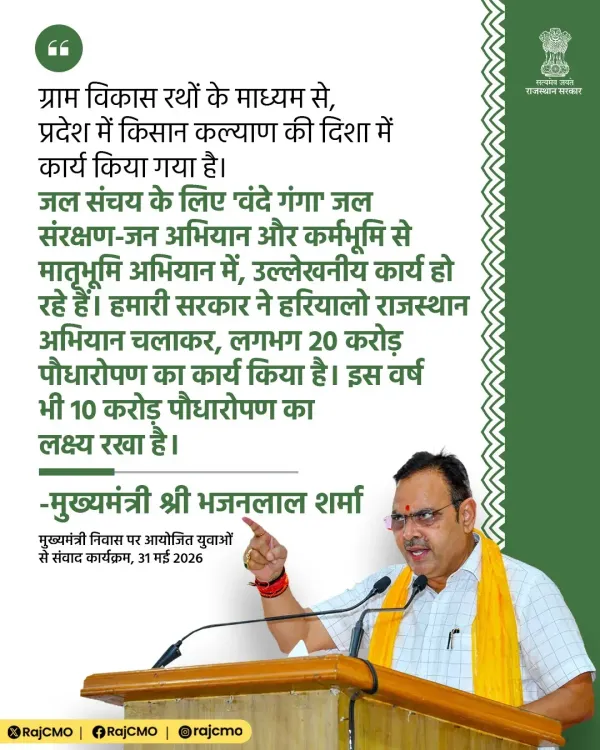
The Chief Minister's Office of Rajasthan announced on Monday, 1 June 2026 that Gram Vikas Raths — mobile outreach vehicles — have been deployed across the state as part of ongoing efforts toward farmer welfare, highlighting the initiative under Chief Minister Bhajanlal Sharma.
Context
The post, shared under the hashtag #आपणो_अग्रणी_राजस्थान ('Our Leading Rajasthan'), states: 'Through Gram Vikas Raths, work has been done in the state in the direction of farmer welfare.' The announcement was tagged to Chief Minister @BhajanlalBjp, underscoring his administration's ownership of the rural outreach programme.
Rajasthan is a largely agrarian state in western India, where a significant portion of the population depends on agriculture. The state's rural economy has historically been vulnerable to drought and inadequate irrigation, making last-mile delivery of government schemes a persistent governance challenge.
Policy Backdrop
Mobile outreach vehicles, commonly called 'raths' in the Indian administrative tradition, have been used by successive state governments — both BJP and Congress — since the early 2000s to carry scheme awareness, subsidy information, and welfare benefits directly to remote villages.
The Gram Vikas Rath model fits within a broader national pattern: state governments across India have deployed rath-style units to improve last-mile delivery of agricultural subsidies, crop insurance enrolment, and welfare entitlements in areas poorly served by fixed government offices. These state-level efforts complement central programmes such as PM-KISAN, which provides direct income support to small and marginal farmers.
Stakeholders and Impact
The primary beneficiaries of the Gram Vikas Rath initiative are small farmers and rural households in Rajasthan, particularly those in geographically remote areas where access to block-level or district offices is limited. Mobile units can serve as a single-window interface for scheme registration, document verification, and grievance redressal.
For the Bhajanlal Sharma government, which assumed office in December 2023 after the state assembly elections, visible rural outreach programmes carry both administrative and political weight ahead of future electoral cycles. Farmer welfare has remained a central plank of BJP's governance messaging in Rajasthan.
What's Next
Attention will now turn to the Rajasthan state budget and legislative discussions on expanding the scope and coverage of farmer welfare programmes. The scale, reach, and measurable outcomes of the Gram Vikas Rath deployments are expected to feature in future government accountability reports and assembly proceedings.
As rural outreach becomes an increasingly competitive space in Indian state politics, the effectiveness of mobile delivery models in translating scheme announcements into ground-level impact will be a key benchmark for the Sharma administration in the months ahead.
Point of View
The BJP administration is consciously building an identity around last-mile delivery ahead of future electoral tests. The move also reflects a wider pattern in Indian state politics where mobile welfare units serve as both administrative tools and visible governance theatre. The real test, however, will be in verifiable outcomes — scheme enrolment numbers, subsidy disbursement data, and farmer satisfaction — that can substantiate the narrative beyond the announcement.
NationPress
15 Oct 2026
Frequently Asked Questions
What is Gram Vikas Rath in Rajasthan?
Gram Vikas Rath is a mobile outreach vehicle deployed by the Rajasthan government to carry welfare scheme awareness, subsidy information, and farmer support services directly to remote villages across the state.
Who is the Chief Minister of Rajasthan in 2026?
Bhajanlal Sharma of the BJP is the Chief Minister of Rajasthan, having assumed office in December 2023 following the state assembly elections.
What does Aapno Agrari Rajasthan mean?
Aapno Agrari Rajasthan translates to 'Our Leading Rajasthan' and is a branding hashtag used by the Rajasthan government and the CMO to promote state development initiatives on social media.
How do Gram Vikas Raths help farmers in Rajasthan?
Gram Vikas Raths function as mobile single-window units that bring scheme registration, document verification, and welfare entitlements directly to farmers in rural areas that are far from district or block-level government offices.
Does Rajasthan's Gram Vikas Rath complement PM-KISAN?
Yes, state-level mobile outreach initiatives like the Gram Vikas Rath are designed to complement central programmes such as PM-KISAN , which provides direct income support to small and marginal farmers, by improving enrolment and awareness at the grassroots level.