Rajasthan CM Bhajanlal deploys Gram Vikas Raths to villages
Synopsis
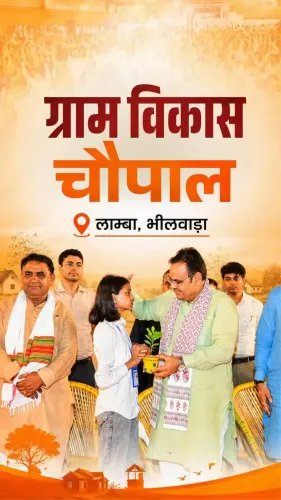
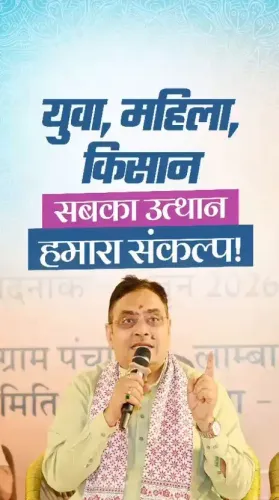
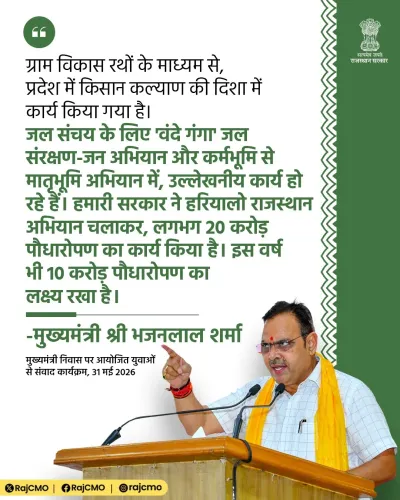
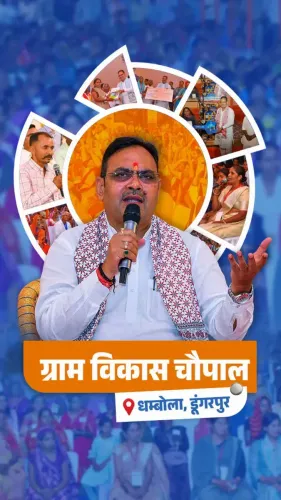
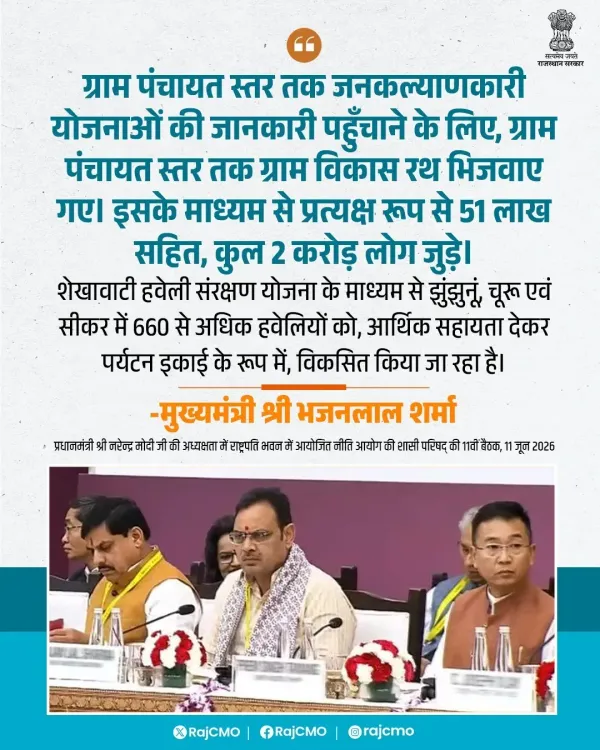
The Chief Minister's Office of Rajasthan announced the deployment of Gram Vikas Raths — mobile welfare awareness units — to the gram panchayat level across the state, under CM Bhajan Lal Sharma's direction, as part of the BJP government's last-mile outreach push.
Key Takeaways
The Chief Minister's Office of Rajasthan announced the deployment of Gram Vikas Raths on 12 June 2026 .
The mobile units are designed to carry information about public welfare schemes directly to the gram panchayat level .
The initiative is linked to Chief Minister Bhajan Lal Sharma and the BJP government's post-2023 priority of last-mile welfare delivery.
Rural households and gram panchayat bodies are the primary stakeholders targeted by the outreach drive.
The campaign aligns with a broader pattern of BJP-governed states using mobile vans to improve awareness and uptake of centrally sponsored and state welfare schemes.
Enrolment trends in targeted schemes will be a key indicator of the initiative's effectiveness going forward.
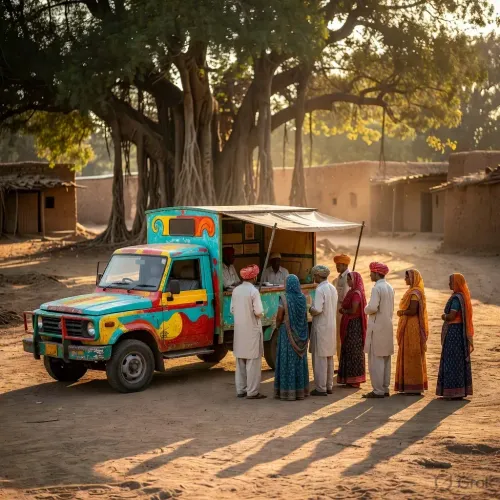
The Chief Minister's Office of Rajasthan announced on Friday, 12 June 2026 that Gram Vikas Raths — mobile outreach units — have been dispatched to the gram panchayat level across the state to carry information about welfare schemes directly to rural communities, under the direction of Chief Minister Bhajan Lal Sharma.
Context
The post, shared under the hashtag #आपणो_अग्रणी_राजस्थान ('Our Pioneering Rajasthan'), states that Gram Vikas Raths have been dispatched to the gram panchayat level so that information about public welfare schemes reaches every village. The announcement tags Chief Minister Bhajan Lal Sharma directly, signalling the initiative carries his office's endorsement. Gram panchayats are constitutional village-level bodies and serve as the primary interface between the state and rural households in Rajasthan.
Policy Backdrop
Following the 2023 Rajasthan assembly elections, the BJP government under Chief Minister Sharma made last-mile delivery and awareness of welfare schemes a stated priority. Mobile outreach vehicles — variously called raths, vans or camps — have been a recurring tool across BJP-governed states to bridge the information gap between government programmes and rural beneficiaries. Centrally sponsored and state-level schemes covering housing, health insurance, pensions and agricultural support often see low uptake in remote areas due to limited awareness, making ground-level communication drives a critical component of welfare delivery.
Rajasthan is a large, predominantly rural state in north-western India with a significant population dependent on government schemes for basic welfare. Reaching gram panchayats — the lowest tier of the three-tier panchayati raj system — ensures that outreach penetrates even the most geographically dispersed communities.
Stakeholders and Impact
The primary beneficiaries of the Gram Vikas Rath initiative are rural households across Rajasthan who may be eligible for welfare programmes but lack access to timely information. Gram panchayat bodies are expected to serve as coordination points, helping residents understand eligibility criteria, documentation requirements and application processes for relevant schemes. The initiative also reinforces the administrative role of panchayat institutions in the welfare ecosystem.
Broader adoption of scheme benefits — including housing, health and pension entitlements — is the intended outcome. Improved awareness at the grassroots level is also seen as a mechanism to reduce leakages by ensuring that genuine beneficiaries are enrolled rather than excluded through ignorance of procedures.
What's Next
Observers will watch for official reports on enrolment increases in targeted welfare schemes as the Gram Vikas Raths complete their rounds across panchayats. Any scaling of the initiative to districts not yet covered, or expansion to additional scheme categories, will indicate the government's assessment of early results. The campaign's reach and measurable impact on scheme uptake are expected to form a key metric for the BJP government's rural outreach record ahead of future electoral cycles.
Point of View
Who took office in December 2023, such initiatives serve the dual purpose of improving genuine welfare uptake and demonstrating administrative reach ahead of future electoral cycles. The gram panchayat focus is significant — it targets the constitutional unit where scheme leakages and awareness gaps are most acute in a large, rural state like Rajasthan. Whether the initiative translates into measurable enrolment gains will determine its political and policy legacy.
NationPress
13 Sept 2026
Frequently Asked Questions
What is a Gram Vikas Rath in Rajasthan?
A Gram Vikas Rath is a mobile outreach unit deployed by the Rajasthan government to travel to gram panchayats and inform rural residents about public welfare schemes they may be eligible for.
Who launched the Gram Vikas Rath initiative in Rajasthan?
The initiative is associated with Chief Minister Bhajan Lal Sharma and was announced by the Chief Minister's Office of Rajasthan on 12 June 2026.
What is the purpose of sending Gram Vikas Raths to gram panchayats?
The purpose is to bridge the information gap between the government and rural communities by delivering direct, on-the-ground awareness about welfare schemes at the village level.
Which schemes do the Gram Vikas Raths cover?
The announcement does not specify individual schemes, but the initiative is designed to cover the range of state and centrally sponsored welfare programmes relevant to rural households in Rajasthan.
How does this initiative fit into Rajasthan's broader welfare strategy?
Following the 2023 assembly elections, the BJP government in Rajasthan prioritised last-mile delivery of welfare schemes; the Gram Vikas Raths are part of that effort to ensure information and enrolment reach even the most remote gram panchayats.