Cabinet Clears NSAP Extension for Five More Years
Synopsis
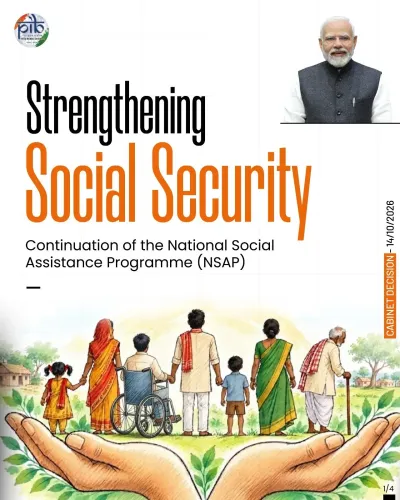
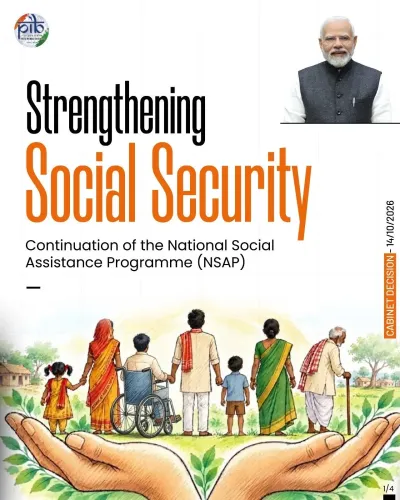
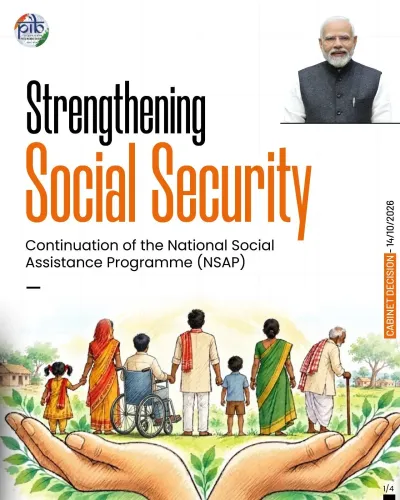
India's Union Cabinet has approved a five-year continuation of the National Social Assistance Programme, a 1995-era centrally sponsored scheme delivering direct pensions to elderly citizens, widows, and persons with disabilities, Union Minister Mansukh Mandaviya announced on October 14, 2026.
Key Takeaways
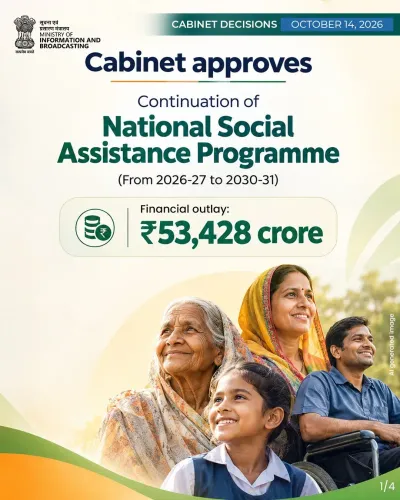
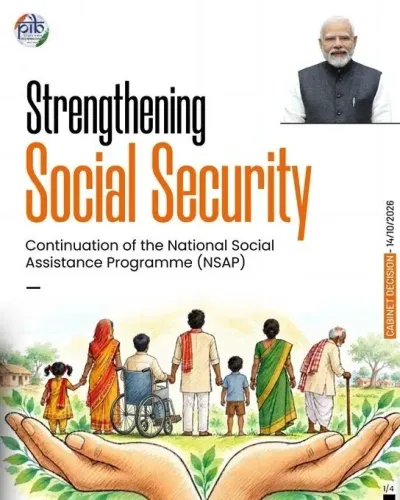
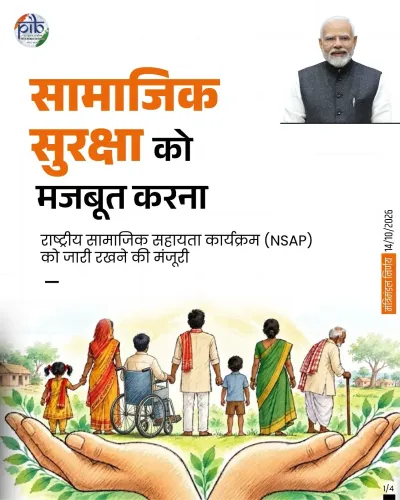
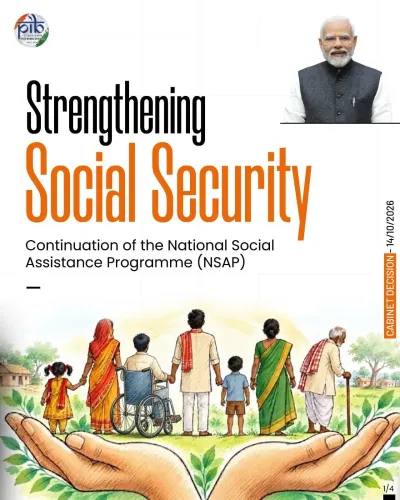
The Union Cabinet approved the continuation of the National Social Assistance Programme (NSAP) for the next five years .
NSAP was originally launched in August 1995 and is one of India's oldest centrally sponsored welfare schemes.
The programme provides direct cash pensions to elderly citizens, widows, and persons with disabilities from below-poverty-line households.
Its flagship component is the Indira Gandhi National Old Age Pension Scheme .
The announcement was made by Union Minister Mansukh Mandaviya on October 14, 2026 .
State-wise fund releases and any revision of pension amounts in the next Union Budget are the key developments to watch.
Millions of elderly citizens, widows, and persons with disabilities will continue receiving direct cash support from the central government — the Union Cabinet, chaired by Prime Minister Narendra Modi, has approved the continuation of the National Social Assistance Programme (NSAP) for the next five years. Union Labour and Sports Minister Mansukh Mandaviya announced the decision on Wednesday, October 14, 2026, calling it a 'big gift' for the needy and persons with disabilities.
What NSAP covers and who it reaches
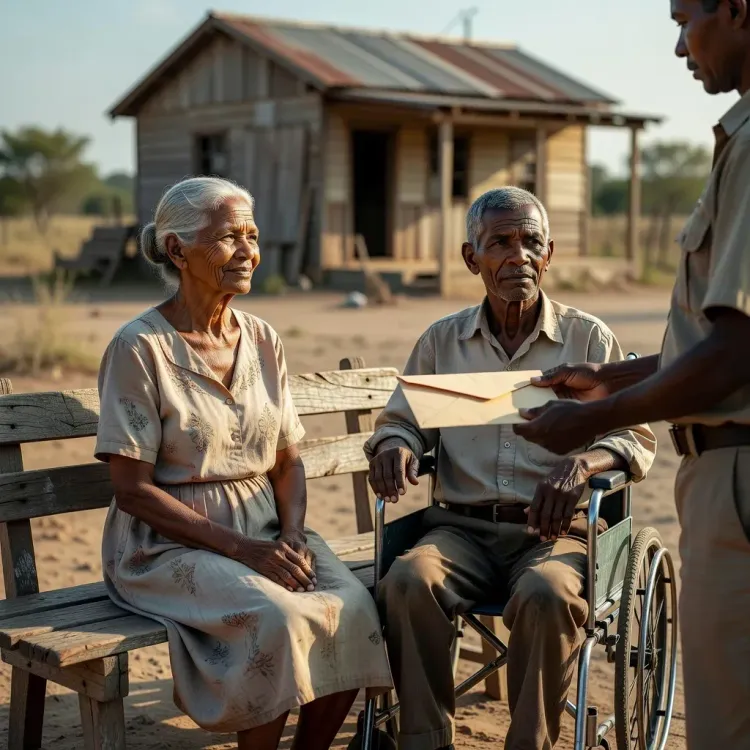
Launched in August 1995, the National Social Assistance Programme is one of India's oldest centrally sponsored welfare schemes. It channels direct pension payments to three of the country's most economically vulnerable groups: the elderly, widows, and persons with disabilities. Its flagship component, the Indira Gandhi National Old Age Pension Scheme, has been a lifeline for below-poverty-line households for over three decades.
The programme operates on a centre-to-beneficiary transfer model, with successive governments — across party lines — renewing it through five-year plan cycles and annual budget allocations. This cabinet clearance follows that established pattern, ensuring no administrative gap in disbursements.
Five-year runway and what comes next
By securing a five-year continuation, the cabinet locks in programme stability through the next mid-decade period, giving state governments and district-level administrators a clear planning horizon. Mandaviya framed the move as central to Prime Minister Modi's welfare agenda — 'जरूरतमंदों और दिव्यांगजनों के लिए बड़ी सौगात' (a big gift for the needy and persons with disabilities).
The immediate watchpoints are state-wise fund release orders and whether the forthcoming Union Budget revises pension amounts or broadens eligibility criteria — incremental enhancements have accompanied past renewals. Implementation guidelines from the Ministry of Rural Development, which administers NSAP, will set the operational contours of this five-year window.
Point of View
The BJP is reinforcing its welfare-state credentials ahead of a period when direct-benefit transfer programmes are central to electoral positioning. The broader policy arc here is one of continuity-as-consolidation: rather than redesigning legacy schemes, the government is choosing to preserve and rhetorically own them. The real test will be whether the next Budget injects a meaningful increase in per-beneficiary pension amounts, which have lagged inflation for years.
NationPress
14 Oct 2026
Frequently Asked Questions
What is the National Social Assistance Programme (NSAP)?
NSAP is a centrally sponsored scheme launched in August 1995 that provides direct cash pensions to elderly citizens, widows, and persons with disabilities living below the poverty line. Its flagship component is the Indira Gandhi National Old Age Pension Scheme.
How long has NSAP been extended for?
The Union Cabinet has approved the continuation of NSAP for the next five years, as announced on October 14, 2026.
Who benefits from NSAP?
NSAP primarily benefits three groups: elderly citizens, widows, and persons with disabilities, particularly those from below-poverty-line households across India.
Which ministry administers NSAP?
NSAP is administered by the Ministry of Rural Development, which issues fund-release orders and implementation guidelines to state governments.
Will pension amounts under NSAP change after this cabinet approval?
The cabinet decision secures the programme's continuation, but any revision to pension amounts or eligibility criteria is expected to be announced through the next Union Budget. Past renewals have sometimes included incremental enhancements.