India-Uzbekistan ink Comprehensive Strategic Partnership, target $5 bn trade by 2030
Synopsis
India and Uzbekistan have moved beyond diplomatic pleasantries — the Tashkent summit locked in a Comprehensive Strategic Partnership with uranium supply, critical minerals, and a $5 billion trade target at its core. For India, this is as much about energy security and supply-chain resilience as it is about deepening its Central Asian footprint.
Key Takeaways
India and Uzbekistan elevated ties to a Comprehensive Strategic Partnership on 30 August 2025 in Tashkent .
Both sides set a bilateral trade target of $5 billion by 2030 and agreed to hold a dedicated business summit.
PM Modi welcomed progress on a long-term uranium supply arrangement from Uzbekistan to India.
A Foreign Ministers-led mechanism will oversee the partnership; the Inter-Governmental Commission will be raised to ministerial level .
India announced the Lal Bahadur Shastri Scholarship for Hindi language for Uzbek students and a $1 million grant for Aral Sea environmental rehabilitation.
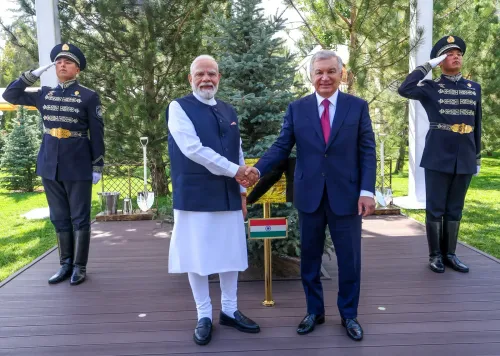
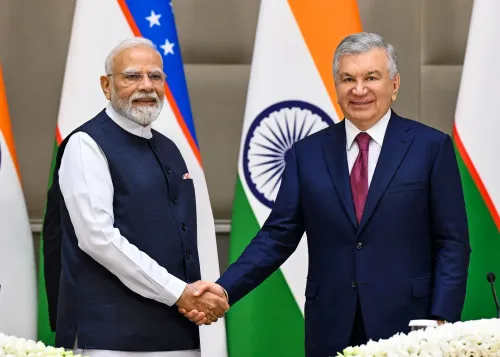
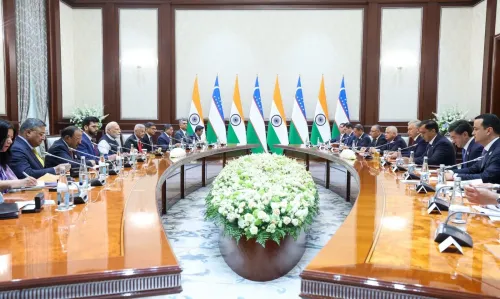
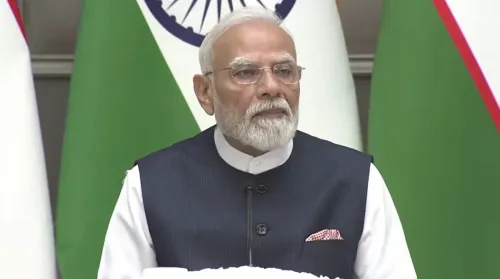
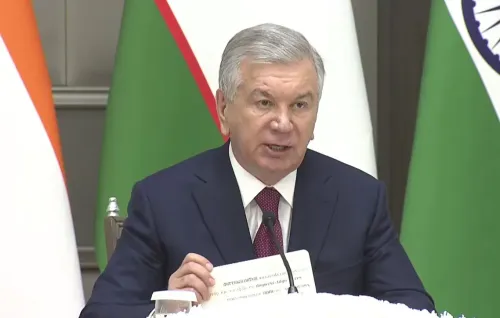
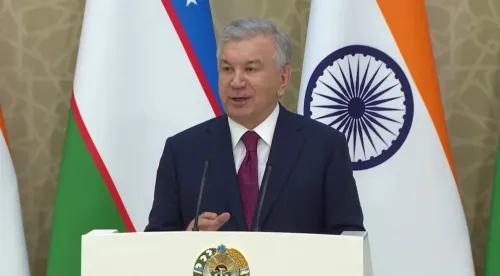
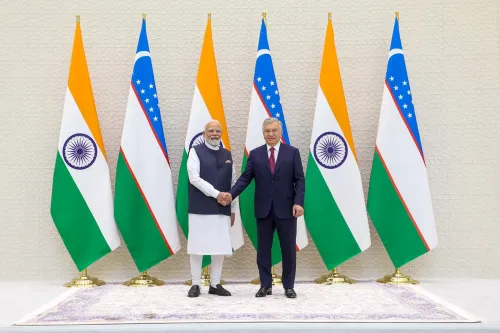
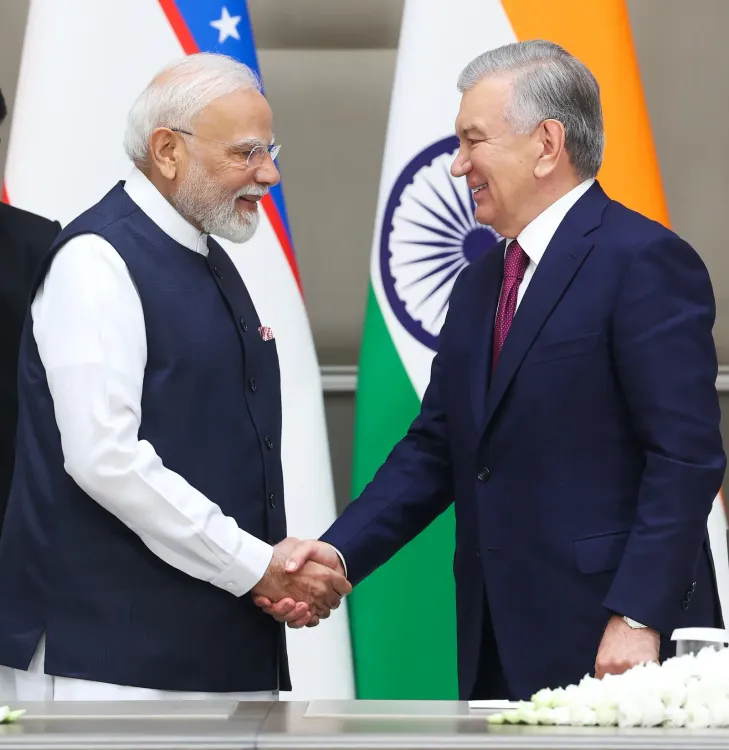
Prime Minister Narendra Modi and Uzbek President Shavkat Mirziyoyev on Sunday, 30 August elevated India-Uzbekistan bilateral ties to a Comprehensive Strategic Partnership during a state visit to Tashkent, with uranium supply arrangements, critical minerals cooperation, and economic security at the centre of wide-ranging talks held at the Kuksaroy Presidential Palace.
Key Developments
The two leaders set a bilateral trade target of $5 billion by 2030 — a significant step-up from current levels — and agreed to convene a dedicated business summit to accelerate investment flows. They also decided to establish a Foreign Ministers-led mechanism to drive the Comprehensive Strategic Partnership forward, and resolved to elevate the existing Inter-Governmental Commission to the ministerial level.
Critical Minerals and Uranium Cooperation
Modi welcomed progress toward a long-term uranium supply arrangement from Uzbekistan to India, underscoring its strategic importance for India's civil nuclear programme. Both sides agreed to deepen cooperation in critical minerals — resources that are increasingly central to clean energy transitions, advanced manufacturing, and next-generation strategic technologies. This comes amid a global scramble to secure resilient mineral supply chains, and India's outreach to Central Asia is part of a broader diversification strategy away from single-source dependencies.
Economic and People-to-People Ties
The agenda spanned trade and investment, defence and security, digital public infrastructure including UPI, healthcare and pharmaceuticals, agriculture, education, tourism, space cooperation, and innovation. Modi also appreciated the growing popularity of Yoga in Uzbekistan, having earlier attended a session organised by the Yoga Federation of Uzbekistan.
New Initiatives Announced
Marking the 60th anniversary of the passing of former Prime Minister Lal Bahadur Shastri, Modi announced the Lal Bahadur Shastri Scholarship for Hindi language for Uzbek students. India additionally committed a $1 million grant to support Uzbekistan's environmental rehabilitation efforts in the ecologically distressed Aral Sea region.
Strategic Significance
The upgrade to a Comprehensive Strategic Partnership signals a qualitative shift in a relationship that has historically been warm but limited in strategic depth. Uzbekistan's uranium reserves and its position as a Central Asian hub make it a consequential partner for India's energy security and connectivity ambitions. The visit also reinforces India's broader engagement with the Shanghai Cooperation Organisation (SCO) neighbourhood at a time of heightened geopolitical flux in the region.
Point of View
And locking in a long-term Uzbek supply line reduces dependence on a narrow set of suppliers — a strategic priority that goes well beyond bilateral optics. The $5 billion trade target is ambitious relative to current volumes and will require structural fixes, not just summitry. More telling is the decision to raise the Inter-Governmental Commission to ministerial level — a bureaucratic signal that both sides intend to operationalise commitments rather than let them age in joint statements. India's Central Asia outreach has historically been aspirational; the test is whether this partnership generates measurable trade and mineral flows within the next 24 months.
NationPress
14 Oct 2026
Frequently Asked Questions
What is the India-Uzbekistan Comprehensive Strategic Partnership?
It is an upgraded framework for bilateral ties announced on 30 August 2025 in Tashkent, covering critical minerals, uranium supply, trade, defence, digital infrastructure, and people-to-people cooperation. The partnership replaces the previous lower-tier engagement and establishes a Foreign Ministers-led oversight mechanism.
What is the significance of uranium cooperation between India and Uzbekistan?
Uzbekistan is among the world's top uranium producers, and a long-term supply arrangement would support India's civil nuclear programme and reduce dependence on a limited number of fuel sources. PM Modi specifically welcomed progress on this arrangement during the Tashkent talks.
What is the bilateral trade target set by India and Uzbekistan?
The two leaders set a target of $5 billion in bilateral trade by 2030 and agreed to organise a business summit to accelerate economic and investment ties.
What new scholarships or grants did India announce during the visit?
India announced the Lal Bahadur Shastri Scholarship for Hindi language for Uzbek students, timed to mark the 60th anniversary of the former Prime Minister's passing. India also committed a $1 million grant for environmental rehabilitation in Uzbekistan's Aral Sea region.
How will the Comprehensive Strategic Partnership be implemented?
A Foreign Ministers-led mechanism will be established to take the partnership forward, and the existing Inter-Governmental Commission will be elevated to the ministerial level to ensure higher-level accountability on joint commitments.