India-Uzbekistan ties elevated to Comprehensive Strategic Partnership
Synopsis
PM Modi's Tashkent visit delivered more than a ceremonial honour — the elevation of India-Uzbekistan ties to a Comprehensive Strategic Partnership signals a deliberate push to institutionalise Central Asian engagement. With Modi invoking the Global South mandate from Uzbek soil, New Delhi is clearly using every bilateral platform to cement its identity as the developing world's anchor power.
Key Takeaways
PM Narendra Modi announced on 30 August that India and Uzbekistan have elevated ties to a Comprehensive Strategic Partnership .
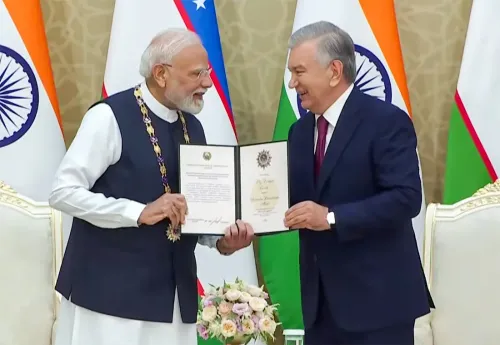
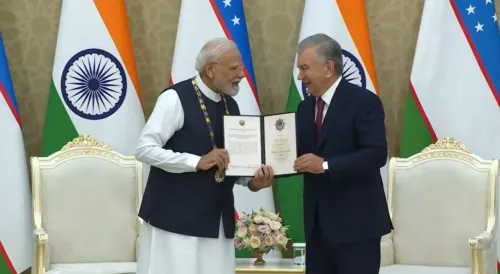
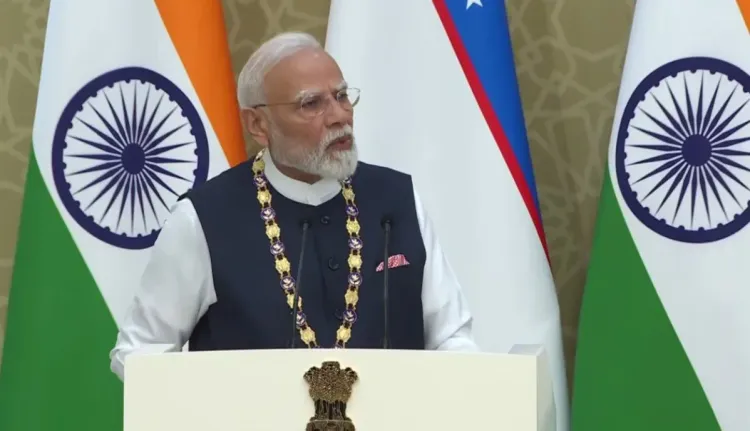
Modi was conferred with Uzbekistan's highest honour, the 'Oliy Darajali Do'stlik' Order , by President Shavkat Mirziyoyev in Tashkent .
Modi dedicated the award to the centuries-old friendship between the two nations, calling it an honour for all 1.4 billion Indians .
Modi pledged that India and Uzbekistan will serve as a united voice for the Global South .
The upgrade marks a formal deepening of ties across diplomatic, economic, and cultural dimensions.
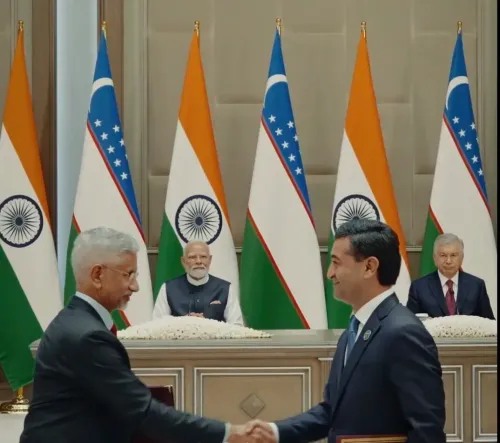
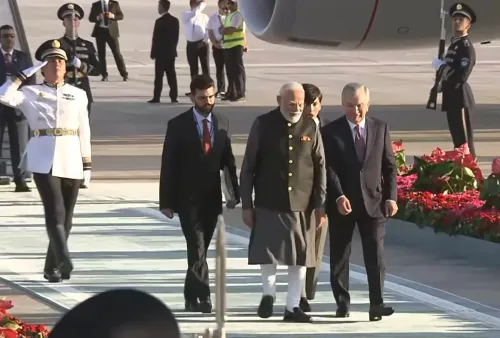
Prime Minister Narendra Modi on Sunday, 30 August announced that India and Uzbekistan have elevated their bilateral relationship to a Comprehensive Strategic Partnership, marking a significant upgrade in ties between the two nations. The announcement came during Modi's visit to Tashkent, where he was conferred with Uzbekistan's highest civilian honour, the 'Oliy Darajali Do'stlik' Order, by President Shavkat Mirziyoyev.
The Honour and What Modi Said
President Mirziyoyev conferred the 'Oliy Darajali Do'stlik' Order on Prime Minister Modi in recognition of his contribution to strengthening bilateral ties. Accepting the award, Modi dedicated it to the centuries-old friendship between the two nations, calling it an honour for all 1.4 billion Indians.
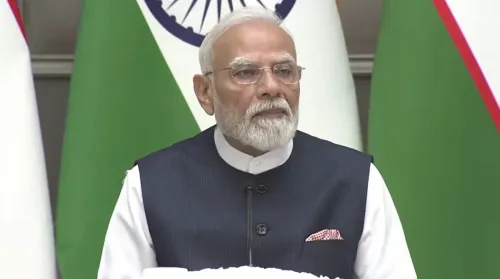
'This honour is not for a single individual; it is an honour for all 1.4 billion Indians. On behalf of all my fellow citizens, I express my heartfelt gratitude to the people of Uzbekistan, the government, and my friend, the respected President,' Modi said.
Modi also drew on the shared linguistic and cultural heritage between the two peoples, noting that the word 'Dost' (friend) — rooted in the same tradition as the Uzbek 'Dostlik' — is used daily across Indian households. 'There is hardly a family in our country that does not use the word Dost a hundred times a day,' he said.
Elevation to Comprehensive Strategic Partnership
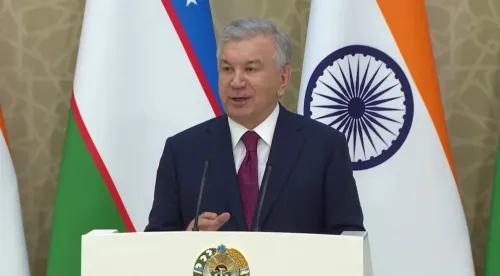
The upgrade to a Comprehensive Strategic Partnership represents a formal deepening of India-Uzbekistan ties across diplomatic, economic, and cultural dimensions. Modi credited President Mirziyoyev's leadership for the trajectory of the relationship. 'Our ties have continuously strengthened thanks to your visionary leadership and your friendship towards India. They are successfully scaling new heights, and as a result, our relationship has now been elevated to the level of a Comprehensive Strategic Partnership,' he stated.
This comes amid India's broader push to deepen engagement with Central Asian nations, a region that has gained strategic salience given evolving geopolitical realities in the neighbourhood.
India's Commitment to the Global South
Modi used the occasion to reaffirm India's commitment to Uzbekistan and to the wider Global South. Speaking from Tashkent, he pledged that the two nations would serve as 'a united voice for the Global South' and work collectively for the welfare of developing nations. 'We will spare no effort in working for the welfare of the Global South and will strive wholeheartedly to fulfil the mission of advancing the well-being of all humanity,' he said.
The framing aligns with India's positioning at recent multilateral forums, where New Delhi has sought to anchor its foreign policy identity as a leading voice for the developing world.
Context and Significance
India and Uzbekistan share deep historical and civilisational links, with centuries of shared heritage along the Silk Route. The elevation of ties to a Comprehensive Strategic Partnership is a step beyond the existing framework and signals intent to institutionalise cooperation across defence, trade, connectivity, and people-to-people exchanges.
Notably, this is not the first high-level honour Modi has received from a partner nation — he has previously been conferred with top state awards by several countries including Russia, Saudi Arabia, and the UAE. Each such honour has been accompanied by announcements of deepened bilateral frameworks.
With this upgrade, India's Central Asia engagement enters a new phase, and the coming months will be watched for concrete deliverables in trade volumes, connectivity projects, and defence cooperation.
Point of View
But the real test lies in what follows the ceremony. India has upgraded bilateral frameworks with Central Asian states before without commensurate movement in trade or connectivity. Uzbekistan is landlocked, and without progress on the International North-South Transport Corridor or Afghanistan transit routes, the partnership risks remaining largely symbolic. Modi's Global South framing from Tashkent is strategically coherent, but it needs institutional scaffolding — joint projects, investment commitments, and measurable connectivity milestones — to distinguish this announcement from its predecessors.
NationPress
14 Oct 2026
Frequently Asked Questions
What is the Comprehensive Strategic Partnership between India and Uzbekistan?
It is a formal upgrade of bilateral ties announced by Prime Minister Narendra Modi during his visit to Tashkent on 30 August, covering deeper cooperation across diplomacy, trade, defence, connectivity, and cultural exchanges. The elevation moves the relationship beyond the previous bilateral framework to a higher level of institutionalised engagement.
What is the 'Oliy Darajali Do'stlik' Order conferred on PM Modi?
The 'Oliy Darajali Do'stlik' Order is Uzbekistan's highest state honour, awarded to Prime Minister Modi by President Shavkat Mirziyoyev in recognition of his contribution to strengthening India-Uzbekistan ties. Modi dedicated the award to the centuries-old friendship between the two nations.
Why did PM Modi invoke the Global South during his Tashkent visit?
Modi used the occasion to position India and Uzbekistan as a 'united voice for the Global South,' consistent with India's broader foreign policy identity as a leading advocate for developing nations. The framing aligns with New Delhi's stance at recent multilateral forums including the G20 and SCO.
What is the historical context of India-Uzbekistan relations?
India and Uzbekistan share centuries of civilisational and cultural ties rooted in Silk Route history and shared linguistic heritage, including the word 'Dost' (friend) common to both cultures. The two countries have steadily deepened engagement since Uzbekistan's independence, with the latest upgrade marking a new high point in the relationship.
What should be watched after this partnership announcement?
Analysts will track concrete deliverables including growth in bilateral trade volumes, progress on connectivity projects such as the International North-South Transport Corridor, and defence cooperation agreements. The partnership's substance will be judged by outcomes in the months following the Tashkent announcement.