CM Vishnu Deo Sai visits Shivri Narayan Dham, invokes cow reverence
Synopsis
Chhattisgarh Chief Minister Vishnu Deo Sai visited Shivri Narayan Dham on 14 October 2026, posting Sanskrit verses affirming cow reverence — a gesture that blends cultural identity with the BJP's livestock policy tradition.
Key Takeaways
Vishnu Deo Sai visited Shivri Narayan Dham temple complex in Chhattisgarh on 14 October 2026 .
He posted the Sanskrit verses 'Gaavo vishwasya maatarah' and 'Gau seva paramo dharmah' — classical lines on cow reverence.
Shivri Narayan Dham is one of Chhattisgarh's most prominent pilgrimage sites.
The Rashtriya Gokul Mission (launched 2014 ) links symbolic cow protection to active national livestock policy.
BJP leaders in state governments regularly combine temple visits with cultural messaging rooted in gau seva traditions.
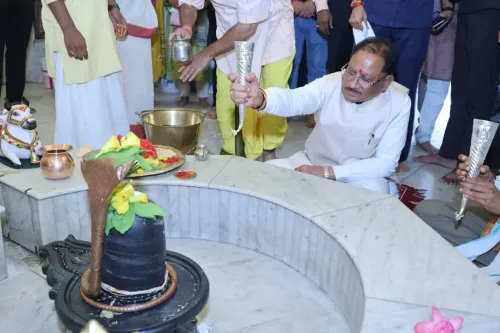
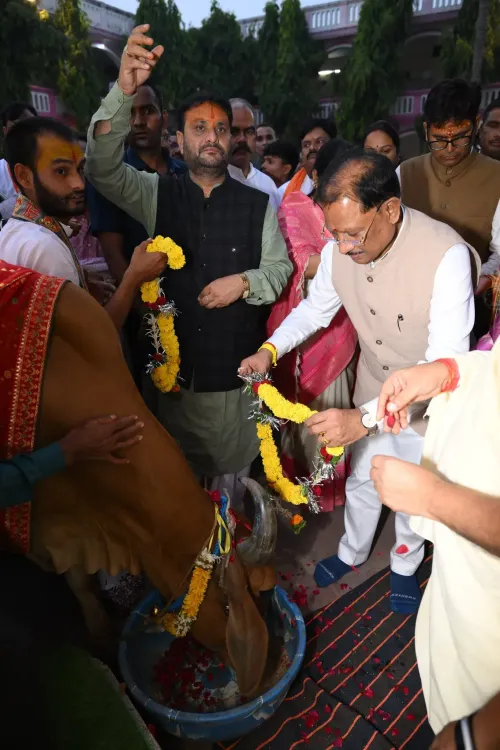
At the sacred precincts of Shivri Narayan Dham in Chhattisgarh, Chief Minister Vishnu Deo Sai offered a quiet but pointed affirmation of faith on Wednesday, 14 October 2026 — invoking two ancient Sanskrit verses that place the cow at the centre of dharmic life.
Posting from the temple complex, the Chief Minister shared the lines 'Gaavo vishwasya maatarah' (the cow is the mother of the world) and 'Gau seva paramo dharmah' (service to the cow is the highest duty) — a pairing drawn from classical Hindu scripture that BJP leaders have long cited to anchor cultural identity to governance.
Shivri Narayan Dham — a site of deep Chhattisgarhi devotion
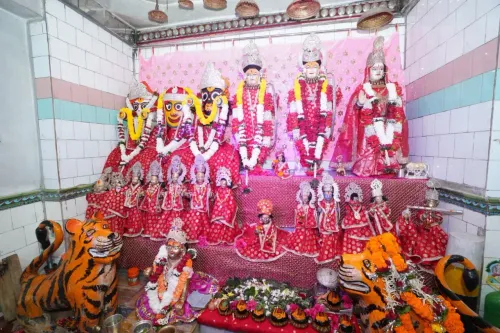
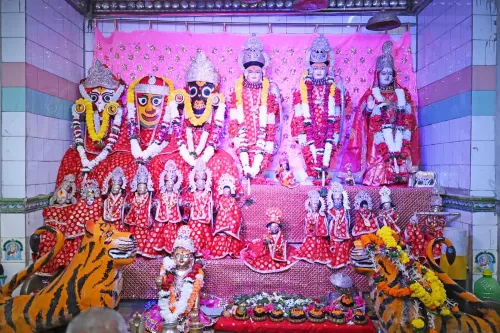
Shivri Narayan Dham is one of Chhattisgarh's most revered temple complexes, drawing pilgrims who regard it as spiritually significant within the broader Hindu tradition of the state. The Chief Minister's visit — accompanied by photographs from the site — signals a personal engagement with the religious calendar that his office regularly marks through such appearances.Cow reverence and the BJP's policy thread
The sentiment expressed is not merely cultural shorthand. The Rashtriya Gokul Mission, launched in 2014, embedded cow protection and the conservation of indigenous cattle breeds into national livestock policy — giving symbolic gestures like these a direct policy lineage. For BJP-governed states, temple visits paired with references to gau seva (cow service) serve a dual function: reinforcing cultural identity while signalling alignment with rural and farming constituencies for whom cattle remain central to livelihood. Chhattisgarh's livestock farmers and temple devotees form a natural audience for this kind of messaging — communities where the religious and the agricultural are rarely separated.Point of View
Which institutionalised cow protection as a development agenda. For a state like Chhattisgarh — with a significant rural and agrarian base — aligning the office of the Chief Minister with temple culture and livestock reverence is both symbolically potent and electorally calculated. Expect further appearances at religious sites as part of a sustained cultural visibility strategy.
NationPress
14 Oct 2026
Frequently Asked Questions
Where is Shivri Narayan Dham located?
Shivri Narayan Dham is a prominent Hindu temple complex located in Chhattisgarh, regarded as one of the state's most important pilgrimage sites.
What does 'Gaavo vishwasya maatarah' mean?
The Sanskrit phrase means 'the cow is the mother of the world' — a classical verse used to express the reverence for cows in Hindu tradition.
What is Rashtriya Gokul Mission?
The Rashtriya Gokul Mission is a central government scheme launched in 2014 to conserve indigenous cattle breeds and promote dairy development across India.
Who is Vishnu Deo Sai?
Vishnu Deo Sai is the Chief Minister of Chhattisgarh and a BJP leader who assumed office following the party's victory in the 2023 state assembly elections.
Why do BJP leaders visit temples and cite cow reverence?
BJP leaders regularly combine temple visits with cultural messaging around cow protection as part of the party's emphasis on Hindu cultural traditions, while also addressing rural and farming constituencies for whom cattle hold economic and religious significance.