Rajnath Singh pitches academia-industry-govt nexus for defence R&D

Synopsis
Defence Minister Rajnath Singh on October 14 called for academia, government, industry, alumni and philanthropy to jointly convert research into deployable solutions and nurture young talent, reinforcing India's Atmanirbhar Bharat indigenisation drive.
Key Takeaways
Union Defence Minister Rajnath Singh posted on October 14, 2026 advocating a five-pillar collaboration model for national development.
The five pillars identified are academia, government, industry, alumni and philanthropy — each playing a distinct role in translating research into solutions.
The call aligns with the Atmanirbhar Bharat framework launched in 2020 to reduce import dependence and boost indigenous defence R&D.
DRDO has already signed multiple MoUs with universities and private firms, but bridging lab research to deployable systems remains a persistent challenge.
Singh's emphasis on 'nurturing young talent' echoes the ministry's support for platforms such as iDEX , which funds defence-technology start-ups.
Next defence budget allocations for R&D consortia will be the key indicator of whether this vision translates into fresh funding commitments.
The bridge between a laboratory breakthrough and a battlefield-ready system has long been India's most stubborn gap — and Union Defence Minister Rajnath Singh on Wednesday, October 14, 2026, put that gap squarely in the public conversation with a pointed call for collective action.
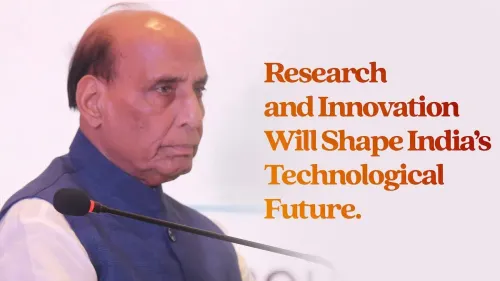
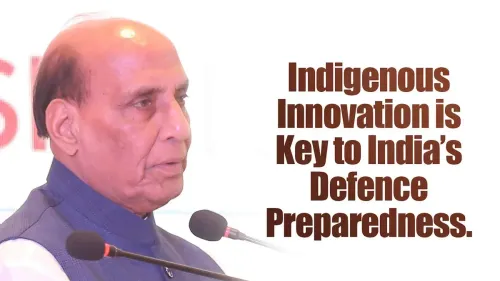
Singh's post argued that 'collaboration among academia, government, industry, alumni and philanthropy can turn research into real-world solutions, nurture young talent and drive national development.' The framing is deliberately broad — five distinct actors, one shared outcome — and it signals the ministry's continued push to move India's defence innovation ecosystem beyond siloed institutions.
Why the five-pillar formula matters for Indian defence
India's defence indigenisation drive has gathered momentum since the 2020 Atmanirbhar Bharat initiative redrew the rules of procurement: reduced import licences, negative import lists, and a mandated role for domestic industry. But the persistent challenge has been the last mile — converting credible research, often produced inside DRDO laboratories or university departments, into deployable systems at scale.
That gap is precisely where the five-pillar model Singh describes is meant to operate. Academia generates the knowledge. Government provides the regulatory runway and public funding. Industry brings manufacturing muscle. Alumni networks offer mentorship and seed capital. Philanthropy fills niches that neither the state budget nor commercial returns can justify. Together, they form a closed loop that individual institutions working alone rarely achieve.
A pattern built across successive defence budgets
The ministry's emphasis on public-private-academia partnerships is not new, but its urgency has sharpened. Successive defence budgets have earmarked growing shares for domestic R&D, and DRDO has signed a series of memoranda of understanding with Indian universities and private firms to co-develop everything from materials science to autonomous systems. Singh's post fits neatly into that arc — not as an isolated observation but as a recurring ministerial signal to the innovation community about where political will is pointing.
Young researchers and start-ups operating in the defence space will read the mention of 'nurturing young talent' as an endorsement of the iDEX (Innovations for Defence Excellence) model, which has funded hundreds of start-ups to prototype dual-use technologies. Whether the next defence budget translates this philosophy into fresh consortium grants or expanded iDEX tranches is the number that will ultimately matter.
Singh has been one of the most vocal advocates of rewriting India's defence-industrial identity — from a buyer to a builder. Wednesday's post is a reminder that the architecture he envisions runs through classrooms and incubators, not just factories.
Point of View
Repetition at the ministerial level is itself a signal of priority. The five-pillar framing is notable for explicitly including alumni networks and philanthropy alongside the more conventional government-industry-academia triad, suggesting the ministry is eyeing diaspora capital and institutional endowments as untapped levers for defence innovation. This sits within a broader BJP governance narrative that treats private and civil-society actors as co-investors in national security, not just beneficiaries of state contracts. The real test will come when the next budget opens: whether fresh consortium models or expanded start-up funding follow this rhetoric will determine whether October 2026 was a pivot or a platitude.
NationPress
14 Oct 2026
Frequently Asked Questions
What did Rajnath Singh say about defence research collaboration?
Rajnath Singh said that collaboration among academia, government, industry, alumni and philanthropy can turn research into real-world solutions, nurture young talent and drive national development.
What is Atmanirbhar Bharat and how does it relate to defence?
Atmanirbhar Bharat, launched in 2020 , is an initiative aimed at making India self-reliant by reducing import dependence and boosting indigenous manufacturing and R&D, particularly in the defence sector through public-private-academia partnerships.
What is DRDO's role in India's defence innovation ecosystem?
DRDO (Defence Research and Development Organisation) is India's primary defence R&D body. It has signed multiple MoUs with universities and private firms to co-develop indigenous defence technologies, though translating lab research into deployable systems at scale remains an ongoing challenge.
What is iDEX and how does it support young defence innovators?
iDEX, or Innovations for Defence Excellence, is a Ministry of Defence initiative that funds start-ups and individual innovators to prototype dual-use and defence-specific technologies, directly supporting the 'young talent' focus Singh highlighted.
Why does India want to indigenise its defence production?
India has historically been one of the world's largest arms importers. Indigenisation reduces foreign-exchange outflow, builds domestic industrial capacity, creates jobs and strengthens strategic autonomy — all core goals of the Atmanirbhar Bharat defence policy.