Rajnath Singh calls for whole-of-nation push on AI and drones
Synopsis
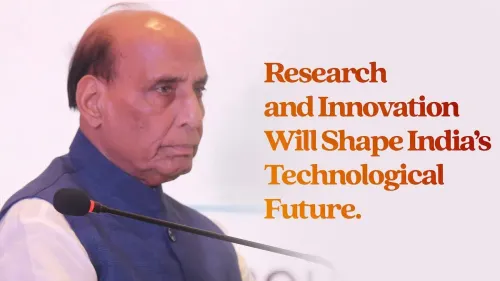
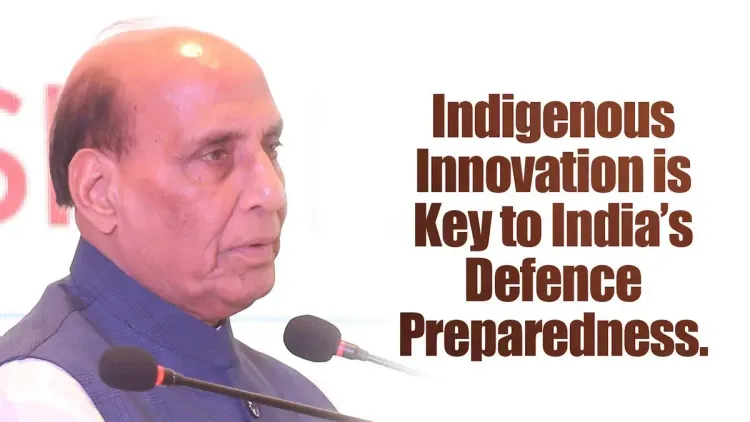
Union Defence Minister Rajnath Singh has called for a whole-of-nation approach — uniting the Armed Forces, DRDO, academia, industry and startups — to build indigenous capabilities in AI, autonomous systems, drones and cybersecurity, framing technological sovereignty as central to India's strategic autonomy.
Key Takeaways
Rajnath Singh identified AI, autonomous systems, drones and cybersecurity as the core domains India must indigenise for future warfare.
He called for a whole-of-nation approach linking the Armed Forces, DRDO, academia, industry and startups into a unified innovation ecosystem.
Bridging academic research with operational military needs was singled out as essential to accelerating defence innovation.
The push builds on the iDEX framework (2018) and the Atmanirbhar Bharat initiative (2020) , extending indigenisation to emerging technologies.
Strategic autonomy — reducing critical dependence on foreign military technology suppliers — is the stated end-goal of the approach.
Key signals to watch include new iDEX challenge rounds and budget allocations shifting from platform procurement to technology development .
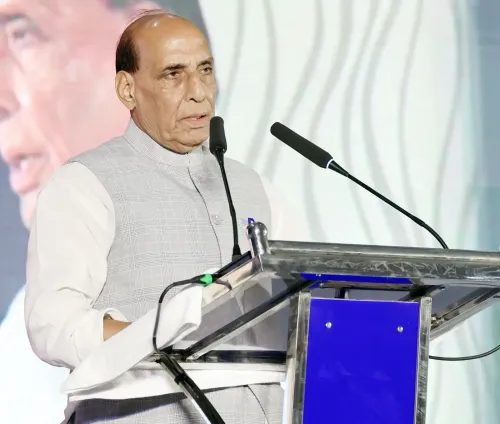
The battlefield of tomorrow will be won long before the first shot is fired — in laboratories, startup garages, and university research centres. Union Defence Minister Rajnath Singh on Wednesday, October 14, 2026 laid out a sweeping vision for India's defence innovation architecture, arguing that indigenous mastery of AI, autonomous systems, drones and cybersecurity is no longer optional — it is existential.
The bridge between labs and battlefields
At the core of Singh's message is a structural argument: India's defence edge will only sharpen if academic research stops existing in a silo separate from what the armed forces actually need on the ground. 'Bridging academic research with the operational needs of the Armed Forces and the requirements of industry is essential to accelerating defence innovation,' Singh wrote, identifying a gap that policymakers have long acknowledged but struggled to close.
The Defence Research and Development Organisation (DRDO), India's primary military R&D agency, has historically been the main conduit between science and the services. But Singh's framing explicitly extends that ecosystem outward — to private industry and, critically, to startups — signalling that the state-centric model alone cannot keep pace with the speed of modern technological disruption.
iDEX, Atmanirbhar Bharat, and the policy arc behind the post
Singh's remarks do not emerge in a vacuum. The architecture he is describing has been under construction for nearly a decade. The iDEX (Innovations for Defence Excellence) framework, launched in 2018, was designed precisely to pull startups and academic institutions into defence problem-solving through open innovation challenges. The Atmanirbhar Bharat initiative, announced in 2020, then gave political and budgetary weight to indigenisation, with successive positive indigenisation lists progressively restricting imports of systems India can produce at home.
What Singh is articulating now is the next-generation layer of that same logic — moving from hardware indigenisation to emerging-technology sovereignty in domains like autonomous systems and cyber, where the lead times for capability-building are measured in years and where no off-the-shelf import can substitute for homegrown expertise.
Why 'whole-of-nation' is the operative phrase
The phrase 'whole-of-nation approach' is doing significant work in Singh's statement. It implicitly concedes that no single institution — not DRDO, not the armed forces, not even the private sector alone — can deliver the technological stack modern warfare demands. The five pillars Singh names — Armed Forces, DRDO, academia, industry and startups — map onto a distributed innovation model closer to what the United States and Israel have deployed to maintain military-technological leads.
For India, the challenge is coordination. Each of those five pillars operates under different incentive structures, procurement timelines and security protocols. Getting them to pull in the same direction — fast enough to matter — is the hard governance problem sitting underneath Singh's vision statement.
Strategic autonomy as the end goal
Singh frames the entire push around two objectives: India's 'technological edge' and its 'strategic autonomy.' The second phrase carries weight far beyond the defence ministry. A country that depends on foreign suppliers for critical military technology is, in a crisis, only as sovereign as those suppliers allow. From drone swarms to AI-enabled command systems to cyber-warfare tools, the next generation of military capability is precisely where India's current import exposure is sharpest — and where indigenisation delivers the highest strategic dividend.
The next concrete signals to watch: new iDEX challenge rounds targeting autonomous systems, any revision to tri-service doctrine on drone and AI integration, and defence budget allocations that reflect the shift from platform procurement to technology development. Singh has drawn the map. The distance between vision and verified capability is what the coming months will measure.
Point of View
The services and the private sector — that the pace of India's defence-technology transition needs to accelerate. It reinforces a decade-long policy arc from iDEX to Atmanirbhar Bharat, but the explicit emphasis on AI and autonomous systems marks an upgrade in ambition: from reducing import bills to contesting the frontier of military technology. The 'whole-of-nation' framing also carries a quiet rebuke of institutional silos that have historically slowed DRDO-to-field timelines. Whether this translates into binding procurement commitments or new institutional mechanisms for civil-military tech fusion will determine if the vision has operational teeth.
NationPress
14 Oct 2026
Frequently Asked Questions
What did Rajnath Singh say about India's defence technology?
Rajnath Singh called for a whole-of-nation approach to build indigenous capabilities in AI, autonomous systems, drones and cybersecurity, arguing that bridging academic research with armed forces' operational needs is essential for defence innovation and strategic autonomy.
What is iDEX and how does it relate to Rajnath Singh's statement?
iDEX (Innovations for Defence Excellence), launched in 2018, connects startups and academic institutions with defence requirements through open innovation challenges. Singh's vision directly builds on this framework by extending it to frontier technologies like AI and autonomous systems.
What is India's Atmanirbhar Bharat defence policy?
Atmanirbhar Bharat, announced in 2020, is India's self-reliance initiative that includes positive indigenisation lists restricting defence imports and pushing domestic production. Singh's latest remarks extend this logic into AI, drones and cybersecurity domains.
Why is strategic autonomy important for India's defence?
Strategic autonomy means India should not depend on foreign suppliers for critical military technologies, as such dependence can limit operational options in a crisis. Singh cited it as a key goal of building indigenous capabilities in next-generation military domains.
What role does DRDO play in India's defence innovation?
DRDO (Defence Research and Development Organisation) is India's primary military R&D agency under the Ministry of Defence. Singh's vision expands the innovation ecosystem beyond DRDO to include private industry, startups and academia working in coordination with the armed forces.