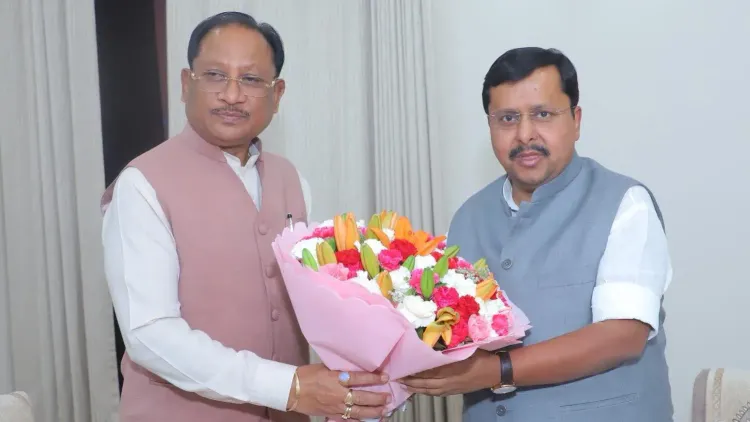
CM Vishnu Deo Sai meets BJP national chief in New Delhi
Synopsis
Chhattisgarh Chief Minister Vishnu Deo Sai held a meeting with BJP national president Nitin Nabin in New Delhi, discussing organisational matters and the state's development agenda with a focus on welfare for farmers, youth, women, and the poor.
Key Takeaways
Chhattisgarh Chief Minister Vishnu Deo Sai met BJP national president Nitin Nabin in New Delhi on 27 May 2026 .
Discussions covered organisational matters and strategies to accelerate Chhattisgarh's development .
Welfare priorities for farmers, youth, women (Matrishakti), and the poor were central to the agenda.
The BJP has governed Chhattisgarh since December 2023 , with CM Sai as the state's first tribal chief minister in the current term.
Such meetings typically precede coordinated state-centre announcements on welfare schemes and development projects .
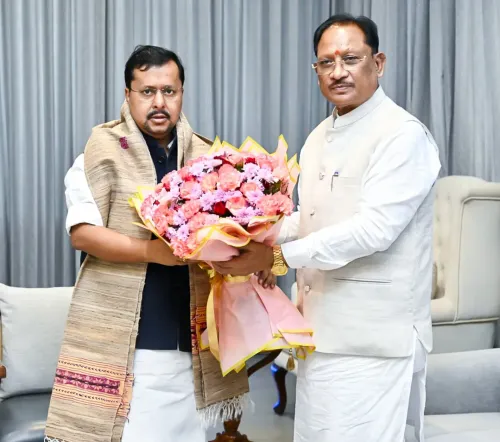
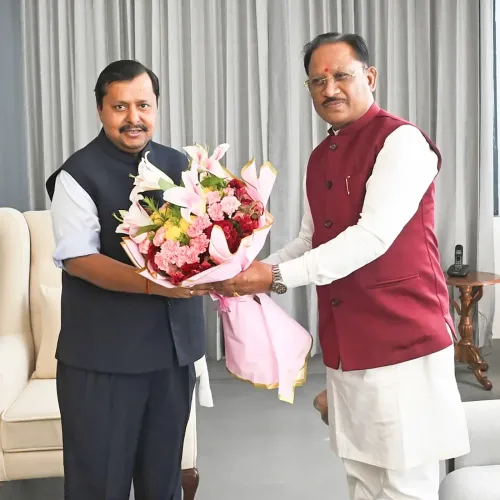
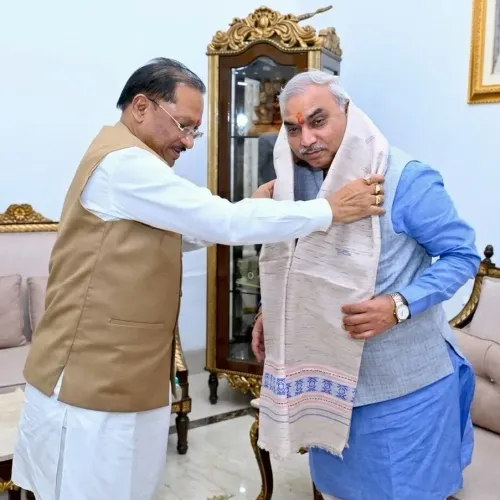
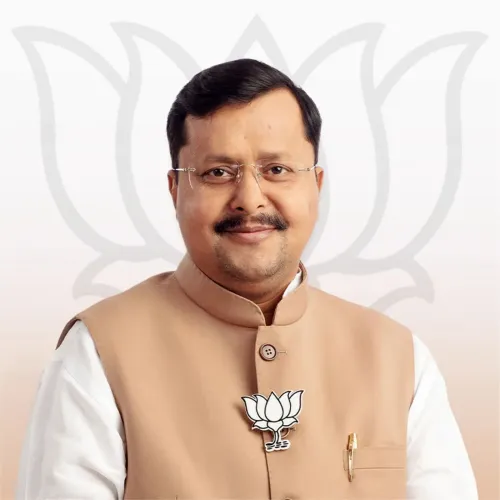
Chhattisgarh Chief Minister Vishnu Deo Sai met Bharatiya Janata Party national president Nitin Nabin in New Delhi on Tuesday, 27 May 2026, during an official visit to the capital. The two leaders held wide-ranging discussions covering organisational matters and the state's development agenda. The meeting underscored the ruling party's continued focus on aligning state governance with central priorities for welfare and growth.
Context
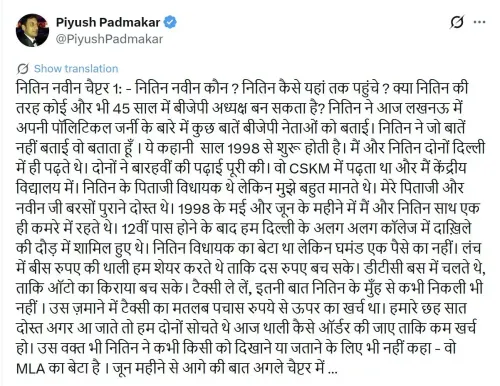
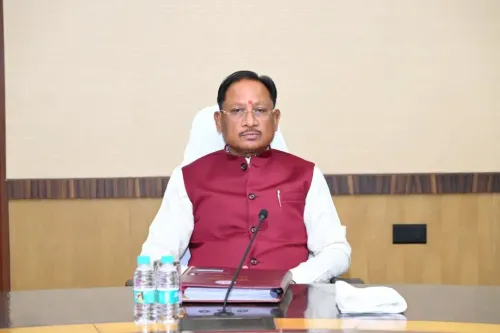
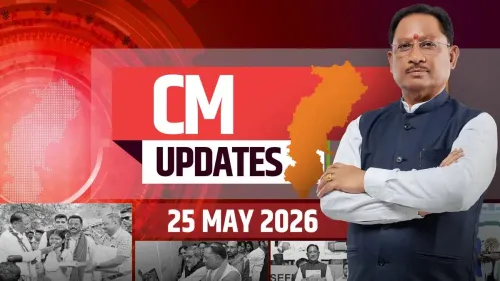
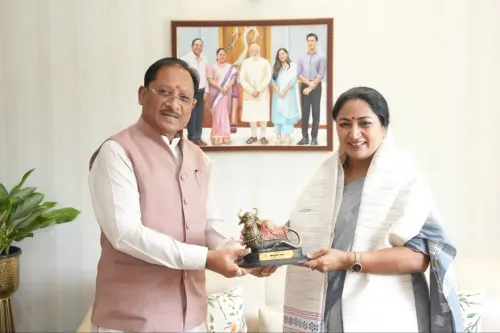
Posting on X, Chief Minister Sai described the encounter as a warm, cordial meeting — 'आत्मीय भेंट' ('a heartfelt meeting') — held during his New Delhi visit. He noted that discussions ranged across organisational subjects as well as ways to 'give new momentum to Chhattisgarh's development' and welfare issues linked to the poor, farmers, youth, and women — referred to in the post as 'मातृशक्ति' ('mother power', a term commonly used for women's empowerment). The post was accompanied by four photographs from the meeting.
Policy Backdrop
The BJP swept back to power in Chhattisgarh in December 2023, ending a five-year gap in the party's rule of the mineral-rich, largely tribal central Indian state. Since assuming office, Chief Minister Sai — himself a prominent tribal leader — has anchored the administration's agenda around farmer income support, youth employment, and women-centric welfare programmes. Regular consultations between state chief ministers and the national party leadership are a standard feature of BJP's organisational culture, used to synchronise state budgets and welfare rollouts with the Centre's flagship schemes.
Chhattisgarh's development priorities include infrastructure expansion in its Bastar and Surguja regions, paddy procurement at minimum support price for farmers, and skill development initiatives for young people. Any directives or consensus emerging from such high-level organisational meetings can directly shape forthcoming cabinet decisions and budgetary allocations in the state.
Stakeholders and Impact
The four constituencies explicitly named in the discussion — the poor, farmers, youth, and women — together represent the core voter base the BJP has cultivated in Chhattisgarh. Farmers form a significant portion of the state's rural economy, while tribal communities and women's self-help groups have been targeted through multiple welfare delivery mechanisms since the new government took office. Youth unemployment and skill-gap concerns have also figured prominently in the state's policy discourse.
Decisions taken at such organisational meetings often feed into coordinated announcements between state ministries and central government departments, potentially unlocking additional funds or scheme extensions for the state.
What's Next
Political observers will watch for follow-up cabinet decisions or budgetary announcements in Chhattisgarh that may reflect the outcomes of Tuesday's discussions. Coordinated announcements with central ministries on state-specific infrastructure or welfare projects are a likely next step. The meeting also signals that organisational consolidation ahead of any future electoral cycle remains firmly on the party's agenda in the state.
Point of View
Where state and central leadership align on both electoral messaging and policy delivery. For Chhattisgarh, which returned to BJP rule only in late 2023, such consultations serve the dual purpose of reinforcing organisational discipline and fast-tracking welfare commitments made during the election campaign. The explicit mention of farmers, youth, women, and the poor signals that the party is conscious of consolidating its social coalition ahead of any future electoral test. This pattern of high-visibility organisational engagement also helps the state government project momentum on development even between major policy announcements.
NationPress
10 Oct 2026
Frequently Asked Questions
Why did Chhattisgarh CM Vishnu Deo Sai visit New Delhi in May 2026?
Chief Minister Vishnu Deo Sai visited New Delhi and met BJP national president Nitin Nabin to discuss organisational matters and strategies to accelerate Chhattisgarh's development, with a focus on welfare for farmers, youth, women, and the poor.
Who is Nitin Nabin and what is his role in BJP?
Nitin Nabin is the national president of the Bharatiya Janata Party. In this capacity he coordinates with state chief ministers and party units on governance priorities and organisational matters.
What issues were discussed between CM Sai and the BJP national president?
The discussions covered organisational subjects, giving new momentum to Chhattisgarh's development, and welfare topics related to the poor, farmers, youth, and women.
When did Vishnu Deo Sai become Chief Minister of Chhattisgarh?
Vishnu Deo Sai assumed office as Chief Minister of Chhattisgarh in December 2023 after the BJP's victory in the state assembly elections.
What are Chhattisgarh's main development priorities under the BJP government?
The BJP government in Chhattisgarh has focused on farmer income support, youth employment and skill development, women-centric welfare programmes, and infrastructure expansion in regions such as Bastar and Surguja.