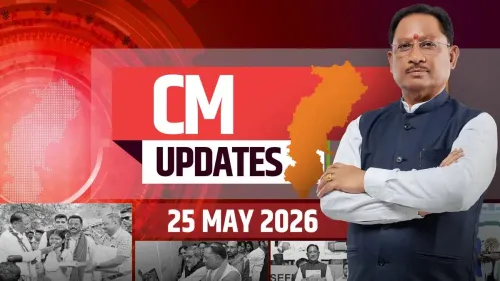
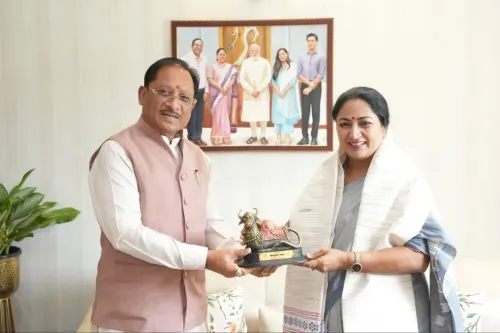
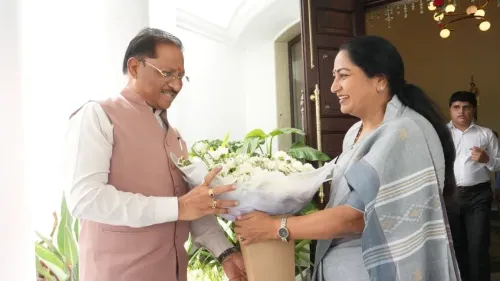
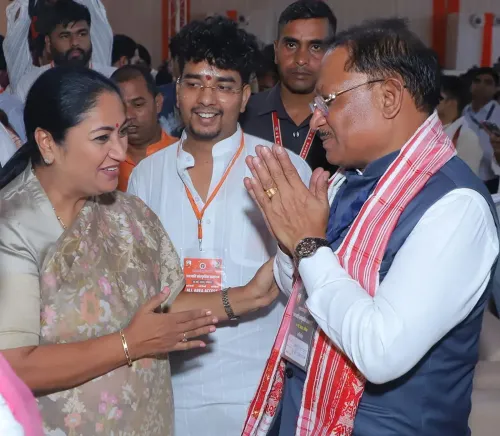
CM Rekha Gupta meets Chhattisgarh CM Vishnu Deo Sai in Delhi
Synopsis
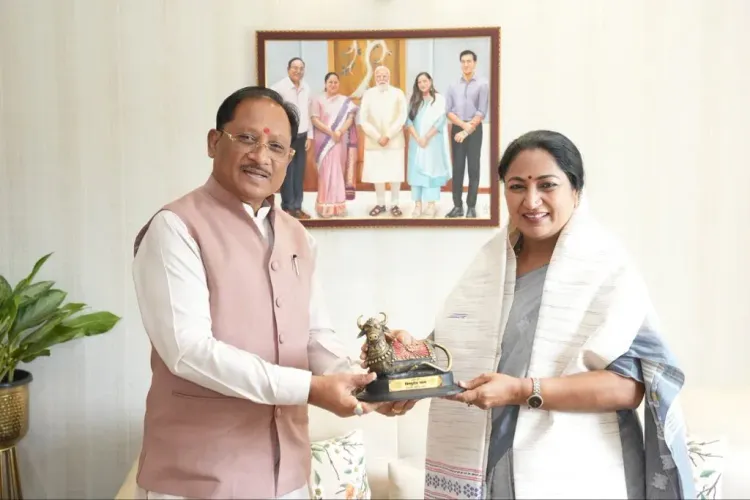
Delhi Chief Minister Rekha Gupta met Chhattisgarh CM Vishnu Deo Sai on 25 May 2026 for a courtesy meeting focused on inter-state cooperation and development. Both BJP leaders discussed advancing their shared Viksit Bharat goals, signalling possible future collaboration on energy, welfare, and trade.
Key Takeaways
Delhi CM Rekha Gupta held a courtesy meeting with Chhattisgarh CM Vishnu Deo Sai on 25 May 2026 .
Discussions focused on promoting mutual cooperation and development across 'various dimensions' between the two states.
Both leaders are from the BJP and referenced the national Viksit Bharat goal as a shared framework.
Vishnu Deo Sai has served as Chhattisgarh CM since December 2023 , following the BJP's victory in the state assembly elections.
No formal agreements or MoUs were announced at the time of the meeting.
Potential follow-up areas include energy supply, labour migration, and welfare scheme coordination between Delhi and Chhattisgarh .
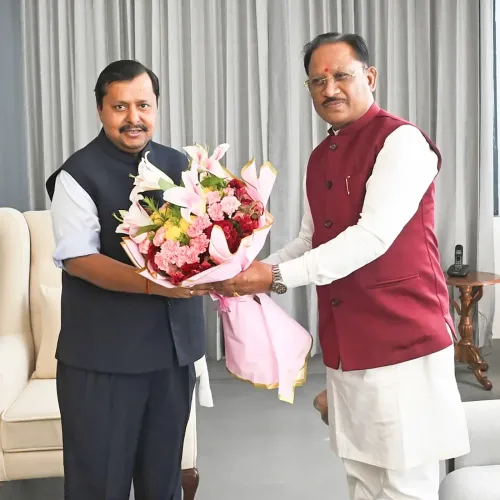
Delhi Chief Minister Rekha Gupta held a courtesy meeting with Chhattisgarh Chief Minister Vishnu Deo Sai on Monday, 25 May 2026, with discussions centred on strengthening inter-state cooperation and exploring avenues of mutual development.
Context
Gupta posted about the meeting on X, writing in Hindi: 'छत्तीसगढ़ के माननीय मुख्यमंत्री श्री Vishnu Deo Sai जी से शिष्टाचार भेंट हुई' ('Had a courtesy meeting with the Honourable Chief Minister of Chhattisgarh, Shri Vishnu Deo Sai'). She added that the two leaders held 'detailed and positive discussions on various dimensions of development and promoting mutual cooperation between both states.'
Both chief ministers are from the Bharatiya Janata Party (BJP), and the meeting reflects a pattern of inter-state engagement that BJP-governed states have pursued in recent years under the framework of cooperative federalism.
Policy Backdrop
The BJP has championed a 'double engine' governance model since 2014, aimed at aligning central and state policy priorities for faster delivery of development outcomes. Meetings between BJP chief ministers routinely invoke the national goal of Viksit Bharat — a developed India by 2047 — as a shared benchmark.
Chhattisgarh, a mineral-rich state in central India, returned a BJP government in the 2023 assembly elections, with Vishnu Deo Sai sworn in as Chief Minister in December 2023. Delhi, the National Capital Territory, has been governed by the BJP since early 2025, with Rekha Gupta assuming the chief ministership following the party's victory.
Gupta noted in her post that 'the sustained development and mutual cooperation of both states will further accelerate our shared goal of a Viksit Bharat.'
Stakeholders and Impact
Residents of both Delhi and Chhattisgarh stand to benefit if the discussions translate into formal agreements on areas such as energy supply, labour migration management, trade facilitation, or welfare scheme alignment. Delhi is a major destination for migrant workers from Chhattisgarh, making coordination on social welfare and infrastructure directly relevant to both populations.
The meeting also carries symbolic weight, reinforcing the BJP's messaging around intra-party and inter-state cohesion ahead of upcoming policy cycles and budget deliberations in both states.
What's Next
No formal agreements or memoranda of understanding were announced at the time of the meeting. Follow-up steps, if any, are expected to emerge through official state-level communications or budget announcements in the coming months.
Observers will watch whether this courtesy call leads to concrete bilateral frameworks on energy, urban migration, or resource-sharing — areas where Delhi and Chhattisgarh have natural complementarities given the latter's coal and power generation capacity and the former's large urban demand base.
Point of View
Reinforcing the party's 'double engine' governance narrative ahead of policy cycles in both states. By invoking Viksit Bharat, both leaders align their bilateral engagement with the central government's flagship long-term vision, lending it national resonance beyond local optics. For Delhi, which depends on states like Chhattisgarh for power and hosts a large Chhattisgarhi migrant population, such diplomatic courtesies can lay groundwork for practical administrative coordination. The absence of any announced outcomes keeps expectations measured, but the meeting signals a willingness to formalise ties that could mature into MoUs on energy or welfare in the near term.
NationPress
15 Sept 2026
Frequently Asked Questions
Why did Delhi CM Rekha Gupta meet Chhattisgarh CM Vishnu Deo Sai?
The two chief ministers held a courtesy meeting on 25 May 2026 to discuss inter-state cooperation and development, with both referencing the shared national goal of Viksit Bharat.
Who is Vishnu Deo Sai?
Vishnu Deo Sai is the BJP Chief Minister of Chhattisgarh, having assumed office in December 2023 following the party's victory in the state assembly elections.
What is Viksit Bharat?
Viksit Bharat is the Indian central government's goal of making India a fully developed nation by 2047, the centenary of independence. BJP-governed states frequently cite it as a shared policy benchmark.
Did Delhi and Chhattisgarh sign any agreement at this meeting?
No formal agreements or memoranda of understanding were announced following the 25 May 2026 meeting between the two chief ministers.
What areas of cooperation could Delhi and Chhattisgarh pursue?
Potential areas include energy supply — Chhattisgarh is a major coal and power-producing state — along with labour migration management and welfare scheme coordination, given the large number of Chhattisgarhi workers residing in Delhi.