CM Dhami makes canal irrigation fully free for Uttarakhand farmers
Synopsis
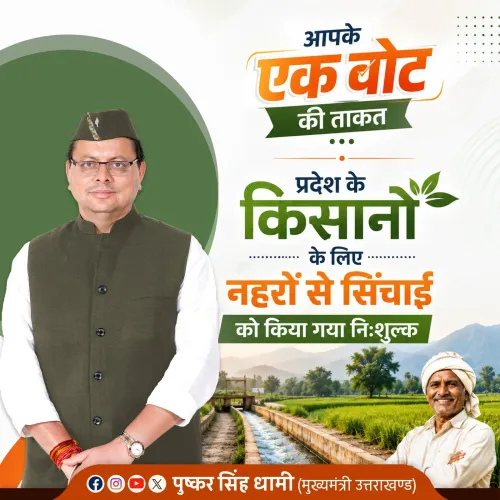
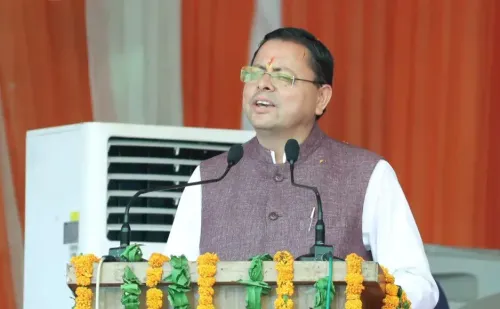
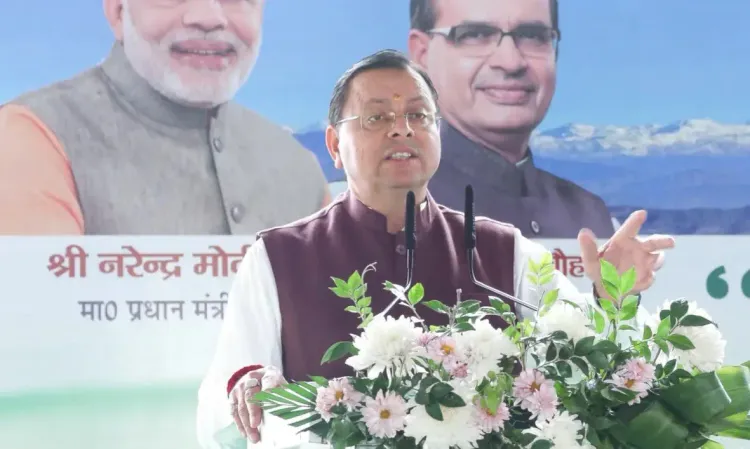
Chief Minister Pushkar Singh Dhami has announced that canal irrigation will be fully free for Uttarakhand farmers, framing the move as part of PM Modi's vision to make agriculture profitable and cut input costs for small and marginal cultivators.
Key Takeaways
CM Pushkar Singh Dhami announced on 30 October 2026 that canal irrigation across Uttarakhand is now completely free for farmers.
The move directly reduces input costs for small and marginal farmers in canal-fed plains such as Haridwar and Udham Singh Nagar .
The decision is aligned with the central Pradhan Mantri Krishi Sinchayee Yojana launched in 2015 to improve water access and efficiency.
CM Dhami cited PM Narendra Modi's farmer-income agenda as the inspiration for the policy.
Specific eligibility coverage, canal network scope, and fiscal impact figures have not yet been officially detailed.
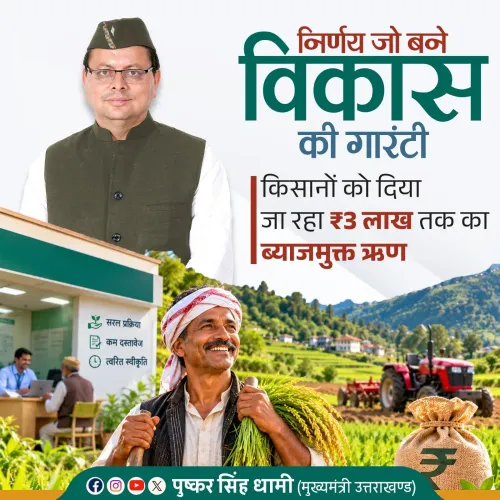
Uttarakhand's farmers just had one of their biggest input costs wiped off the ledger. Chief Minister Pushkar Singh Dhami announced on Friday, 30 October 2026 that canal irrigation across the state has been made completely free — a direct relief measure aimed at making farming financially viable in a state where terrain has always made agriculture a hard bet.
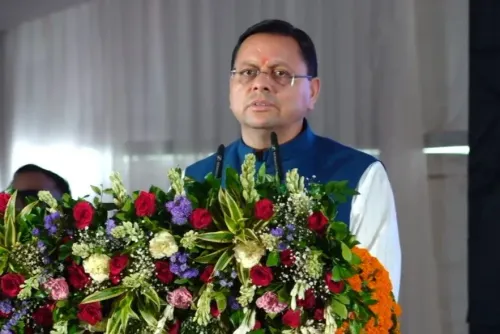
Quoting the Chief Minister's Office of Uttarakhand, the post carried CM Dhami's words: 'Aadaraniya Pradhanmantri ji ki prerna se hamari sarkar kheton ko sashakt banane aur kheton ko labhakaari banane ki disha mein nirantar kary kar rahi hai. Isi ke tahat nahaaron se sinchai poori tarah muft kar di gayi hai.' — 'Inspired by the honourable Prime Minister, our government is continuously working towards empowering farms and making them profitable. Towards this end, irrigation from canals has been made entirely free.'
What free canal irrigation means for Uttarakhand's cultivators
Uttarakhand's agricultural economy is split across hilly terrains and fertile valley plains. In the plains and lower valleys — districts like Haridwar, Udham Singh Nagar, and Dehradun — canal networks are the lifeline for paddy, wheat, and sugarcane cultivation. Irrigation charges, however modest in isolation, compound across a season and push small and marginal farmers — who form the overwhelming majority of the state's agricultural households — deeper into debt or away from cultivation altogether.
By eliminating canal irrigation fees entirely, the Dhami government removes a recurring cash outflow from some of the state's most economically vulnerable households. The move aligns with the state's participation in the Pradhan Mantri Krishi Sinchayee Yojana, the 2015 central scheme designed to expand irrigation coverage and improve water-use efficiency across India.
Dhami frames the step as Modi's farm-income vision in action
CM Dhami explicitly positions this decision within Prime Minister Narendra Modi's broader national agenda of doubling farmer incomes and cutting agricultural input costs — a political framing that other BJP-governed states have also used when rolling out power subsidies, water relief, and procurement guarantees for small cultivators. It signals that the state views this not as a standalone gesture but as part of a sustained policy direction.
What remains to be detailed publicly are the specific eligibility criteria, the precise canal network covered, and the revenue impact on the state's irrigation department — figures that will ultimately determine the scheme's real-world reach when a formal government order is issued.
For farmers waiting in the fields this Rabi season, though, the message from Dehradun is unambiguous: turn on the water, and the bill is gone.
Point of View
Visible state-level action — particularly effective ahead of any electoral cycle. Eliminating canal fees is a low-bureaucracy, high-visibility relief measure that directly targets the cost-side of farming without requiring complex targeting machinery. However, the long-term sustainability of the move hinges on how the state compensates its irrigation department for lost revenue, and whether canal infrastructure itself receives adequate maintenance funding — a question that prior subsidy regimes in other states have struggled to answer. If followed through with a robust government order and maintenance budget, it could meaningfully ease the burden on Uttarakhand's predominantly small and marginal farming households.
NationPress
30 Oct 2026
Frequently Asked Questions
Has Uttarakhand made canal irrigation free for farmers?
Yes. Chief Minister Pushkar Singh Dhami announced on 30 October 2026 that irrigation from canals across Uttarakhand has been made completely free for farmers.
Which farmers in Uttarakhand benefit from free canal irrigation?
The announcement targets farmers who rely on state canal networks, primarily in plains and valley districts like Haridwar, Udham Singh Nagar, and Dehradun. Specific eligibility criteria are yet to be detailed in an official government order.
What is Pradhan Mantri Krishi Sinchayee Yojana and how does it relate?
Pradhan Mantri Krishi Sinchayee Yojana is a central government scheme launched in 2015 to expand irrigation coverage and improve water-use efficiency. Uttarakhand's free canal irrigation decision aligns with this scheme's goals of reducing input costs for cultivators.
Why did CM Dhami cite PM Modi in the canal irrigation announcement?
CM Dhami framed the decision as inspired by Prime Minister Narendra Modi's national agenda of doubling farmer incomes and making agriculture more profitable — a political framing common across BJP-governed states when rolling out agricultural relief measures.
What are the next steps after Uttarakhand's free canal irrigation announcement?
The key steps to watch are the issuance of a formal government order detailing eligibility, the canal network covered, and budget allocations for canal maintenance to ensure the scheme is sustainable over time.