CM Dhami: Modi govt building roads, water links in Uttarakhand border villages
Synopsis
Chief Minister Pushkar Dhami has reaffirmed that the Uttarakhand government, guided by PM Narendra Modi, is expanding roads, drinking water, health and education infrastructure to the state's most remote border and mountain villages, citing multiple central schemes as the backbone of this push.
Key Takeaways
CM Pushkar Dhami on 4 July 2026 stated that the Uttarakhand government is working under PM Narendra Modi's guidance to strengthen basic infrastructure statewide.
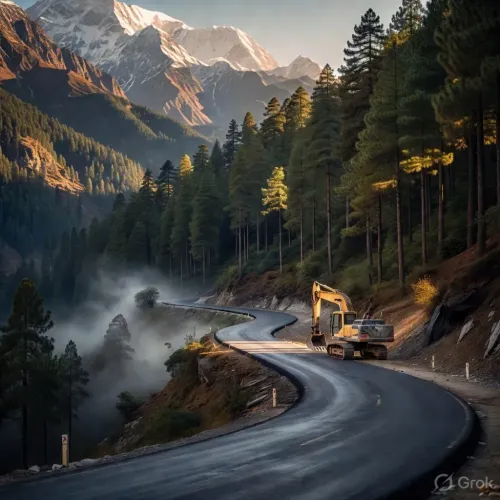
The declared focus areas are roads, education, health, and drinking water — from urban centres to far-flung border and mountain villages.
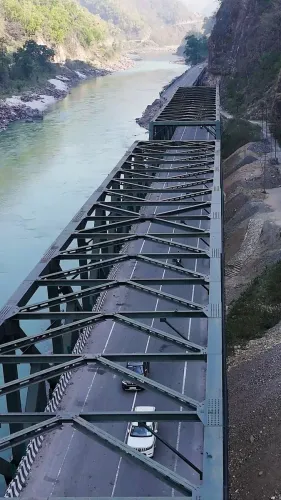
Key central schemes driving the push include the Char Dham Pariyojana (roads), Pradhan Mantri Gram Sadak Yojana Phase-II (rural connectivity), and Jal Jeevan Mission (tap water).
Uttarakhand's border districts — including Chamoli, Pithoragarh, Uttarkashi and Champawat — are the primary beneficiary communities cited in policy planning.
No new scheme or specific project completion figure was announced; the statement reaffirms ongoing policy direction.
Progress data and utilisation certificates for 2026-27 projects will be the next key accountability marker.
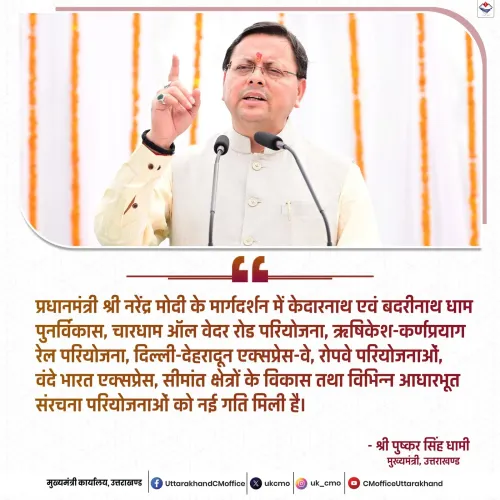
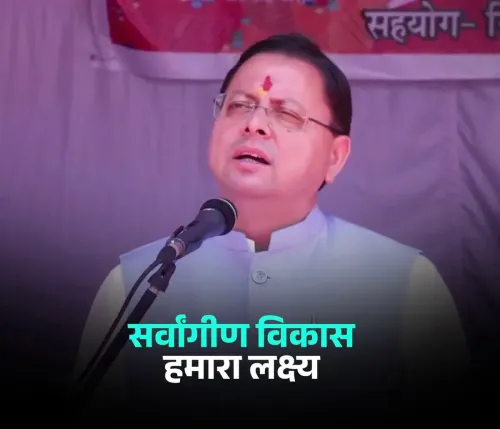
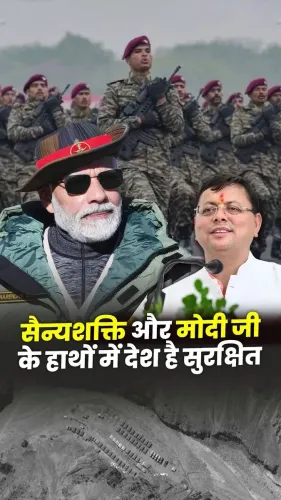
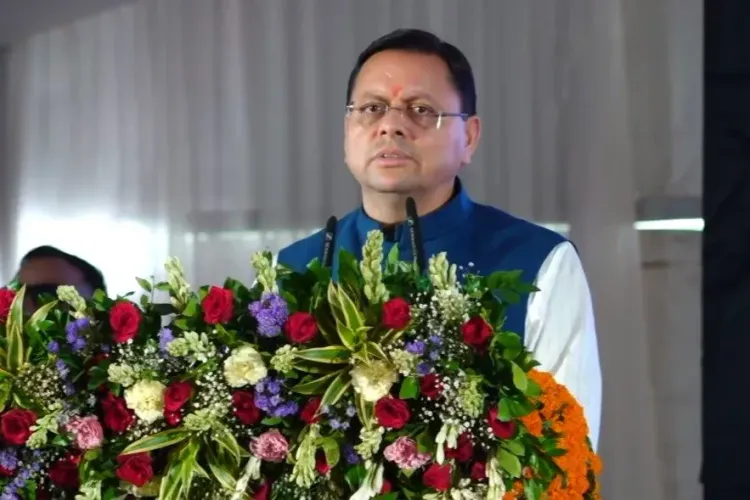
The Chief Minister's Office of Uttarakhand on Saturday, 4 July 2026, shared a statement from Chief Minister Pushkar Singh Dhami reaffirming the state government's commitment to strengthening basic infrastructure — roads, education, health, and drinking water — across urban centres as well as remote border and mountain villages, under the guidance of Prime Minister Narendra Modi.
Context
In the post, CM Dhami stated: 'हमारी सरकार आदरणीय प्रधानमंत्री श्री नरेंद्र मोदी जी के मार्गदर्शन में निरंतर कार्य कर रही है' ['Our government is continuously working under the guidance of respected Prime Minister Shri Narendra Modi']. He added that the framework of essential services — from roads to drinking water — is being strengthened from cities to the most distant border and mountain villages of the state.
The statement is notable for its explicit mention of 'sududoor seemavarti aur parvateey gaon' — far-flung border and hill villages — signalling that last-mile delivery remains a declared priority of the Dhami government in Uttarakhand.
Policy Backdrop
Several central government programmes underpin the infrastructure push the CM referenced. The Char Dham Pariyojana, announced in 2016, has been upgrading strategic road corridors across Uttarakhand's hilly districts, with dual civilian and strategic utility. Pradhan Mantri Gram Sadak Yojana Phase-II, expanded from 2015, targets connectivity for remote habitations that remain cut off during winter months.
On drinking water, the Jal Jeevan Mission — launched in 2019 — has been the primary vehicle for extending tap-water connections to rural households, including those in Uttarakhand's high-altitude and border-adjacent districts. Health infrastructure in border areas has similarly seen increased allocations under Ayushman Bharat and the National Health Mission since 2018, covering district hospitals and primary health centres.
Uttarakhand has been a consistent recipient of central capital expenditure in these sectors owing to its difficult topography, sparse population density, and its international borders with China and Nepal.
Stakeholders and Impact
The communities most directly affected are the estimated lakhs of residents in Uttarakhand's border districts — including those in Chamoli, Pithoragarh, Uttarkashi, and Champawat — who have historically faced the steepest deficits in connectivity and public services. Improved road access directly lowers the cost of essential goods, reduces medical emergency response times, and expands children's access to secondary schools.
Border villages also carry strategic significance: sustained habitation in these communities is seen by planners as essential to India's border management posture, making infrastructure investment a convergence point of welfare and national security policy.
What's Next
Analysts and civil society groups tracking the state's development spending will look for the release of utilisation certificates and physical progress data for ongoing road and water projects in Uttarakhand's border districts during the 2026-27 budget cycle. The CM's statement, while reaffirming intent, does not announce a new scheme or specific project milestone — making ground-level progress reports the next meaningful accountability checkpoint.
With assembly elections on the political horizon, the frequency and specificity of such infrastructure messaging from the Chief Minister's Office is likely to increase, placing greater scrutiny on the gap between declared ambition and measurable delivery on the ground.
Point of View
The messaging targets a constituency that has long felt peripheral to state development plans, and where even modest visible progress carries outsized political weight. The invocation of four pillars — roads, education, health, drinking water — mirrors the BJP's broader 'vikas' communication template deployed across Hindi-belt states. The real test will be whether the 2026-27 budget cycle produces verifiable physical progress data to substantiate the claim, or whether the statement remains aspirational.
NationPress
3 Oct 2026
Frequently Asked Questions
What infrastructure work is the Uttarakhand government doing in border villages?
The Uttarakhand government, as stated by CM Pushkar Dhami on 4 July 2026, is working to strengthen roads, education facilities, health centres, and drinking water supply in remote border and mountain villages, primarily through central schemes such as the Char Dham Pariyojana, Pradhan Mantri Gram Sadak Yojana, and Jal Jeevan Mission.
What is the Jal Jeevan Mission and how does it apply to Uttarakhand?
The Jal Jeevan Mission, launched in 2019, aims to provide tap-water connections to every rural household in India. In Uttarakhand, it covers high-altitude and border-adjacent villages that previously lacked piped water supply.
What is the Char Dham Pariyojana?
The Char Dham Pariyojana, announced in 2016, is a central government project to upgrade and widen strategic road corridors in Uttarakhand connecting the four major pilgrimage sites, with dual civilian and strategic defence utility.
Why does Uttarakhand receive special focus for border infrastructure?
Uttarakhand shares international borders with China and Nepal. Sustained habitation and connectivity in its border villages is considered essential both for welfare and for India's border management posture, making the state a consistent priority for central infrastructure funding.
Has CM Dhami announced any new scheme for Uttarakhand villages in July 2026?
No new scheme was announced. The 4 July 2026 statement reaffirmed the government's ongoing commitment to infrastructure delivery under existing central programmes; no specific new project or completion milestone was cited.