CM Dhami Honours Soldiers and Farmers as Pillars of India
Synopsis
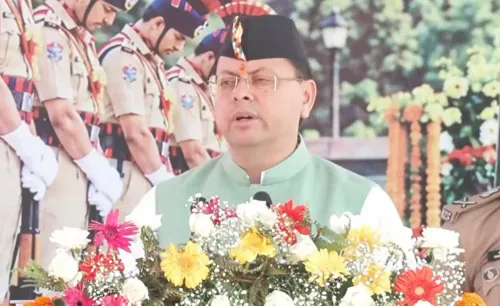
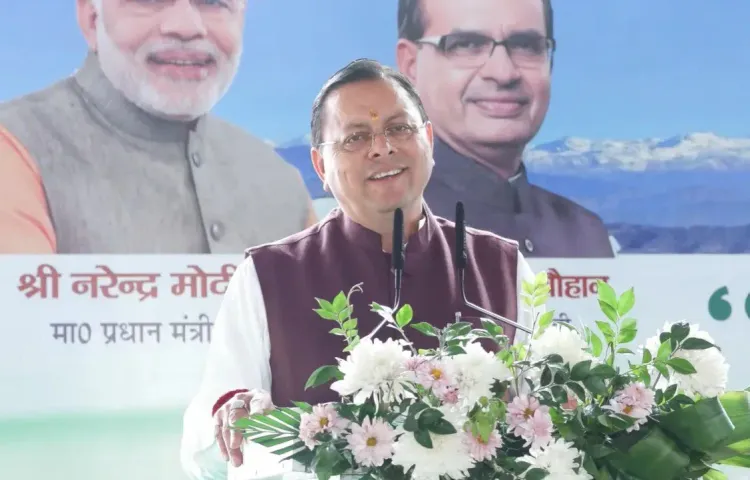
Uttarakhand Chief Minister Pushkar Singh Dhami honoured India's border soldiers and farmers in a statement shared by the CMO on October 30, 2026, calling them the twin pillars of national security and food sovereignty.
Key Takeaways
CM Pushkar Singh Dhami issued a tribute on October 30, 2026 crediting soldiers and farmers as the foundations of India's security and food supply.
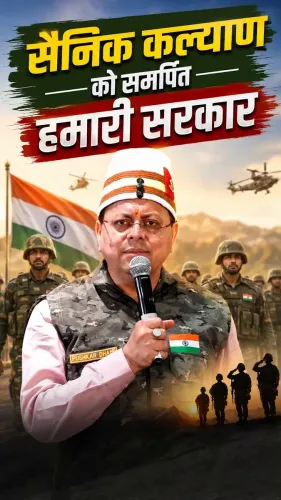
Dhami said if India is secure, the credit belongs to soldiers standing guard at the borders 'day and night.' He credited farmers — calling them annadata (givers of grain) — for keeping the nation's grain reserves rich.
Uttarakhand shares borders with China and Nepal and is among India's highest per-capita military recruitment states, giving the tribute particular local resonance.
The statement aligns with a national policy emphasis on both defence self-reliance and farmer dignity.
Two groups quietly hold the nation together — one at the frontier, one in the field. On Friday, October 30, 2026, the Chief Minister's Office of Uttarakhand shared a statement by Chief Minister Pushkar Singh Dhami crediting India's soldiers and farmers as the twin foundations of national security and food sovereignty.
Dhami's statement, posted in Hindi, reads: 'यदि आज हमारा देश सुरक्षित है, तो इसका श्रेय सीमाओं पर दिन-रात मुस्तैद रहकर मातृभूमि की रक्षा करने वाले वीर जवानों को जाता है।' — 'If our country is secure today, the credit goes to the brave soldiers who stand guard at the borders day and night for the protection of the motherland.' He continued: 'And if the nation's grain reserves are rich, the credit goes to our annadata farmers who toil tirelessly in the fields to feed the country.'
Soldiers at the Border, Farmers in the Field
The pairing is deliberate and resonant. Uttarakhand shares sensitive international borders with China and Nepal, making defence personnel a lived reality for the state's hill communities — not an abstraction. Dhami, who has led the state since 2021, has consistently woven tributes to the armed forces into his public messaging, reflecting Uttarakhand's identity as one of India's highest per-capita military recruitment states.
The salute to farmers arrives at a moment when agricultural self-reliance sits at the centre of national policy. The phrase 'annadata' — literally 'giver of grain' — carries deep cultural weight in Indian public discourse, and its use by a sitting Chief Minister signals alignment with the broader national narrative around farmer dignity and food security.
A Statement Rooted in Uttarakhand's Reality
Indian state leaders routinely issue such tributes, but in Uttarakhand the sentiment carries particular texture. Families across the state's 13 districts have sons and daughters in uniform; the hill economy also depends heavily on subsistence and smallholder farming. When Dhami invokes the soldier and the farmer in the same breath, he is speaking directly to the lived experience of a large share of his constituents.
The message is compact, but its political and cultural freight is substantial — a reminder that the infrastructure of nationhood runs on people, not just policy.
Point of View
' reinforcing ideological alignment between Dehradun and Delhi. For Uttarakhand specifically, where border districts supply a disproportionate share of the Indian Army's ranks and where hill farming communities face persistent economic stress, the message is not merely ceremonial — it is constituency-facing. The invocation of annadata also keeps farmer-welfare optics front and centre ahead of any state-level agricultural announcements. Such statements, while routine in form, signal the political register a Chief Minister chooses to occupy.
NationPress
30 Oct 2026
Frequently Asked Questions
What did CM Pushkar Singh Dhami say about soldiers and farmers?
CM Dhami said that if India is secure today, the credit goes to the brave soldiers guarding the borders day and night, and if the nation's grain reserves are rich, the credit belongs to the farmers who toil tirelessly to feed the country.
Why does Uttarakhand have a special connection to the Indian Army?
Uttarakhand is one of India's highest per-capita military recruitment states, with families across its hill districts having members in the armed forces, making tributes to soldiers particularly resonant in the region.
What does 'annadata' mean in CM Dhami's statement?
'Annadata' is a Hindi term meaning 'giver of grain,' used in Indian public discourse as a respectful title for farmers who produce the nation's food supply.
When did CM Dhami make this statement?
The statement was shared by the Chief Minister's Office of Uttarakhand on Friday, October 30, 2026.
Which borders does Uttarakhand share, making the army tribute significant?
Uttarakhand shares international borders with China and Nepal, making defence personnel and border security a lived, everyday reality for the state's communities.