Rajnath Singh hails IIT Kanpur's role in India's future
Synopsis
Union Defence Minister Rajnath Singh congratulated IIT Kanpur on October 14, 2026, praising the institution's reach into technologies, enterprises and solutions that shape India's future, reinforcing the Defence Ministry's deepening engagement with premier technical institutes.
Key Takeaways
Union Defence Minister Rajnath Singh publicly praised IIT Kanpur on October 14, 2026 via a post on X.
Singh credited IIT Kanpur with contributions extending 'beyond classrooms and research labs to the technologies, enterprises and solutions that shape India's future.' IIT Kanpur was established in 1959 under the Kanpur Indo-American Programme , making it one of India's oldest and most prominent IITs.
The Defence Ministry has increasingly highlighted academic institutions' role in dual-use technology development aligned with indigenous defence goals.
Singh's statement fits a broader pattern of public engagement between India's defence leadership and premier technical universities.
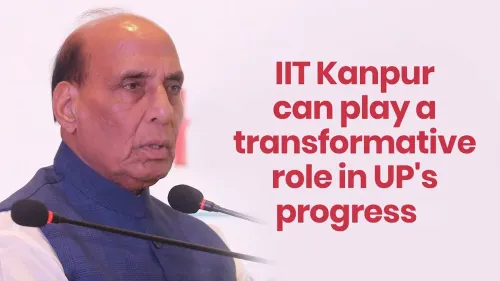
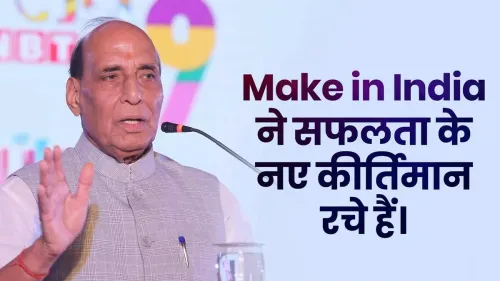
When a Union Defence Minister publicly salutes a technical university, it is rarely just a compliment — it is a signal. Union Defence Minister Rajnath Singh on Wednesday, October 14, 2026 took to X to acknowledge IIT Kanpur's decades-long contribution to India's technological and intellectual fabric, calling its reach far wider than its campuses.
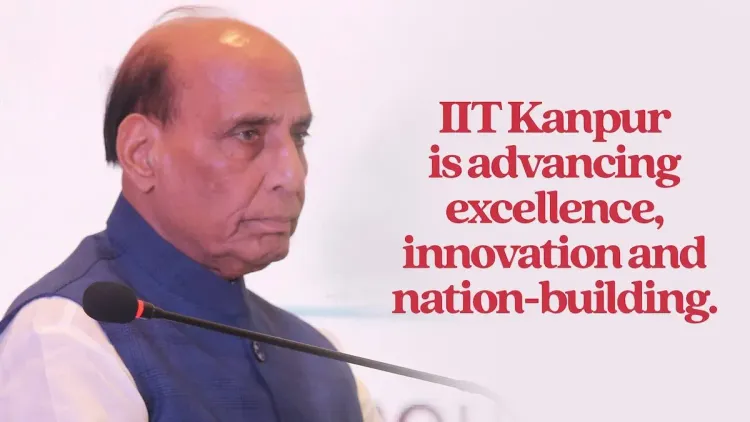
Singh's post was unambiguous in scope: 'IIT Kanpur's contribution extends beyond classrooms and research labs to the technologies, enterprises and solutions that shape India's future.' He congratulated the 'entire IIT Kanpur community for fostering a culture of intellectual excellence, innovation and nation-building.'
From Kanpur to the nation: 67 years of building India's technical core
IIT Kanpur was established in 1959 — among the first wave of IITs founded to seed independent India with world-class engineering talent. Its origins carry a striking footnote: the institute was built under the Kanpur Indo-American Programme, a Cold War-era collaboration that brought nine leading American universities to help design its curriculum and laboratories. The institution that emerged from that partnership went on to become one of the country's most cited research universities.
Over six decades, IIT Kanpur has produced alumni who now run global corporations, lead defence research bodies, and drive deep-tech startups. Its faculty holds some of India's most significant patents in aerospace, materials science, and computing — areas that sit at the intersection of civilian innovation and national security.
Why a Defence Minister's praise carries extra weight
Singh's acknowledgement is not ceremonial noise. As Union Defence Minister, he oversees India's push for indigenous defence manufacturing — a programme that leans heavily on institutions like IIT Kanpur for foundational research. Indian defence leadership has consistently highlighted academic institutions' role in technologies with potential dual-use applications, from advanced materials to drone propulsion systems.
The broader pattern is deliberate: the Ministry of Defence has been deepening its engagement with premier technical institutes, seeking to shorten the distance between laboratory discovery and operational deployment. A public endorsement like Singh's keeps that alignment visible — and keeps the pipeline of talent and ideas flowing toward national priorities.
For IIT Kanpur's thousands of students, researchers, and alumni worldwide, the message is pointed: the work done inside those labs carries weight far beyond academic metrics. India is watching — and counting on it.
Point of View
' Singh signals that academic excellence and defence self-reliance are being treated as overlapping — not parallel — tracks. The timing also matters: with India's deep-tech and defence-startup ecosystem maturing, public affirmations from the Defence Minister serve as a soft mandate, encouraging researchers to orient discoveries toward strategic applications. Watch for concrete MoD-IIT collaboration announcements in the months ahead.
NationPress
14 Oct 2026
Frequently Asked Questions
Why did Rajnath Singh praise IIT Kanpur?
Rajnath Singh praised IIT Kanpur for its contributions to technologies, enterprises and solutions shaping India's future, highlighting the institution's role in innovation and nation-building beyond academic research.
When was IIT Kanpur established?
IIT Kanpur was established in 1959 as one of India's first Institutes of Technology, initially developed under the Kanpur Indo-American Programme with support from leading American universities.
What is the connection between IIT Kanpur and India's defence sector?
IIT Kanpur conducts research in areas such as aerospace, materials science, and computing that have dual-use potential. The Defence Ministry has been deepening ties with premier technical institutes to speed the journey from laboratory research to operational defence applications.
What did Rajnath Singh say about IIT Kanpur on X?
Singh wrote that IIT Kanpur's contribution 'extends beyond classrooms and research labs to the technologies, enterprises and solutions that shape India's future,' and congratulated the institution for fostering a culture of 'intellectual excellence, innovation and nation-building.'
Is Rajnath Singh associated with Uttar Pradesh?
Yes. Rajnath Singh is a senior BJP leader from Uttar Pradesh, having served as the state's Chief Minister before going on to serve as Union Home Minister and, currently, Union Defence Minister.