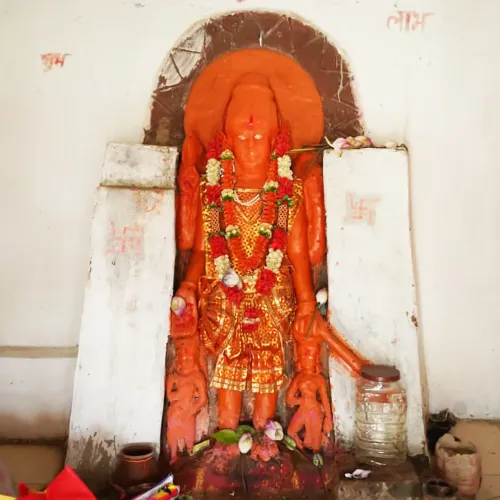
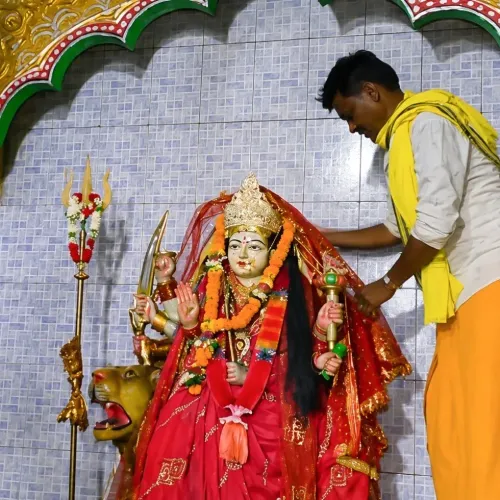
CM Vishnu Deo Sai offers prayers at Shivri Narayan temple
Synopsis
Chhattisgarh Chief Minister Vishnu Deo Sai performed ritual worship at the Nar-Narayan and Jagannath shrine in Shivri Narayan, Janjgir-Champa, on October 14, 2026, praying for statewide happiness, peace, and prosperity.
Key Takeaways
CM Vishnu Deo Sai visited the Nar-Narayan temple in Shivri Narayan, Janjgir-Champa on October 14, 2026 .
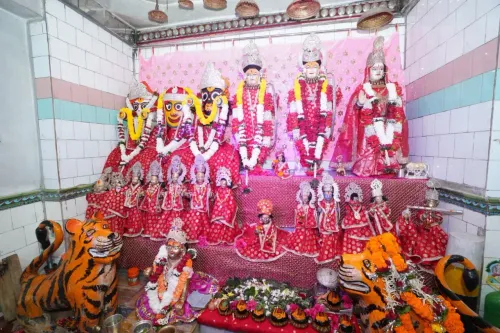
He performed darshan-pujan of Bhagwan Nar-Narayan and Mahaprabhu Shri Jagannath with his wife.
The CM publicly prayed for the happiness, peace, and prosperity of all Chhattisgarh residents.
Shivri Narayan is a significant Vaishnava pilgrimage town on the banks of the Mahanadi river in Janjgir-Champa district .
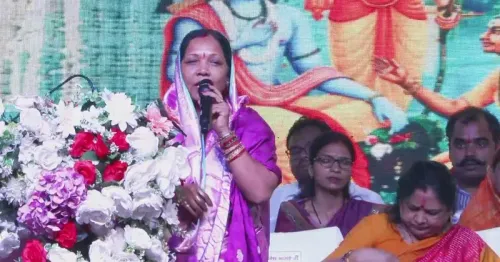
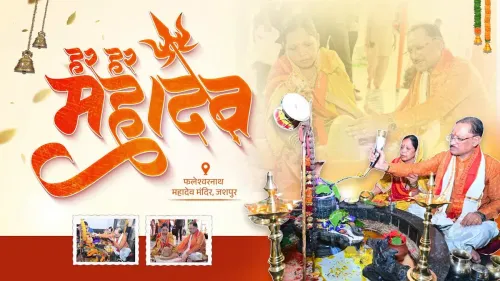
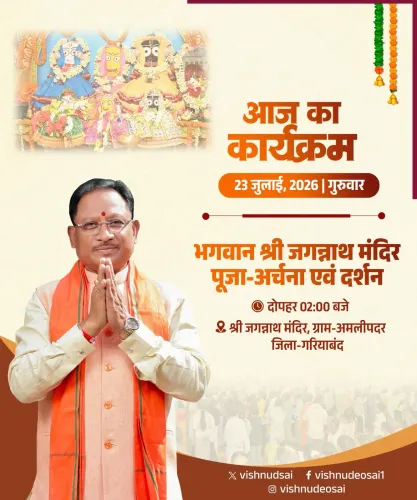
The post was shared with four photographs of the temple visit on X .
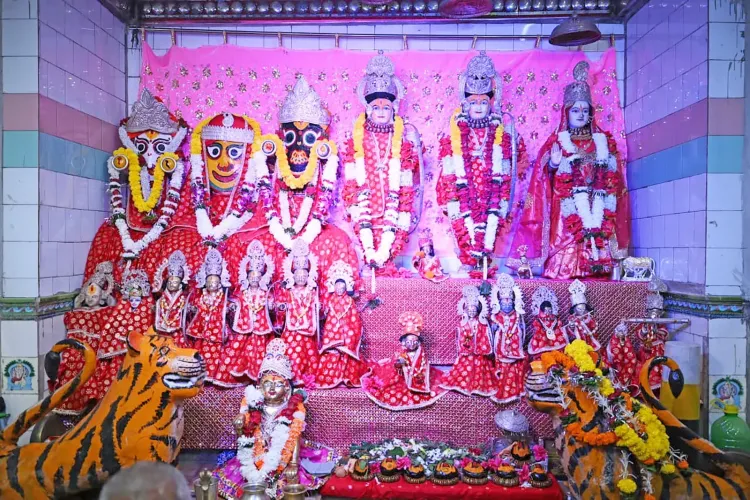
A prayer for Chhattisgarh's peace and prosperity, offered at one of the state's most revered shrines. Chhattisgarh Chief Minister Vishnu Deo Sai visited the Nar-Narayan temple at Shivri Narayan in Janjgir-Champa district on Wednesday, October 14, 2026, performing darshan-pujan (ritual worship) of Bhagwan Nar-Narayan and Mahaprabhu Shri Jagannath alongside his wife.
Posting on X with the salutation 'ॐ नमो नारायणाय' ('Om Namo Narayanaya'), the Chief Minister shared that he prayed for the 'sukh, shanti evam samridhi' — happiness, peace, and prosperity — of all residents of the state. 'May the grace of Bhagwan Nar-Narayan remain upon all people of the state, and may our Chhattisgarh continue to advance on the path of progress, prosperity and well-being — this is my prayer,' he wrote.
Shivri Narayan: a Vaishnava seat in the Chhattisgarh heartland
Shivri Narayan is a small temple town situated on the banks of the Mahanadi river in Janjgir-Champa district, long regarded as one of Chhattisgarh's important Vaishnava pilgrimage sites. The Nar-Narayan temple there draws devotees from across the region, and the site carries both religious and cultural significance for the state's Hindu communities.
The visit is part of a broader pattern visible across Indian state governments: chief ministers regularly engage with prominent religious sites as a mark of cultural continuity and to signal personal participation in the spiritual life of their constituents. For CM Sai, who took charge of Chhattisgarh in December 2023 following the BJP's return to power in the state, such temple visits have been a visible thread in his public schedule.
The twin deities of the shrine — Nar-Narayan, representing the divine and human aspects of devotion — hold a distinctive place in Vaishnavism, and the co-presence of Jagannath iconography at the site reflects Chhattisgarh's cultural links with neighbouring Odisha's temple traditions.
With the Chief Minister's post accompanied by four photographs of the visit, the message served simultaneously as a personal devotional statement and a public address to Chhattisgarh's 33 million-plus residents — a quiet reminder that in Indian political culture, the sacred and the civic have always walked a shared road.
Point of View
The first tribal chief minister of Chhattisgarh under the BJP, visible engagement with the state's Hindu pilgrimage circuit complements the party's broader cultural-nationalist positioning. The choice of Shivri Narayan — a site with deep Vaishnava roots and Odishan cultural links — also quietly underscores Chhattisgarh's distinct regional identity within the Hindi heartland. Such gestures carry soft diplomatic weight in state politics, signalling continuity with tradition even as governance imperatives dominate the daily agenda.
NationPress
14 Oct 2026
Frequently Asked Questions
Where is the Nar-Narayan temple that CM Vishnu Deo Sai visited?
The Nar-Narayan temple is located in Shivri Narayan town, situated in Janjgir-Champa district of Chhattisgarh, on the banks of the Mahanadi river.
Why did Chhattisgarh CM Vishnu Deo Sai visit Shivri Narayan?
CM Vishnu Deo Sai visited to perform ritual worship of Bhagwan Nar-Narayan and Mahaprabhu Shri Jagannath, and to pray for the happiness, peace, and prosperity of all Chhattisgarh residents.
What is the significance of Shivri Narayan in Chhattisgarh?
Shivri Narayan is one of Chhattisgarh's important Vaishnava pilgrimage sites, housing the Nar-Narayan temple and reflecting the state's cultural connections with Odishan temple traditions.
When did CM Vishnu Deo Sai visit the Nar-Narayan temple?
The visit took place on Wednesday, October 14, 2026.
Who is Vishnu Deo Sai?
Vishnu Deo Sai is the Chief Minister of Chhattisgarh and a BJP leader, who assumed office in December 2023 following the party's return to power in the state.