CM Sai joins Mahanadi Mahaarti, calls water conservation a people's movement
Synopsis
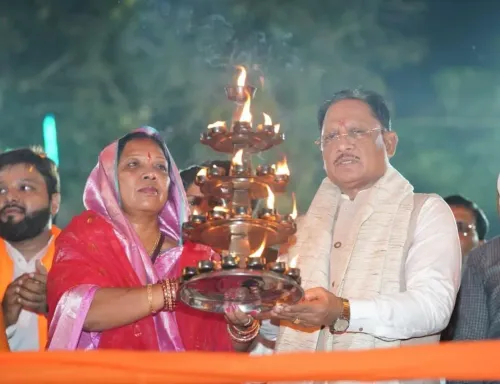
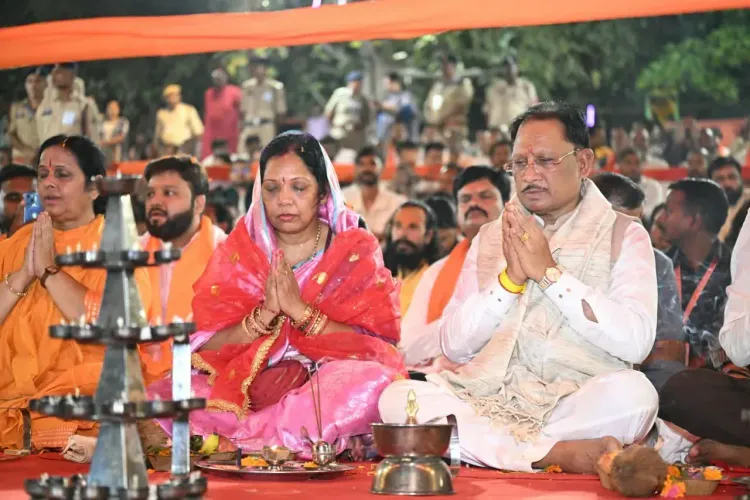
Chief Minister Vishnu Deo Sai participated in the Chitrotsala Ganga Mahaarti on the Mahanadi's banks at Shivrinarayan on 14 October 2026, calling water conservation a collective duty and urging residents to make rainwater harvesting and river protection a people's movement.
Key Takeaways
CM Vishnu Deo Sai attended the Chitrotsala Ganga Mahaarti at Shivrinarayan on the banks of the Mahanadi on 14 October 2026 .
He described the Mahanadi as Chhattisgarh's life-giving river and its conservation as a collective social responsibility.
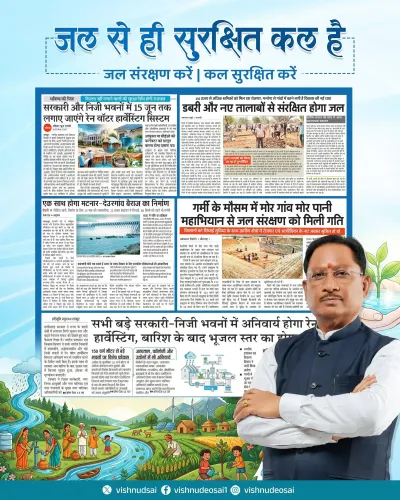
His slogan 'Jal hai toh kal hai' (If there is water, there is tomorrow) anchored his appeal for a water-conservation movement.
He specifically called for citizen participation in rainwater harvesting , groundwater recharge , and protection of rivers and ponds .
The event was held in Janjgir-Champa district , a town revered as the abode of Mata Shabari .
On the sacred banks of the Mahanadi in Shivrinarayan, one of Chhattisgarh's most revered pilgrimage towns, Chief Minister Vishnu Deo Sai stood among devotees on Wednesday, 14 October 2026, and turned a religious ritual into a clarion call — water, he said, is civilisation's lifeline, and protecting it is every citizen's duty.
The Chief Minister participated in the Chitrotsala Ganga Mahaarti, a grand river-worship ceremony held on the Mahanadi's banks in this town in Janjgir-Champa district, long revered as the abode of Mata Shabari (the devotee-saint of the Ramayana tradition). The occasion drew together faith and environmental urgency in a single, vivid setting.
Mahanadi as the life-force of Chhattisgarh
Describing the Mahanadi as Chhattisgarh ki jeevan-dayini — the life-giver of Chhattisgarh — CM Sai framed the river not merely as a spiritual symbol but as the backbone of the state's agriculture, drinking water supply, and rural economy. The Mahanadi originates in Chhattisgarh's highlands before flowing eastward into Odisha, making its health a concern that crosses state boundaries and touches millions of lives.
His message was blunt: 'Jal hai toh kal hai' — 'If there is water, there is tomorrow.' He argued that rainwater harvesting, groundwater recharge, and the protection of rivers and ponds are not government tasks alone. They are, he said, a collective responsibility of every resident of the state.
From ritual to a public movement
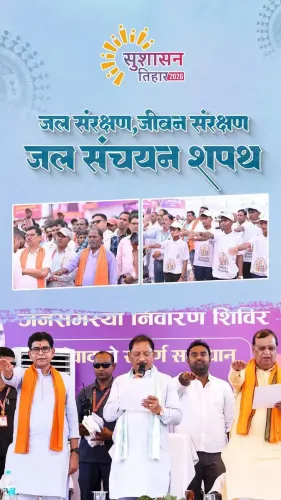
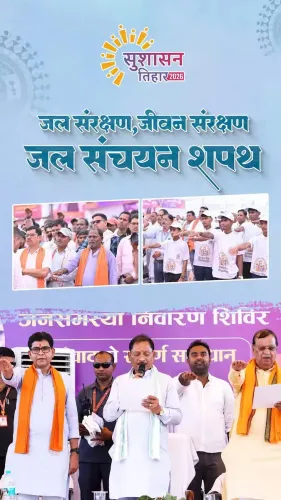
Sai called on the people of Chhattisgarh to make water conservation a jan andolan — a genuine people's movement — with active participation in three specific actions: rainwater harvesting, groundwater replenishment, and the preservation of rivers and tanks. The framing is deliberate: by anchoring the appeal in a high-attendance religious event, the state government bridges the gap between civic duty and community sentiment.
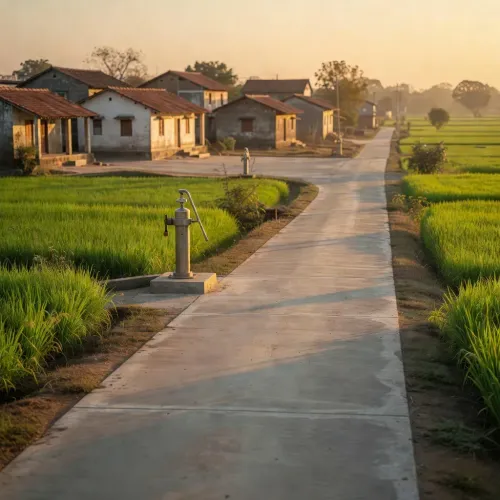
This approach mirrors a broader pattern across Indian states, where cultural and religious gatherings at river sites have become platforms for water-security messaging — complementing national efforts under the Jal Shakti Ministry focused on catchment protection and aquifer recharge. For Chhattisgarh, where a large tribal and agrarian population depends directly on seasonal river flow, the stakes are not abstract. A bad monsoon or a degraded river is not a policy statistic; it is an empty field and a dry hand-pump.
With the state government's emphasis on Sushasan (good governance) as a political identity, the Shivrinarayan ceremony offers a moment where administrative intent and public faith reinforce each other. Whether it translates into new budget allocations or formal water-conservation schemes will be the measure that counts.
Point of View
Where agrarian livelihoods hinge on the Mahanadi's seasonal health, framing water security as a community moral obligation rather than a bureaucratic directive could generate broader grassroots buy-in. The 'jan andolan' framing also echoes the BJP-led Centre's playbook of mass-mobilisation language on environmental issues, suggesting an alignment of state and national communication strategy. The real test, however, is whether the rhetoric at Shivrinarayan is followed by concrete budgetary and administrative action on river protection.
NationPress
14 Oct 2026
Frequently Asked Questions
What is the Chitrotsala Ganga Mahaarti at Shivrinarayan?
The Chitrotsala Ganga Mahaarti is a grand river-worship ceremony held on the banks of the Mahanadi at Shivrinarayan, a town in Janjgir-Champa district of Chhattisgarh revered as the abode of Mata Shabari. The event combines religious ritual with public gatherings along the sacred riverfront.
Why is Shivrinarayan important in Chhattisgarh?
Shivrinarayan is one of Chhattisgarh's most significant pilgrimage sites, traditionally regarded as the town where Mata Shabari — the devout saint from the Ramayana — once lived. It sits on the banks of the Mahanadi river in Janjgir-Champa district.
What did CM Vishnu Deo Sai say about water conservation?
CM Sai called water conservation a collective responsibility of all citizens, using the slogan 'Jal hai toh kal hai' (If there is water, there is tomorrow). He urged people to actively participate in rainwater harvesting, groundwater recharge, and the protection of rivers and ponds.
Why is the Mahanadi important for Chhattisgarh?
The Mahanadi is Chhattisgarh's principal river, originating in the state's highlands and serving as a critical source of irrigation and drinking water for its largely agrarian population before flowing into Odisha. Its health directly affects farming communities and rural livelihoods across the state.
What is CM Sai's approach to environmental issues?
Vishnu Deo Sai, who became Chief Minister of Chhattisgarh in December 2023, has used cultural and religious events to amplify environmental and water-conservation messages, framing river protection as a people's movement aligned with the broader 'Jal Shakti' focus at the national level.