CM Vishnu Deo Sai performs Mahanadi Aarti at Shivri Narayan on Navratri
Synopsis
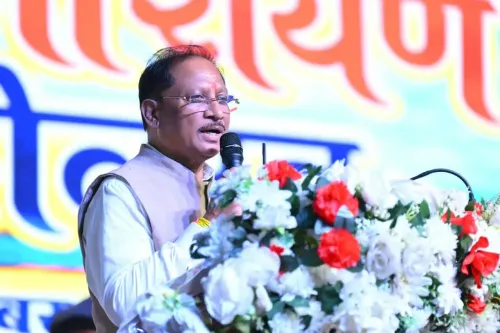
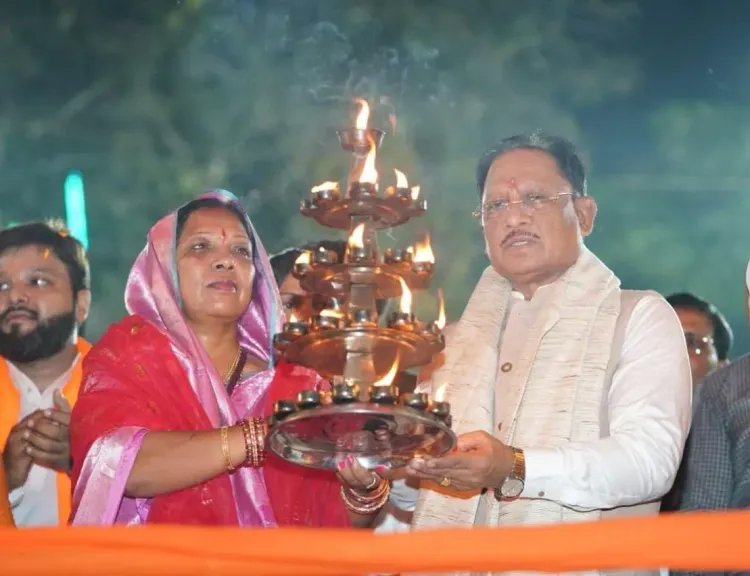
Chhattisgarh Chief Minister Vishnu Deo Sai performed the Chitroptala Ganga Maha Aarti on the Mahanadi banks at the pilgrimage town of Shivri Narayan on Navratri Chaturthi, praying for the state's prosperity and invoking the sacred river's maternal grace.
Key Takeaways
CM Vishnu Deo Sai performed the Chitroptala Ganga Maha Aarti at Shivri Narayan on 14 October 2026 , the fourth day of Sharadiya Navratri.
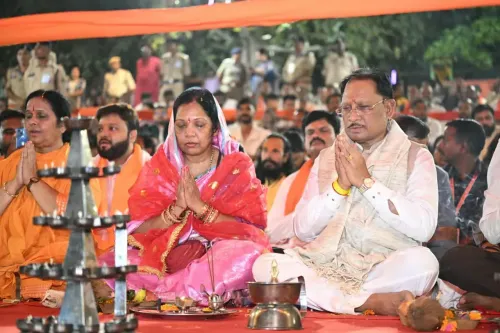
The aarti was conducted saptpatnik — alongside his wife — at the Mahanadi banks.
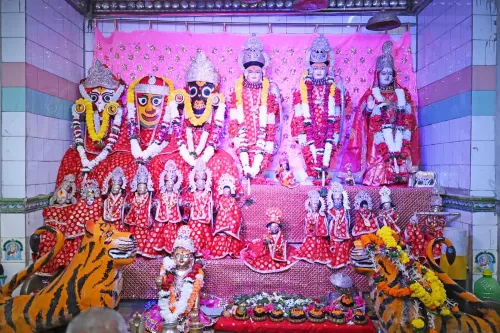
Shivri Narayan is the site of the Shabari temple, linking the town to Ramayana tradition and making it one of Chhattisgarh's premier pilgrimage destinations.
The CM opened with a Sanskrit verse honouring the Mahanadi as the sacred, sin-destroying mother of Chhattisgarh.
He prayed for the happiness, prosperity, and well-being of all residents of the state.
The visit aligns with a broader pattern of state leaders marking Navratri at historically significant temple and river sites.
On the fourth day of Sharadiya Navratri, the sacred banks of the Mahanadi at Shivri Narayan lit up with the glow of oil lamps as Chhattisgarh Chief Minister Vishnu Deo Sai performed the Chitroptala Ganga Maha Aarti alongside his wife — offering prayers for the prosperity and happiness of every resident of the state.
The Chief Minister opened his post with a Sanskrit invocation: 'Mahanadi mahapunya, sarvapapapranashini / Chhattisgarhdhara dhanya, mataram tvaam namaamy aham' — loosely translated as, 'O Mahanadi, supremely sacred, destroyer of all sins, blessed earth of Chhattisgarh, I bow to you, O Mother.' The verse framed the visit not as a routine official event but as an act of personal reverence to the river at the heart of the state's identity.
Shivri Narayan — where Ramayana memory meets the river
Shivri Narayan, a pilgrimage town on the Mahanadi's banks in Janjgir-Champa district, draws its sanctity from its association with Shabari — the devoted bhilni of the Ramayana whom Lord Ram is said to have visited. The Shabari temple here makes the site one of Chhattisgarh's most revered dhams. For CM Sai to choose this specific location for the Navratri Aarti carries layered significance: it ties the ruling dispensation's cultural messaging to both Ramayana geography and the river's role as the state's lifeline.
The Mahanadi — whose name literally means 'great river' — originates in the highlands of Chhattisgarh before flowing through Odisha into the Bay of Bengal. In local imagination, she is Mahanadi Maai, a mother goddess as much as a waterway, sustaining agriculture, culture, and faith across the Chhattisgarh plains.
Navratri ritual, state identity, and the CM's message
State leaders across India have long participated in Navratri observances at historic temple sites — a practice that simultaneously honours cultural tradition and reinforces administrative visibility. CM Sai's Maha Aarti at Shivri Narayan fits squarely into that pattern, but the accompanying Sanskrit verse and the explicit framing of the Mahanadi as the foundation of Chhattisgarh's 'faith, culture, and life' give the gesture a distinctly regional-identity edge.
In his post, the CM prayed that 'with the grace of Mahanadi Maai, our state continues to advance on the path of progress and prosperity.' The prayer fuses the devotional with the developmental — an idiom that resonates in a state where river water, irrigation, and hydropower remain live political topics.
The remaining days of Sharadiya Navratri are expected to bring more state-level observances at heritage sites across Chhattisgarh — each one a reminder that in this river-blessed state, the sacred and the civic have never really been separate.
Point of View
Wrapping the river in devotion is also, quietly, a statement of Chhattisgarh's prior emotional claim.
NationPress
14 Oct 2026
Frequently Asked Questions
What is the significance of Shivri Narayan in Chhattisgarh?
Shivri Narayan is a pilgrimage town in Janjgir-Champa district on the Mahanadi banks, sacred for its association with Shabari of the Ramayana and home to a revered Shabari temple, making it one of Chhattisgarh's most important religious sites.
What is the Chitroptala Ganga Maha Aarti?
The Chitroptala Ganga Maha Aarti is a grand riverside worship ceremony performed on the Mahanadi at Shivri Narayan. 'Chitroptala' is an ancient name for the Mahanadi referenced in classical texts.
Who is Vishnu Deo Sai and why did he visit Shivri Narayan?
Vishnu Deo Sai is the Chief Minister of Chhattisgarh and a BJP leader. He visited Shivri Narayan on the fourth day of Sharadiya Navratri 2026 to perform the Maha Aarti on the Mahanadi banks and pray for the state's prosperity.
What is Sharadiya Navratri Chaturthi?
Sharadiya Navratri is a nine-night Hindu festival celebrating the goddess Durga, observed in the autumn month of Ashwin. Chaturthi refers to the fourth day of the festival, on which CM Sai performed the Mahanadi Aarti in 2026.
Why is the Mahanadi river important to Chhattisgarh?
The Mahanadi is Chhattisgarh's principal river and lifeline, supporting agriculture, culture, and faith across the state. It originates in the Chhattisgarh highlands and is venerated locally as 'Mahanadi Maai', a mother goddess figure.