South Korea, Kazakhstan forge comprehensive strategic partnership on oil, nuclear power
Synopsis
South Korea and Kazakhstan signed 13 agreements on crude oil, nuclear energy and AI in Seoul on 15 September, upgrading ties to a 'future-oriented comprehensive strategic partnership.' With Kazakhstan offering Hormuz-bypass oil routes and world-leading uranium reserves, the deal is a calculated energy security play by Seoul — and a preview of the bigger South Korea-Central Asia Summit that follows.
Key Takeaways
South Korea and Kazakhstan upgraded bilateral ties to a 'future-oriented comprehensive strategic partnership' on 15 September 2026 in Seoul .
13 intergovernmental agreements and MOUs were signed, covering crude oil, nuclear power, AI, clean energy and people-to-people exchanges.
A crude oil pact enables cooperation on Kazakh oil supplies via routes bypassing the Strait of Hormuz , diversifying South Korea's import sources.
Two nuclear energy agreements cover joint R&D on small modular reactors (SMRs) , nuclear safety, stable uranium fuel supplies , and workforce development.
Kazakhstan's first deputy prime minister is to be designated as a dedicated 'Korea desk' to support South Korean firms operating in the country.
President Tokayev invited President Lee Jae Myung for a state visit to Kazakhstan in 2027 , with a date to be set through diplomatic channels.
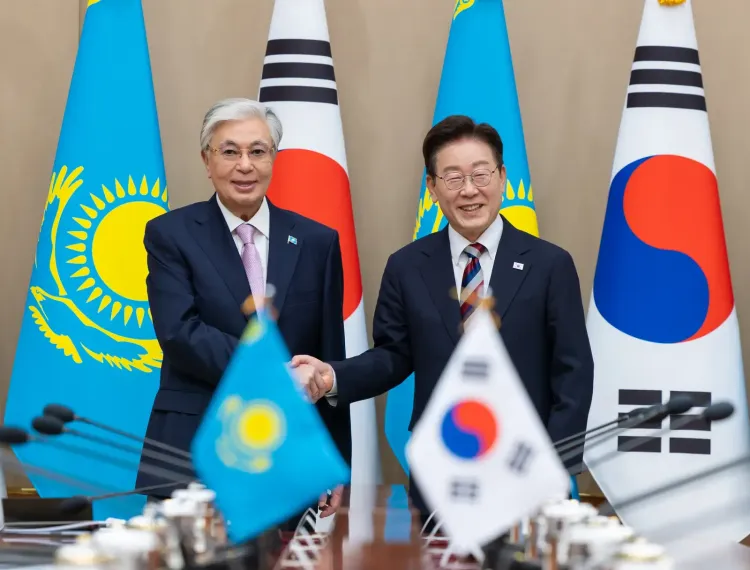
South Korea and Kazakhstan agreed on Tuesday, 15 September 2026, to elevate their bilateral relationship to a 'future-oriented comprehensive strategic partnership' and deepen cooperation in crude oil, nuclear power, artificial intelligence, and other advanced sectors. The accord was struck during a leaders' summit in Seoul, one day ahead of the inaugural South Korea-Central Asia Summit.
Summit and Key Agreements
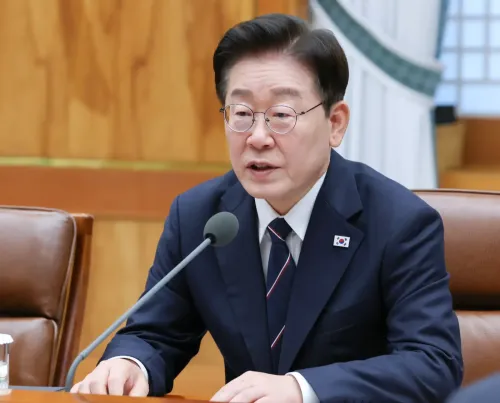
South Korean President Lee Jae Myung and Kazakh President Kassym-Jomart Tokayev held the bilateral summit at Seoul's presidential office, which confirmed the outcome. The two leaders formalised the upgraded partnership, building on diplomatic relations established in 1992 and a strategic partnership formed in 2009, according to presidential spokesperson Kang Yu-jung.
The two governments signed 13 intergovernmental agreements and memorandums of understanding (MOUs) spanning crude oil, nuclear energy, economic security, advanced industries, and people-to-people exchanges.
Crude Oil Cooperation: A Strategic Diversification Play
A basic pact on crude oil cooperation was among the headline agreements. Under its terms, the two sides will collaborate on Kazakh crude oil supplies, geological exploration, oil and gas field development, and joint responses to global supply disruptions.
Kazakhstan is Central Asia's largest oil producer and, notably, exports crude through routes that bypass the Strait of Hormuz — a critical chokepoint that carries roughly 20% of global oil shipments. Seoul's presidential office said this routing advantage could help South Korea meaningfully diversify its crude import sources.
The agreement builds on groundwork laid in April, when presidential chief of staff Kang Hoon-sik visited Kazakhstan as a special envoy and worked to secure 18 million barrels of Kazakh crude oil for South Korea.
Nuclear Power: SMRs and Uranium Supply Chains
Two separate agreements on the peaceful use of nuclear energy were signed, covering joint research and development on nuclear power and small modular reactors (SMRs), nuclear and radiation safety, stable nuclear fuel supplies, and workforce development.
'The agreements will establish a comprehensive framework for cooperation across the nuclear energy sector and help support our companies' participation in new nuclear power projects in Kazakhstan,' spokesperson Kang said.
Kazakhstan is one of the world's leading uranium producers, and the agreements are expected to strengthen nuclear fuel supply chain ties — a significant energy security gain for South Korea, which relies almost entirely on imports for its nuclear fuel cycle. This comes amid a broader global push for SMRs, with several nations competing for early-mover advantage in the technology.
Future Growth Areas and People-to-People Ties
Beyond energy, the two leaders agreed to expand economic cooperation into artificial intelligence (AI), science and technology, new cities, and renewable and clean energy. At President Lee's request, President Tokayev expressed his intention to designate Kazakhstan's first deputy prime minister as a dedicated 'Korea desk' — a move designed to fast-track the stable operation of South Korean companies in the country.
The two sides also discussed content industry cooperation and the preservation of sites and records linked to Korea's independence movement in Kazakhstan, ahead of the 90th anniversary in 2027 of the settlement of ethnic Koreans in Central Asia.
President Tokayev invited President Lee to make a state visit to Kazakhstan next year; the two leaders agreed to finalise a date through diplomatic channels. With the inaugural South Korea-Central Asia Summit set to follow, the bilateral upgrade signals a broader strategic pivot by Seoul toward Central Asian partnerships.
Point of View
South Korea is hedging on two fronts at once. The SMR cooperation clause is the most forward-looking element: Kazakhstan needs new power capacity and South Korea needs commercial references for its reactor exporters, making this a textbook win-win. What remains to be tested is whether the 13 MOUs translate into bankable projects, or whether — as with many summit-era agreements — execution lags ambition.
NationPress
15 Sept 2026
Frequently Asked Questions
What did South Korea and Kazakhstan agree to at the Seoul summit?
The two countries agreed to elevate bilateral ties to a 'future-oriented comprehensive strategic partnership' and signed 13 intergovernmental agreements and MOUs covering crude oil, nuclear power, AI, renewable energy, and people-to-people exchanges. The summit between President Lee Jae Myung and President Kassym-Jomart Tokayev was held in Seoul on 15 September 2026.
Why is Kazakhstan's crude oil significant for South Korea?
Kazakhstan is Central Asia's largest oil producer and exports crude through routes that bypass the Strait of Hormuz, reducing South Korea's exposure to Middle East supply disruptions. Seoul had already moved to secure 18 million barrels of Kazakh crude in April 2026, and the new pact formalises long-term cooperation on supplies, exploration, and field development.
What nuclear energy deals were signed between South Korea and Kazakhstan?
Two agreements on the peaceful use of nuclear energy were signed, covering joint R&D on nuclear power and small modular reactors (SMRs), nuclear and radiation safety, stable nuclear fuel supplies, and workforce development. Kazakhstan is one of the world's leading uranium producers, making the deal strategically important for South Korea's nuclear fuel supply chain.
What is the South Korea-Central Asia Summit and when is it?
The South Korea-Central Asia Summit is the first multilateral summit between South Korea and Central Asian nations, scheduled to take place in Seoul one day after the bilateral Lee-Tokayev meeting, i.e., on 16 September 2026. The bilateral upgrade with Kazakhstan is seen as a key building block ahead of that broader regional engagement.
What is the 'Korea desk' that Kazakhstan agreed to establish?
At President Lee's request, President Tokayev agreed to designate Kazakhstan's first deputy prime minister as a dedicated 'Korea desk' — an official channel designed to facilitate the stable and efficient operation of South Korean companies doing business in Kazakhstan.