India-Australia nuclear pact unlocks uranium supply for 100 GW power goal
Synopsis
India has secured long-term access to Australian uranium — the world's largest reserve — through a newly finalised civil nuclear administrative arrangement. Combined with the SHANTI Act opening nuclear power to private players, this could be the supply-side breakthrough that finally puts India's 100 GW nuclear ambition within reach.
Key Takeaways
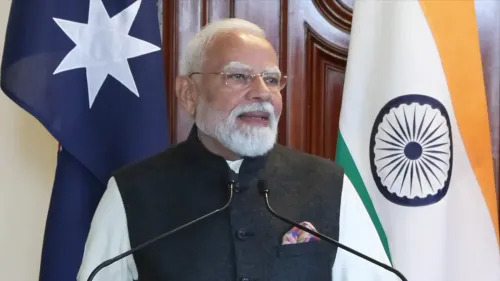
India and Australia finalised the Administrative Arrangement under their Civil Nuclear Cooperation Agreement at the Melbourne summit last week.
Australia holds more than one-third of global uranium reserves — the largest share of any country.
The pact supports India's Nuclear Energy Mission targeting 100 GW of nuclear capacity by 2047 .
India currently operates 24 reactors across 7 sites with 8.78 GW installed capacity; 10 more units (8,000 MW) are under construction.
The arrangement complements the SHANTI Act (December 2025) , which allows Indian private firms to build and operate nuclear plants.
Australian uranium will primarily fuel India's Pressurised Heavy Water Reactors (PHWRs) , which run on natural uranium.
India and Australia have finalised the Administrative Arrangement under their Civil Nuclear Cooperation Agreement, clearing the way for long-term exports of Australian uranium to India for peaceful purposes under International Atomic Energy Agency (IAEA) safeguards. The agreement, a key outcome of the India–Australia Annual Summit held in Melbourne last week, was confirmed in an official statement issued on Tuesday, 14 July.
Australia holds the world's largest uranium reserves, accounting for more than one-third of the global total. Assured access to this supply is expected to significantly strengthen the fuel base for India's rapidly expanding nuclear power programme, according to the official statement.
Strategic Significance for India's Energy Future
The arrangement directly supports India's Nuclear Energy Mission, which targets 100 GW of nuclear power capacity by 2047. It also reinforces the Sustainable Harnessing and Advancement of Nuclear Energy for Transforming India (SHANTI) Act, enacted in December 2025, which enables Indian private companies and joint ventures to build, own, and operate nuclear power plants for the first time.
Nuclear power, as a low-carbon and firm-capacity energy source, is increasingly central to India's plan to reduce dependence on coal while meeting the surging energy demands of industry, data centres, and the broader digital economy. India has committed to achieving net-zero emissions by 2070 and has progressively raised its non-fossil energy targets — a secure uranium supply directly enables that transition.
India's Current Nuclear Footprint
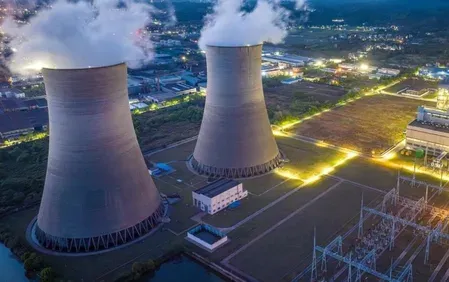
India currently operates 24 nuclear power reactors across seven sites, with a total installed capacity of 8.78 GW. A further 10 reactor units with a combined capacity of 8,000 MW are under active construction, and pre-project activities for 10 additional reactors are already underway.
The reactor fleet includes Pressurised Heavy Water Reactors (PHWRs), Boiling Water Reactors (BWRs), and Light Water Reactors (LWRs). PHWRs — which run primarily on natural uranium fuel — are the backbone of India's current generation capacity. Australian uranium will ensure a steady and diversified supply of this primary fuel, with plutonium produced as a by-product feeding into India's longer-term fuel cycle.
Deepening the Comprehensive Strategic Partnership
Beyond energy, the civil nuclear arrangement adds a substantive new pillar to the India–Australia Comprehensive Strategic Partnership, which already spans trade, defence, critical minerals, technology, and Indo-Pacific security cooperation. Australia's decision to supply uranium is also being read as a formal endorsement of India's strong non-proliferation record and its responsible stewardship of nuclear technology.
The arrangement diversifies India's uranium import base, reducing dependence on any single supplier — a strategic hedge that energy security planners have long sought.
What Comes Next
With the administrative framework now in place, long-term supply contracts between Indian and Australian entities can move forward. The SHANTI Act's private-sector provisions open the door for accelerated capacity addition beyond what state-owned Nuclear Power Corporation of India Limited (NPCIL) can deliver alone. Industry observers note that the combination of assured fuel supply and private participation could materially accelerate India's path to its 100 GW nuclear target by 2047.
Point of View
The pipeline exists; whether the administrative and regulatory machinery can match the ambition remains the test. Australia's implicit endorsement of India's non-proliferation credentials also carries geopolitical weight in an Indo-Pacific where nuclear postures are under close scrutiny.
NationPress
13 Oct 2026
Frequently Asked Questions
What is the India-Australia Civil Nuclear Cooperation Agreement?
It is a bilateral agreement enabling Australia to export uranium to India for peaceful nuclear energy purposes under IAEA safeguards. The Administrative Arrangement finalised at the Melbourne summit last week operationalises the long-term uranium supply framework between the two countries.
Why does India need Australian uranium?
India's Pressurised Heavy Water Reactors (PHWRs) run primarily on natural uranium, and securing a diversified, long-term supply is critical to fuelling the country's expanding reactor fleet. Australia holds more than one-third of global uranium reserves, making it the world's largest source.
What is India's nuclear power target and how does this help?
India aims to achieve 100 GW of nuclear power capacity by 2047 under its Nuclear Energy Mission. Assured access to Australian uranium strengthens the fuel base needed to build and operate the large number of reactors required to reach that target.
What is the SHANTI Act and how does it relate to this pact?
The Sustainable Harnessing and Advancement of Nuclear Energy for Transforming India (SHANTI) Act, enacted in December 2025, allows Indian private companies and joint ventures to build, own, and operate nuclear power plants. The uranium supply arrangement complements the Act by ensuring fuel availability for the expanded capacity private players are now permitted to develop.
How many nuclear reactors does India currently have?
India operates 24 nuclear power reactors across seven sites with a total installed capacity of 8.78 GW. Ten additional reactor units with a combined capacity of 8,000 MW are under construction, and pre-project activities for 10 more reactors are already underway.