HP CM Office: Rs 2 Cr Clean Energy Project to Earn Panchayat Rs 14 Lakh/Year
Synopsis
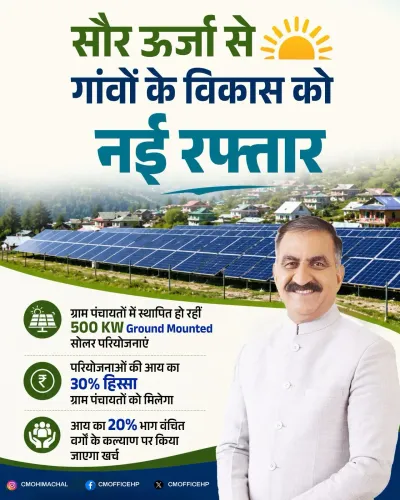
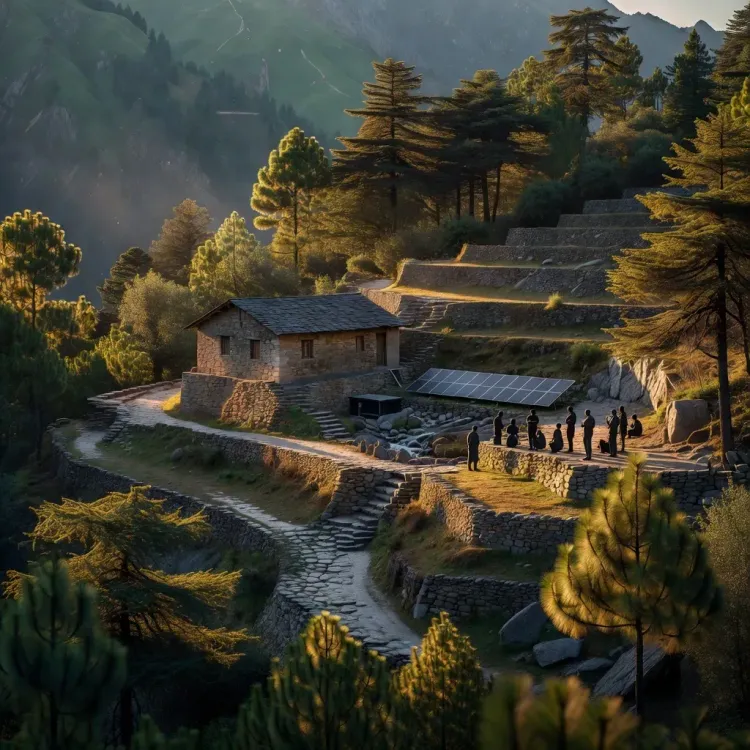
The Himachal Pradesh CMO has detailed a Rs 2 crore community clean energy project that will generate 8 lakh units of electricity annually and deliver roughly Rs 14 lakh per year to the gram panchayat through a public-interest revenue distribution model.
Key Takeaways
The project is built at a cost of Rs 2 crore .
It will generate approximately 3,000 units of clean electricity per day and around 8 lakh units per year .
The gram panchayat is expected to earn nearly Rs 14 lakh annually from the project.
The defining feature is a public-interest revenue distribution model ( janhitkari rajasva vitaran model ) that channels earnings to the local body.
The project aligns with Himachal Pradesh's long-standing policy of decentralised renewable energy generation for hill communities.
The Chief Minister's Office of Himachal Pradesh on Tuesday, 14 July 2026 shared details of a community clean energy project costing Rs 2 crore, designed to generate electricity and channel annual revenue directly to a gram panchayat, underscoring the state's push for decentralised renewable generation in its hill villages.
Context
The post, shared by @CMOFFICEHP, describes the project as capable of producing approximately 3,000 units of clean electricity per day and around 8 lakh units annually. The gram panchayat is projected to earn roughly Rs 14 lakh per year from this output. The CMO highlighted what it called the project's defining feature: a janhitkari rajasva vitaran model (public-interest revenue distribution model).
The emphasis on a structured revenue-sharing mechanism signals an intent to make local bodies financial stakeholders in clean energy infrastructure, rather than passive recipients of government schemes.
Policy Backdrop
Himachal Pradesh has a long history of promoting small-scale renewable energy in remote and ecologically sensitive zones. The state's small hydro power policy, introduced in 2006 and revised subsequently, encouraged micro-hydel and community-linked projects with provisions for panchayat revenue sharing.
The broader pattern across the state has involved decentralised solar and micro-hydro installations that simultaneously serve clean-energy targets and bolster village-level finances. A project of Rs 2 crore scale fits squarely within this tradition of community-anchored infrastructure.
Stakeholders and Impact
Gram panchayats stand to benefit most directly, gaining a recurring annual income stream of approximately Rs 14 lakh that can be deployed for local development priorities. Rural hill communities in Himachal Pradesh, often dependent on state transfers, could see enhanced fiscal autonomy through such models.
The public-interest revenue distribution model, as described, appears designed to prevent revenue from being absorbed at higher administrative tiers, ensuring it reaches the village body. If replicated at scale, this approach could meaningfully supplement panchayat finances across the state's 3,615-plus gram panchayats.
What's Next
The announcement points toward further panchayat-level projects under the state's renewable energy policy framework. Attention will now turn to whether the government issues formal guidelines specifying revenue-distribution ratios and eligibility criteria for similar projects.
The success of the janhitkari rajasva vitaran model in practice — particularly whether the projected Rs 14 lakh annual income is realised and disbursed transparently — will determine whether it becomes a replicable template for green energy governance across Himachal Pradesh and potentially other hill states.
Point of View
The state creates a constituency of local bodies with a direct stake in maintaining and expanding such infrastructure. This fits a broader national arc in which states compete to demonstrate that green transition and rural development are not trade-offs but complements. The real test, however, will be the transparency and regularity of the revenue disbursal mechanism once the project is operational.
NationPress
14 Jul 2026
Frequently Asked Questions
What is the cost of the Himachal Pradesh gram panchayat clean energy project?
The project has been established at a cost of Rs 2 crore, according to the Chief Minister's Office of Himachal Pradesh.
How much electricity will the HP panchayat clean energy project generate?
The project is expected to produce approximately 3,000 units of clean electricity per day and around 8 lakh units over the course of a year.
How much annual income will the gram panchayat earn from this project?
The gram panchayat is projected to receive roughly Rs 14 lakh per year as revenue from the project's electricity generation.
What is the janhitkari rajasva vitaran model in Himachal Pradesh?
It is a public-interest revenue distribution model highlighted by the HP CMO, designed to channel earnings from community energy projects directly to the gram panchayat rather than higher administrative bodies.
Does Himachal Pradesh have a policy for community-level renewable energy projects?
Yes, Himachal Pradesh introduced a small hydro power policy in 2006, later revised, which encourages micro-scale renewable projects with revenue-sharing provisions for panchayats in hill areas.