Goa CM Sawant seeks blessings at Nanij Uppeeth
Synopsis
Goa Chief Minister Pramod Sawant visited the Nanij Uppeeth on 14 July 2026, seeking blessings from Jagadguru Shri Ramanandacharya Narendracharya Maharaj for the well-being, peace, and prosperity of Goa's people, continuing a pattern of cultural and spiritual outreach by the BJP leader.
Key Takeaways
Goa Chief Minister Pramod Sawant visited the Nanij Uppeeth in Goa on 14 July 2026 .
He sought the blessings of Jagadguru Shri Ramanandacharya Narendracharya Maharaj , the spiritual head of the institution.
Sawant expressed gratitude for the Maharaj's guidance toward the 'well-being, peace and prosperity' of Goa's people.
The visit is part of a broader pattern of BJP leaders engaging with religious institutions in Goa, a state with a diverse religious demographic.
Sawant has served as Chief Minister since 2019 and represents the Sanquelim constituency.
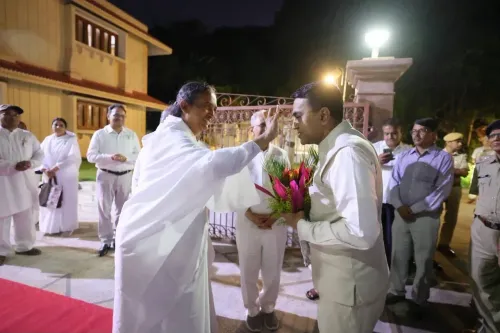
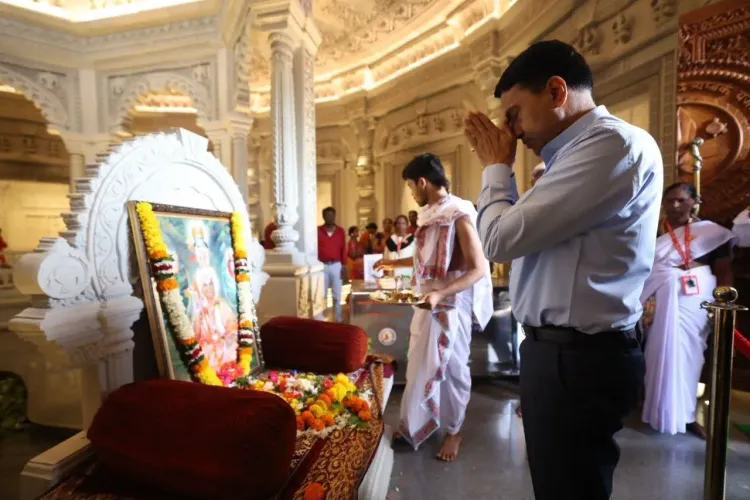
Goa Chief Minister Pramod Sawant visited the Nanij Uppeeth in Goa on Tuesday, 14 July 2026, seeking the divine blessings of Jagadguru Shri Ramanandacharya Narendracharya Maharaj and expressing gratitude for the spiritual leader's guidance toward the well-being, peace, and prosperity of the people of Goa.
Context
Sawant shared the visit on his official X account, stating he was 'grateful for his blessings and guidance for the continued well-being, peace and prosperity of the people of Goa.' The Nanij Uppeeth is a religious institution in Goa headed by Jagadguru Shri Ramanandacharya Narendracharya Maharaj, a prominent spiritual figure in the state.
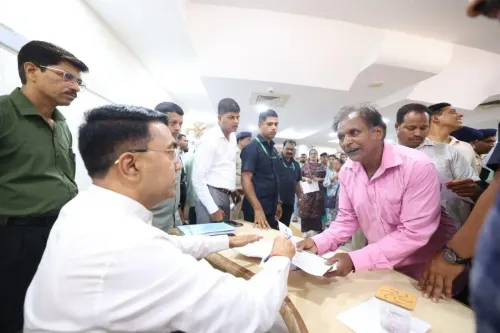
The Chief Minister was accompanied for the darshan and received blessings from the Maharaj. Four photographs from the visit were shared alongside the post, depicting the interaction between the Chief Minister and the spiritual leader.
Policy Backdrop
Visits by elected representatives to religious and spiritual institutions are a well-established feature of Indian political culture, particularly among BJP leaders in states with diverse religious demographics. Goa, with its mix of Hindu, Christian, and Muslim communities, has historically seen state leadership engage across religious institutions as a gesture of cultural outreach and social harmony.
Such interactions are typically framed as personal acts of faith and as expressions of a leader's commitment to the collective welfare of all residents, rather than as formal policy engagements. Chief Minister Sawant, who has held the post since 2019 and represents the Sanquelim constituency, has maintained regular contact with religious and community leaders across Goa throughout his tenure.
Stakeholders and Impact
The primary stakeholders in such engagements are the residents of Goa, whose sense of cultural and spiritual continuity is often reinforced when elected leaders publicly acknowledge religious institutions. The Nanij Uppeeth holds significance for devotees of the Ramananda tradition in the state.
For the broader Hindu community in Goa, a Chief Minister's visit to a jagadguru (universal spiritual teacher) carries symbolic weight, signalling state-level recognition of the institution's moral and cultural authority. Such gestures are generally received as affirmations of the government's respect for religious diversity and heritage.
What's Next
State-level cultural and religious engagements of this nature are expected to continue as Goa approaches various festival seasons and community events. CM Sawant's outreach to spiritual leaders across different communities will likely remain a consistent feature of his public calendar, reflecting the broader pattern of governance that interweaves cultural diplomacy with administrative responsibilities in a pluralistic state like Goa.
Point of View
Particularly in states like Goa where community identity and cultural heritage carry significant electoral and social weight. By framing the visit in terms of collective well-being and peace rather than partisan politics, Sawant positions the engagement as an act of statecraft rather than mere religious observance. This reflects a wider pattern across BJP-governed states where the line between cultural diplomacy and political messaging is deliberately kept fluid. Such outreach to spiritual authorities also serves to reinforce the Chief Minister's personal credibility as a leader attentive to the moral and cultural concerns of his constituents.
NationPress
14 Jul 2026
Frequently Asked Questions
Why did Goa CM Pramod Sawant visit the Nanij Uppeeth?
Chief Minister Pramod Sawant visited the Nanij Uppeeth in Goa on 14 July 2026 to seek the divine blessings of Jagadguru Shri Ramanandacharya Narendracharya Maharaj for the well-being, peace, and prosperity of the people of Goa.
Who is Jagadguru Shri Ramanandacharya Narendracharya Maharaj?
Jagadguru Shri Ramanandacharya Narendracharya Maharaj is the spiritual leader heading the Nanij Uppeeth, a religious institution based in Goa.
Where is the Nanij Uppeeth located?
The Nanij Uppeeth is a religious institution located in Goa, and it is headed by Jagadguru Shri Ramanandacharya Narendracharya Maharaj.
How long has Pramod Sawant been Chief Minister of Goa?
Pramod Sawant has served as Chief Minister of Goa since 2019 and represents the Sanquelim constituency as a senior BJP leader.
Do BJP chief ministers regularly visit religious institutions in Goa?
Yes, visits by BJP leaders to Hindu religious institutions are a well-established pattern in Goa and other states, typically framed as cultural outreach and expressions of commitment to social harmony.