Maharashtra Cabinet Takes Urban Development Decisions
Synopsis
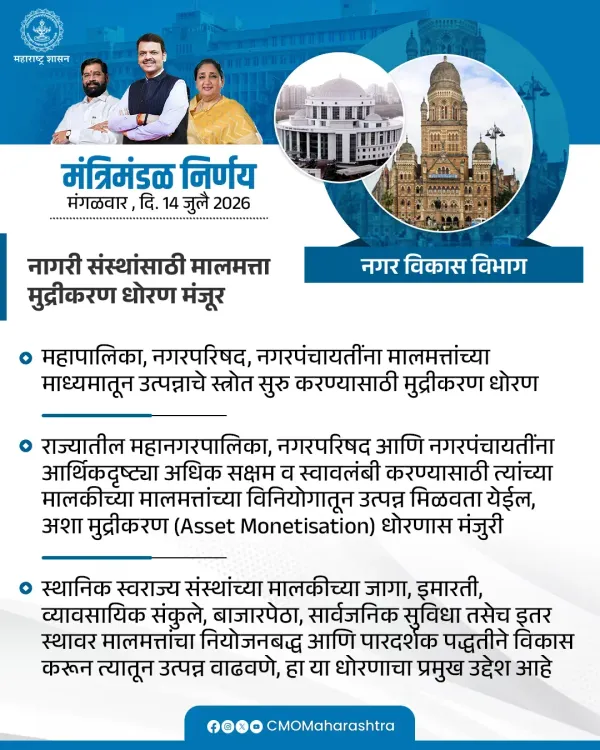
The Chief Minister's Office of Maharashtra announced a cabinet decision by the Urban Development Department on 14 July 2026, tagging CM Devendra Fadnavis. The move reflects the state government's continued focus on urban governance across Maharashtra's rapidly expanding cities.
Key Takeaways
The Chief Minister's Office of Maharashtra posted a cabinet decision announcement on 14 July 2026 .
The decision pertains to the Urban Development Department , tagged alongside CM Devendra Fadnavis .
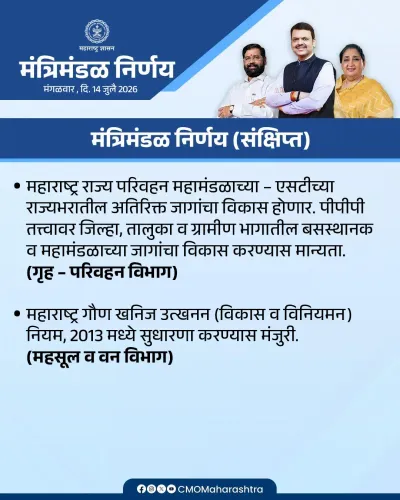
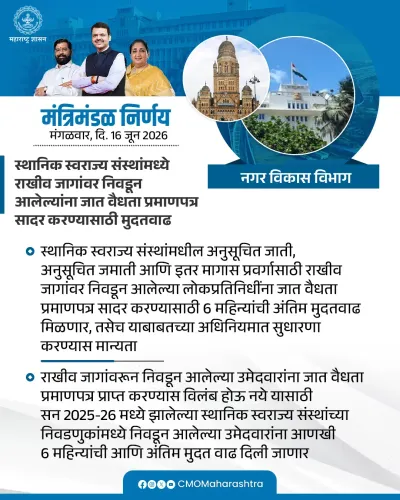
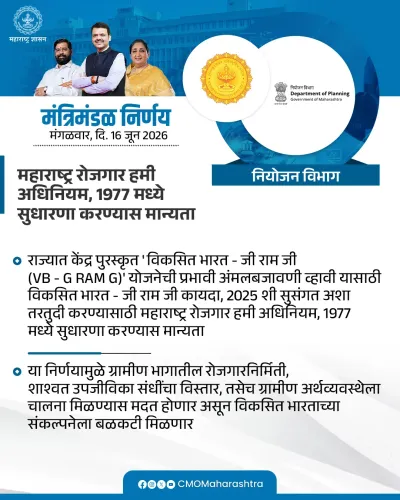
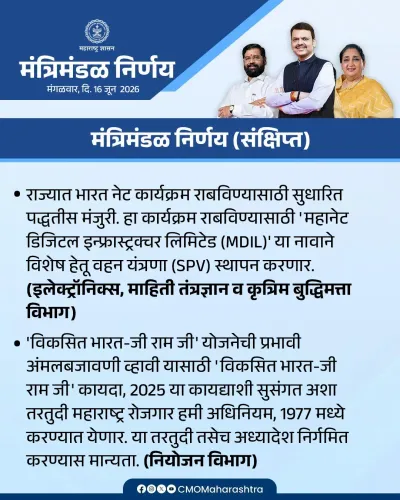
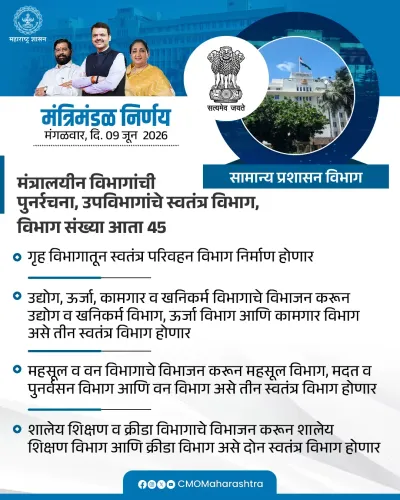
Three images were shared with the official post, indicating documentation of the cabinet approval.
Maharashtra 's Urban Development Department oversees municipal governance and urban planning for the state's major cities including Mumbai and Pune .
Detailed government resolutions specifying the approvals and funding are expected to be released subsequently by the department.
The Chief Minister's Office of Maharashtra announced a cabinet decision by the Urban Development Department on Tuesday, 14 July 2026, tagging Chief Minister Devendra Fadnavis in the official post on X. The announcement, shared under the hashtag #मंत्रिमंडळनिर्णय (Cabinet Decision), signals a fresh round of policy approvals for urban governance in the state.
Context
The post, published by the Chief Minister's Office of Maharashtra, attributes the cabinet decision to the Urban Development Department, which is overseen by Chief Minister Devendra Fadnavis. The use of the official CMO handle and the hashtag #CabinetDecision follows the Maharashtra government's established practice of announcing ministerial approvals in real time on social media. The specific details of the decision were accompanied by three images in the original post.
Maharashtra, India's second-most populous state, encompasses major urban agglomerations including Mumbai and Pune, making urban development policy among the most consequential areas of state governance.
Policy Backdrop
The Urban Development Department of Maharashtra is the nodal body responsible for municipal governance, urban planning, and infrastructure policy across the state. Under successive administrations, the department has driven initiatives ranging from metro rail expansion to housing schemes targeting rapid urbanisation.
During Fadnavis's earlier tenure as Chief Minister between 2014 and 2019, the Maharashtra cabinet approved several landmark urban infrastructure projects, including metro rail corridors and implementations under the Smart City Mission. The current administration has continued to prioritise urban infrastructure as a governance focus area.
Stakeholders and Impact
Cabinet decisions from the Urban Development Department typically affect municipal bodies across Maharashtra, who are responsible for translating state-level approvals into on-ground projects. Urban residents — particularly in fast-growing secondary cities — stand to be directly impacted by changes in planning norms, housing policy, or infrastructure allocations.
The announcement's framing through the CMO's official channel underscores the political visibility the Fadnavis administration places on urban governance, a sector closely watched by civic groups, developers, and local self-government institutions alike.
What's Next
Detailed circulars or government resolutions from the Urban Development Department are expected to follow, specifying the exact nature of the approvals, associated funding, and implementation timelines. Such follow-up releases typically appear on the Maharashtra government's official portal within days of a cabinet meeting.
Observers will watch whether the decisions address long-pending issues such as revised development control regulations, affordable housing mandates, or infrastructure upgrades for Maharashtra's Tier-2 cities — areas that have been recurring policy priorities for the state.
Point of View
Where housing shortfalls, infrastructure backlogs, and municipal finance are perennial voter concerns. By publicly associating the Chief Minister's name with cabinet-level urban decisions, the administration reinforces its positioning as an active reformist government on civic issues. The specifics of the decision, once released, will reveal whether this represents incremental policy maintenance or a more substantive shift in the state's urban development agenda.
NationPress
13 Oct 2026
Frequently Asked Questions
What cabinet decision did the Maharashtra government announce on 14 July 2026?
The Chief Minister's Office of Maharashtra announced a cabinet decision by the Urban Development Department on 14 July 2026, though the specific details of the approval are expected to be released through a formal government resolution.
Who is Devendra Fadnavis and what is his role in Maharashtra's Urban Development Department?
Devendra Fadnavis is a BJP leader serving as Chief Minister of Maharashtra and holds oversight responsibility for cabinet decisions, including those related to the Urban Development Department.
What does Maharashtra's Urban Development Department do?
The Urban Development Department formulates and implements policies for municipal governance, urban planning, and infrastructure development across Maharashtra, covering cities like Mumbai and Pune.
How does the Maharashtra government announce cabinet decisions?
The Maharashtra government routinely announces cabinet decisions through the official Chief Minister's Office handle on X, often accompanied by images of relevant documents or meetings.
Where can I find the full details of Maharashtra cabinet decisions?
Detailed government resolutions following cabinet decisions are typically published on the Maharashtra government's official portal within a few days of the cabinet meeting.