CM Sai Plants Saplings Under 'Ek Ped Maa Ke Naam 3.0' at Nava Raipur Assembly
Synopsis
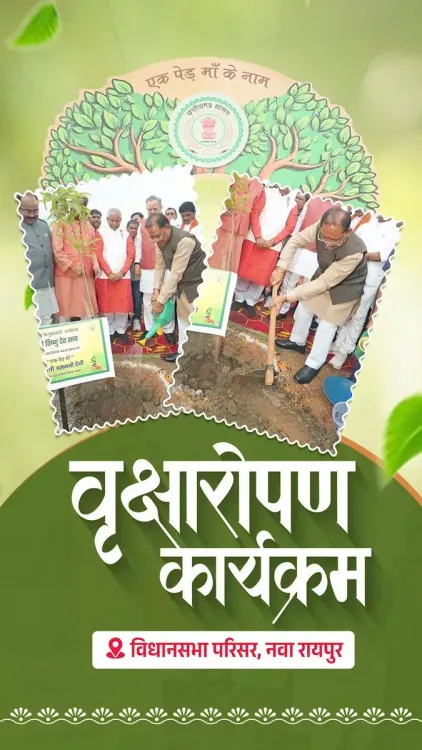
Chhattisgarh Chief Minister Vishnu Deo Sai joined Vidhan Sabha members for a large tree plantation drive in Nava Raipur on 14 July 2026 under the 'Ek Ped Maa Ke Naam 3.0' campaign, calling nature conservation a shared responsibility and urging citizens to build a greener future for coming generations.
Key Takeaways
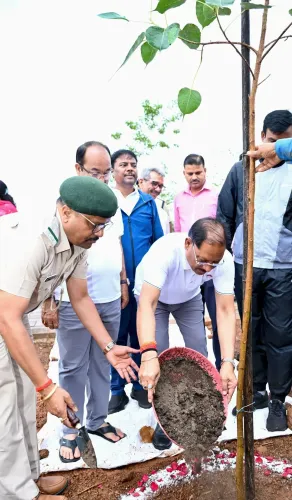
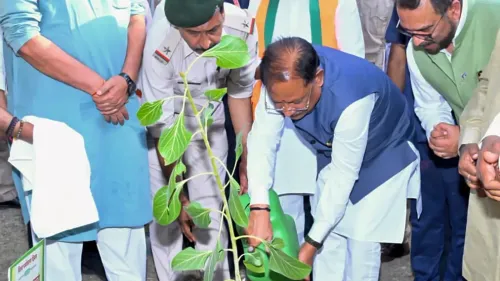
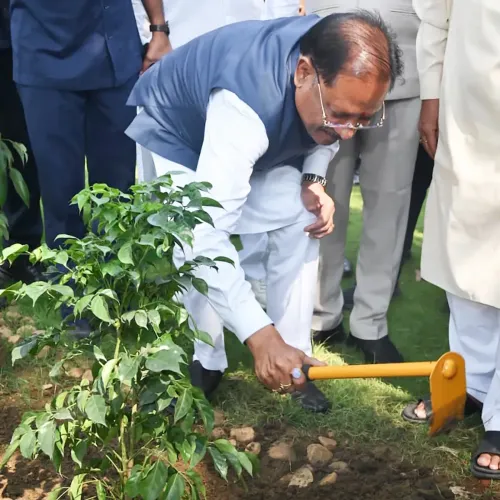
Chief Minister Vishnu Deo Sai participated in a plantation drive at the Chhattisgarh Vidhan Sabha campus in Nava Raipur on 14 July 2026 .
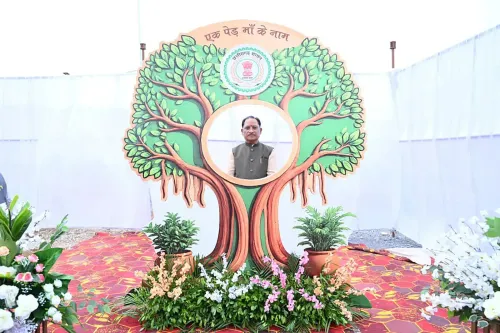
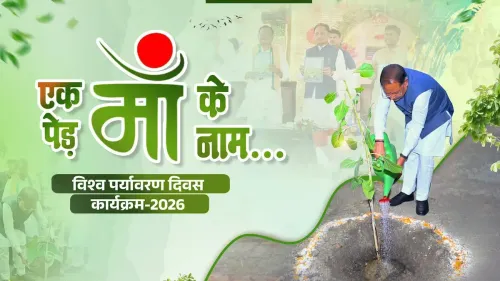
The event was held under the 'Ek Ped Maa Ke Naam 3.0' campaign, the third annual edition of the nationally promoted initiative.
Members of the state legislature joined the Chief Minister in planting saplings, lending institutional visibility to the drive.
The Ek Ped Maa Ke Naam campaign was originally launched by Prime Minister Narendra Modi in June 2024 .
Chhattisgarh holds one of India's higher forest cover percentages, and the state has consistently aligned plantation activities with both national climate goals and cultural symbolism.
District-level rollout of the campaign across Chhattisgarh and any related forest policy announcements remain to be watched.
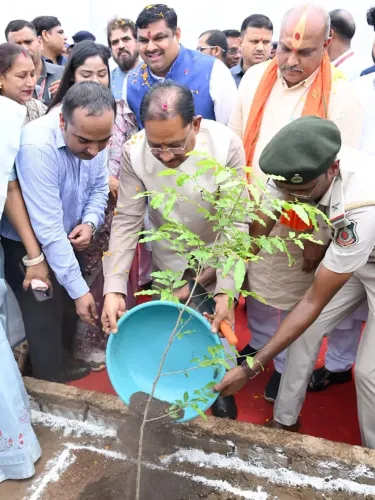
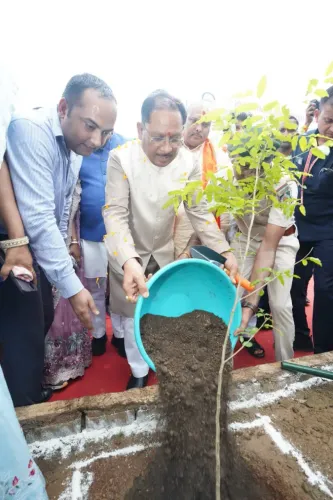
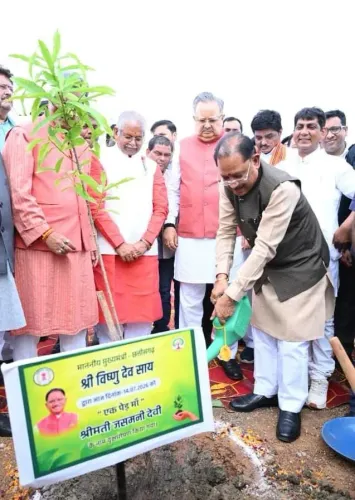
Chhattisgarh Chief Minister Vishnu Deo Sai participated in a large-scale tree plantation drive at the Chhattisgarh Vidhan Sabha complex in Nava Raipur on Tuesday, 14 July 2026, planting saplings alongside members of the state legislature under the 'Ek Ped Maa Ke Naam 3.0' campaign. The event marked the third edition of the nationally promoted initiative that encourages citizens to plant trees in the name of their mothers.
Context
Posting on X, Chief Minister Sai wrote: 'Haritali ka vistar, surakshit bhavishy ka aadhar!' ('The expansion of greenery is the foundation of a secure future!'). He described the programme as a 'grand tree plantation event' held at the Vidhan Sabha premises in Nava Raipur, conducted with members of the House, and called conservation of nature 'a shared responsibility of all of us.' He urged citizens to 'resolve to plant as many trees as possible and build a green, clean and prosperous future for coming generations.'
The Vidhan Sabha campus in Nava Raipur — the planned capital of Chhattisgarh, also known as Atal Nagar — served as the symbolic venue, lending institutional weight to what the state government is framing as a civic and environmental commitment.
Policy Backdrop
The Ek Ped Maa Ke Naam campaign was launched by Prime Minister Narendra Modi in June 2024 as a mass plantation movement, blending environmental messaging with cultural sentiment around motherhood. State governments across the country, including in BJP-ruled states, have since organised successive editions of the drive.
Chhattisgarh is among the states with a relatively high percentage of forest cover in India, and successive administrations have tied plantation activities to both climate commitments and community identity. The '3.0' designation of this edition signals continuity in the state's execution of centrally promoted green initiatives, extending the campaign into its third annual cycle.
Stakeholders and Impact
The immediate participants were elected members of the Chhattisgarh Vidhan Sabha, whose involvement signals a legislative endorsement of the campaign beyond routine bureaucratic implementation. Broader beneficiaries include forest-dependent communities and state residents who stand to gain from increased green cover and improved air quality over time.
Environmental advocates have long argued that symbolic plantation drives must be accompanied by robust survival audits — tracking how many planted saplings reach maturity — to translate political intent into measurable ecological outcomes. The state government has not yet detailed monitoring mechanisms for this edition.
What's Next
The Nava Raipur event is expected to serve as a launchpad for similar drives across Chhattisgarh's districts in the coming weeks, in keeping with the campaign's mass-mobilisation design. Observers will watch whether the state follows up with budgetary allocations for sapling procurement, maintenance, and survival tracking in the legislative session ahead. The degree to which district-level administrations replicate the scale and visibility of this assembly-campus event will determine the campaign's statewide reach.
Point of View
The state is attempting to convert a symbolic national campaign into a cross-party civic act, even if the optics are firmly BJP-led. The '3.0' branding also matters: it frames this not as a one-off gesture but as an institutionalised annual ritual, which builds accountability pressure over successive editions. Whether that pressure translates into verifiable outcomes — saplings that survive, budgets that are allocated, and district targets that are met — will be the real test of the campaign's policy substance.
NationPress
13 Oct 2026
Frequently Asked Questions
What is the 'Ek Ped Maa Ke Naam' campaign?
'Ek Ped Maa Ke Naam' ('One Tree in the Name of Mother') is a nationwide tree plantation initiative launched by Prime Minister Narendra Modi in June 2024, encouraging citizens to plant a tree as a tribute to their mothers. State governments have organised successive annual editions of the drive.
What happened at the Chhattisgarh Vidhan Sabha on 14 July 2026?
Chhattisgarh Chief Minister Vishnu Deo Sai led a large-scale tree plantation event at the Vidhan Sabha complex in Nava Raipur, planting saplings alongside members of the state legislature as part of the 'Ek Ped Maa Ke Naam 3.0' campaign.
Where is Nava Raipur located and why is it significant?
Nava Raipur, also known as Atal Nagar, is the planned capital city of Chhattisgarh. It houses the state legislative assembly and key government buildings, making it the administrative heart of the state.
How does Chhattisgarh's forest cover compare to other Indian states?
Chhattisgarh is among the Indian states with a relatively high percentage of forest cover, and successive state governments have linked plantation campaigns to both climate goals and the cultural identity of its forest-dependent communities.
What should be watched after this plantation drive?
Key things to monitor include the rollout of similar drives across Chhattisgarh's districts, any budgetary allocations for sapling procurement and maintenance, and whether the state introduces a survival-tracking mechanism to measure how many planted trees reach maturity.