CM Sukhu Announces Milk MSP for HP Dairy Farmers
Synopsis
Chief Minister Sukhvinder Singh Sukhu says Himachal Pradesh is buying cow milk at Rs 61 per litre and buffalo milk at Rs 71 per litre — claiming the state is India's first to pair a milk MSP with a natural farming programme, putting direct income into rural households.
Key Takeaways
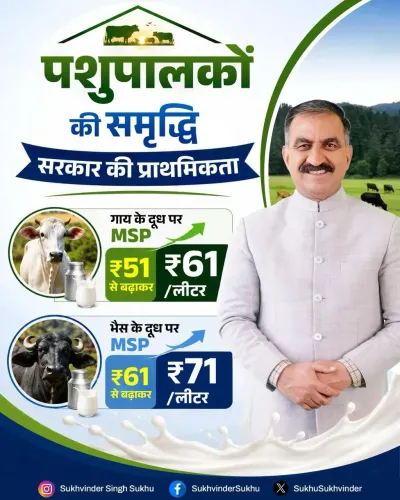
Himachal Pradesh is procuring cow milk at Rs 61 per litre and buffalo milk at Rs 71 per litre under the Sukhu government's administered price policy.
Chief Minister Sukhvinder Singh Sukhu claims Himachal Pradesh is the first Indian state to offer an MSP on milk alongside a natural farming programme.
The policy is designed to transfer income directly to dairy farmers and livestock-keeping families without intermediaries.
The natural farming linkage follows models piloted in Andhra Pradesh and Sikkim , but adds a formal milk floor price that those states did not introduce.
Future legislative or cabinet action to formalise the milk MSP will determine whether the rates carry statutory protection beyond the current government's tenure.
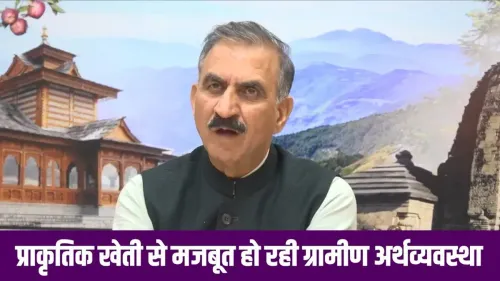
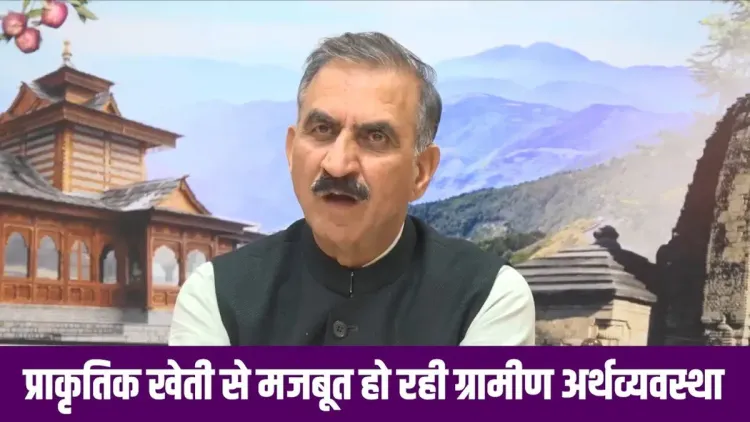
Himachal Pradesh Chief Minister Sukhvinder Singh Sukhu on Tuesday, 14 July 2026, announced that his government is procuring cow milk at Rs 61 per litre and buffalo milk at Rs 71 per litre, positioning Himachal Pradesh as the first state in India to extend a minimum support price for milk alongside a natural farming programme.
Context
Posting in Hindi on X, Chief Minister Sukhu stated: 'ग्रामीण समृद्धि का मजबूत आधार हमारे किसान और पशुपालक हैं' — 'The strong foundation of rural prosperity is our farmers and livestock keepers.' He added that the direct procurement rates were putting money 'directly into the hands of hardworking families,' framing the policy as an income-transfer measure for smallholder households rather than a subsidy routed through intermediaries.
The Chief Minister also claimed that Himachal Pradesh is 'the first state in the country' to offer an MSP on milk in conjunction with a natural farming push — a dual commitment that his government has been building since taking office in December 2022.
Policy Backdrop
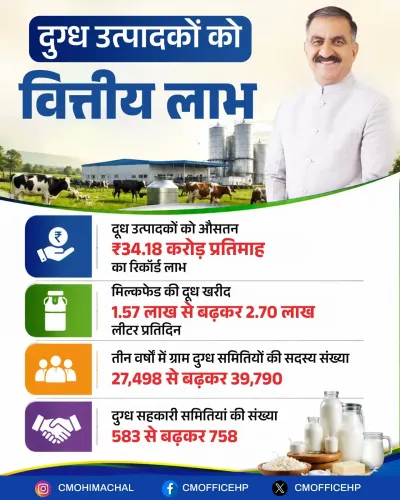
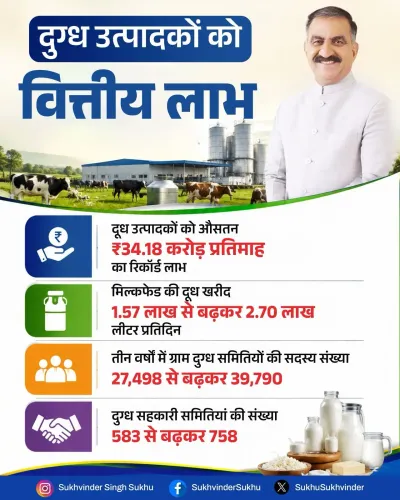
Himachal Pradesh's dairy cooperative network, anchored by the state's Milkfed structure, has administered milk procurement prices for several decades to shield small producers from market volatility. The current rates — Rs 61 per litre for cow milk and Rs 71 per litre for buffalo milk — represent the government's latest administered floor, paid directly to registered farmer-suppliers.
The linkage with natural farming follows a pattern visible in other Indian states: Andhra Pradesh and Sikkim pioneered low-input sustainable agriculture incentives in the late 2010s, but neither formally paired those programmes with a milk MSP mechanism. Sukhu's government has been promoting natural farming across Himachal Pradesh's hill districts, where chemical input costs are high and smallholdings are the norm.
At the national level, milk pricing has historically been left to cooperatives such as Amul and state-level federations, with no central MSP framework equivalent to that for foodgrains. A state-level floor price, if institutionalised, would mark a significant policy departure.
Stakeholders and Impact
Himachal Pradesh has a large rural population dependent on mixed farming — combining horticulture, cereal cultivation and dairy. Dairy farmers and livestock keepers in the state's mid-hill and high-altitude zones, where alternative cash incomes are limited, stand to benefit most directly from a guaranteed procurement rate.
The natural farming component also targets input-cost reduction: farmers who avoid synthetic fertilisers and pesticides are expected to see margin improvements even at modest output prices. Together, the two pillars — guaranteed milk price and natural farming support — are designed to raise net rural household income without expanding subsidy expenditure proportionally.
What's Next
Attention will now turn to the state budget allocations for 2026-27 and whether the Sukhu government formalises the milk MSP through a cabinet order or legislation, which would give the rates statutory backing and make them harder for a future government to revise downward. Expansion of the natural farming programme — including how many farmers are enrolled and what certification or market linkage support they receive — will also be closely watched as indicators of whether the policy translates into measurable rural income gains.
Point of View
The government is trying to marry two distinct policy goals — income security and sustainable agriculture — into a single narrative. The claim of being 'India's first' state on milk MSP, if it withstands scrutiny, would give the Congress a replicable template to advocate at the national level. The real test, however, lies in budget sustainability and enrolment numbers, which will determine whether this remains a headline commitment or becomes a structural rural income guarantee.
NationPress
14 Jul 2026
Frequently Asked Questions
What is the milk procurement price in Himachal Pradesh in 2026?
The Himachal Pradesh government under CM Sukhvinder Singh Sukhu is procuring cow milk at Rs 61 per litre and buffalo milk at Rs 71 per litre as an administered floor price for registered dairy farmers.
Is Himachal Pradesh the first state to give MSP on milk?
CM Sukhu has claimed that Himachal Pradesh is the first Indian state to offer a minimum support price for milk in conjunction with a natural farming programme, though this claim awaits independent verification.
What is natural farming and how is it linked to milk MSP in Himachal Pradesh?
Natural farming refers to low-input, chemical-free agriculture. The Sukhu government is promoting it alongside guaranteed milk procurement prices to reduce input costs for smallholder farmers while securing their dairy income simultaneously.
Who benefits from Himachal Pradesh's milk procurement scheme?
Dairy farmers and livestock-keeping rural households across Himachal Pradesh's hill districts benefit, receiving direct payment at the administered rate when they supply milk to the state cooperative procurement network.
What happens next after Sukhu's milk MSP announcement?
Observers are watching for a formal cabinet order or legislation to give the milk MSP statutory backing, as well as 2026-27 budget allocations that would indicate the scale of the government's financial commitment to the scheme.