CM Sukhu Highlights Dairy Growth Gains for HP Farmers
Synopsis
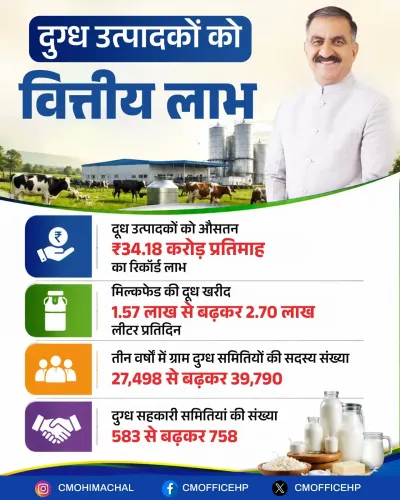
Himachal Pradesh CM Sukhvinder Singh Sukhu on 1 June 2026 reported that daily milk procurement has jumped from 1.57 lakh to 2.70 lakh litres, Gram Dugdh Samiti membership has grown to 39,790, and dairy producers are earning an average of Rs 34.18 crore per month under his government.
Key Takeaways
Daily milk procurement in Himachal Pradesh has risen from 1.57 lakh litres to 2.70 lakh litres — an increase of over 70 per cent.
Dairy producers are receiving an average benefit of Rs 34.18 crore per month from the state procurement system.
Membership of Gram Dugdh Samitis (village milk cooperatives) has grown from 27,498 to 39,790 .
The number of village milk cooperative societies has increased from 583 to 758 , adding 175 new societies .
CM Sukhu has stated the government's goal is to make dairy production more empowered, organised, and profitable for rural households.
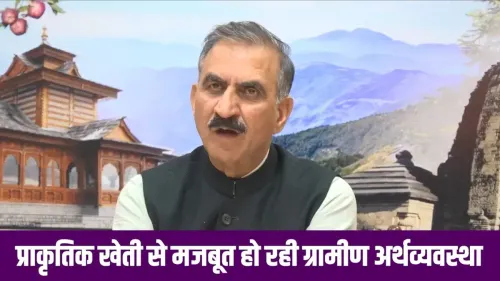
Himachal Pradesh Chief Minister Sukhvinder Singh Sukhu on Monday, 1 June 2026, shared a detailed update on the state government's dairy sector performance, citing significant gains in milk procurement volumes, producer earnings, and cooperative membership under his administration.
Context
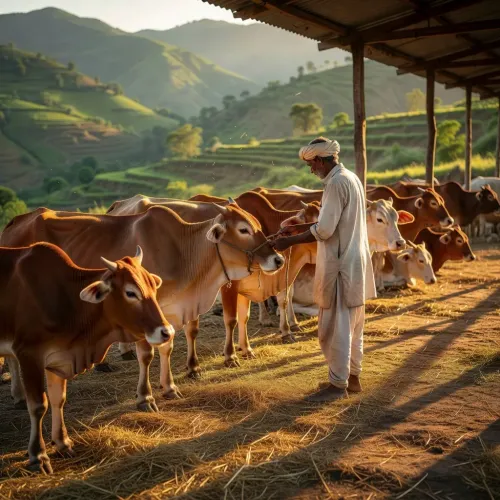
Posting in Hindi on X, CM Sukhu stated that cow and buffalo milk production forms the backbone of both farmers' livelihoods and rural economic prosperity. 'गाय-भैंस के दूध का उत्पादन किसानों और पशुपालकों की आजीविका के साथ-साथ ग्रामीण अर्थव्यवस्था की समृद्धि का भी आधार है' [Cow and buffalo milk production is the foundation of farmers' and animal herders' livelihoods as well as the prosperity of the rural economy], he wrote. He added that his government is ensuring dairy producers receive the full benefit of their labour.
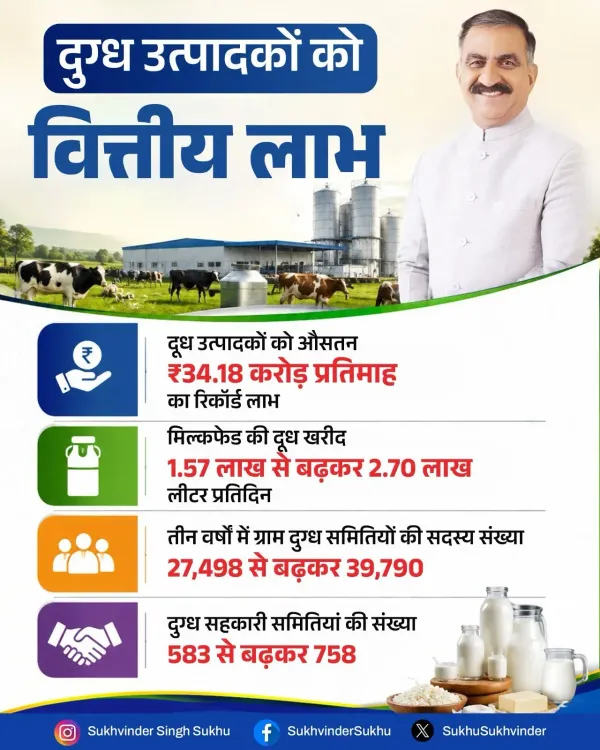
The post lists four headline figures: milk producers are receiving an average benefit of Rs 34.18 crore per month; daily milk procurement has risen from 1.57 lakh litres to 2.70 lakh litres; membership of village milk cooperative societies (Gram Dugdh Samitis) has grown from 27,498 to 39,790; and the number of such societies has increased from 583 to 758.
Policy Backdrop
The cooperative dairy procurement model in Himachal Pradesh traces its lineage to Operation Flood, launched nationally in 1970 by the National Dairy Development Board, which institutionalised village-level collection and payment systems to reduce dependence on middlemen. Hill states such as Himachal Pradesh subsequently adapted this framework to suit their geography, where limited arable land and seasonal migration make livestock rearing a critical income source for small and marginal households.
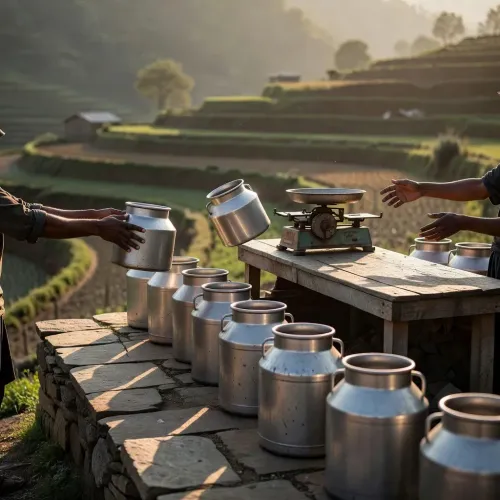
The Gram Dugdh Samitis — village milk cooperative societies — serve as the primary interface between individual dairy producers and the state procurement chain, handling collection, quality testing, and direct payment to members. Expanding both the number of societies and their active membership is widely seen as the most effective lever for raising rural dairy incomes in hill terrain.
Stakeholders and Impact
The direct beneficiaries of the expanded procurement network are dairy farmers and animal herders across Himachal Pradesh's rural districts, many of whom depend on livestock income to supplement earnings from horticulture and subsistence farming. A rise in daily procurement from 1.57 lakh to 2.70 lakh litres — an increase of over 70 per cent — translates into a larger and more reliable cash flow for these households.
The growth in cooperative membership from 27,498 to 39,790 suggests that previously unorganised or informal producers are being brought into the formal procurement system, which typically offers better price discovery and timely payment compared to private intermediaries. The addition of 175 new Gram Dugdh Samitis — from 583 to 758 — extends the geographic reach of this network deeper into rural Himachal Pradesh.
What's Next
CM Sukhu concluded his post by stating the government's ambition to make milk production 'more empowered, organised, and profitable' — 'दुग्ध उत्पादन को और अधिक सशक्त, संगठित व लाभकारी बनाकर ग्रामीण समृद्धि को नई दिशा दी जाए' — signalling that the current figures are intended as a baseline rather than a ceiling. Analysts and dairy sector observers will watch the state's upcoming budget allocations for dairy infrastructure and any new targets for procurement centre expansion in the next fiscal year as a measure of how firmly this commitment is backed by public expenditure.
Point of View
000 new members — echoes the long-standing Congress strategy of institutional outreach to small and marginal farmers as a political base. By anchoring the message in concrete procurement and income figures, the communication attempts to shift the narrative from the state's fiscal constraints to tangible ground-level gains. Whether these numbers translate into sustained political goodwill will depend on how consistently the procurement prices and payment timelines hold up for individual producers.
NationPress
16 Oct 2026
Frequently Asked Questions
How much has milk procurement increased in Himachal Pradesh under CM Sukhu?
Daily milk procurement in Himachal Pradesh has risen from 1.57 lakh litres to 2.70 lakh litres , an increase of over 70 per cent, according to figures shared by CM Sukhvinder Singh Sukhu on 1 June 2026.
What are Gram Dugdh Samitis in Himachal Pradesh?
Gram Dugdh Samitis are village-level milk cooperative societies in Himachal Pradesh that collect milk from dairy farmers, test its quality, and make direct payments to producer members, reducing dependence on private middlemen.
How much are dairy farmers earning per month in Himachal Pradesh?
According to CM Sukhu's post, milk producers in Himachal Pradesh are receiving an average benefit of Rs 34.18 crore per month through the state's dairy procurement system.
How many Gram Dugdh Samitis are there in Himachal Pradesh now?
The number of Gram Dugdh Samitis has grown from 583 to 758 under the current state government, while membership has expanded from 27,498 to 39,790.
What is CM Sukhu's plan for dairy farmers in Himachal Pradesh?
CM Sukhu has stated the government's aim is to make milk production more empowered, organised, and profitable to give rural prosperity a new direction, with further expansion of the cooperative network expected.