CM Sukhu doubles milk incentive to Rs 6/litre on World Milk Day
Synopsis
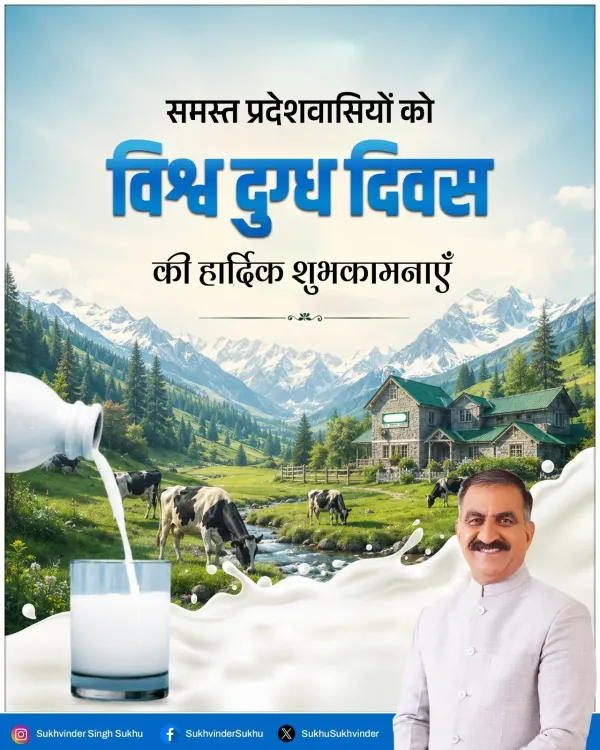
On World Milk Day, Himachal Pradesh CM Sukhvinder Singh Sukhu announced a doubling of the Milk Incentive Scheme payout from Rs 3 to Rs 6 per litre via DBT, with Rs 11 crore to be transferred directly to dairy farmers' bank accounts in the current financial year.
Key Takeaways
CM Sukhvinder Singh Sukhu announced the incentive hike on World Milk Day, 1 June 2026 .
The per-litre incentive under the Milk Incentive Scheme has been doubled from Rs 3 to Rs 6 .
Approximately Rs 11 crore will be transferred directly to farmers' bank accounts via DBT this financial year.
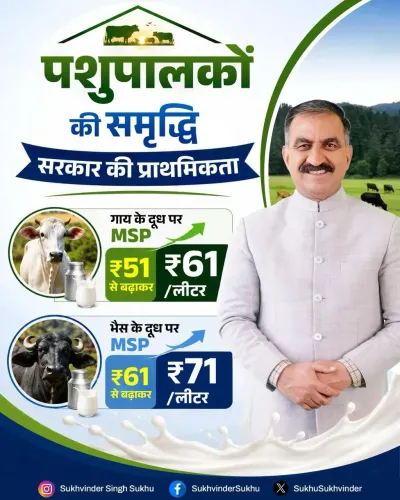
The state government has also introduced an MSP for milk to support livestock owners.
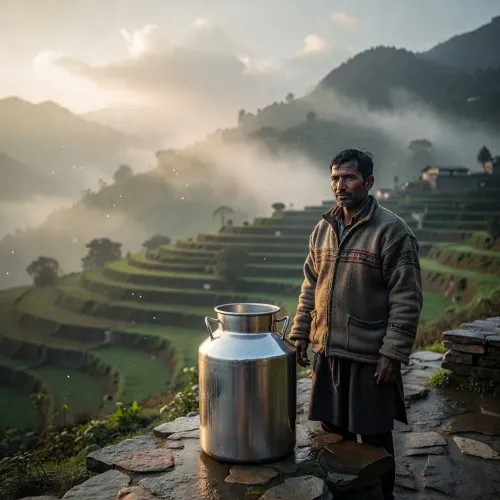
The policy targets dairy farmers and livestock owners in Himachal Pradesh , where animal husbandry is a key rural livelihood.
Himachal Pradesh Chief Minister Sukhvinder Singh Sukhu on Monday, 1 June 2026 announced that the state government has doubled the per-litre incentive for dairy farmers under the Milk Incentive Scheme, raising the payout from Rs 3 to Rs 6 per litre through Direct Benefit Transfer. The announcement, made on World Milk Day, also confirmed that approximately Rs 11 crore will be transferred directly into farmers' bank accounts during the current financial year.
Context
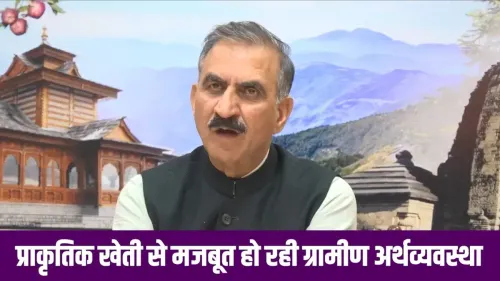
Posting in Hindi on World Milk Day, CM Sukhu described milk production as 'ग्रामीण अर्थव्यवस्था की सशक्त धुरी' ['the strong axis of the rural economy'], framing the incentive hike as a direct policy response to the needs of livestock owners and dairy farmers across the state. He extended greetings to all farmers and animal husbandry workers on the occasion.
The revised incentive is being delivered via DBT (Direct Benefit Transfer), the central government mechanism that routes subsidies electronically to beneficiaries' bank accounts, eliminating intermediaries. The scheme is aimed at encouraging greater milk production in a state where cultivable flat land is limited and animal husbandry serves as a primary livelihood source for many rural households.
Policy Backdrop
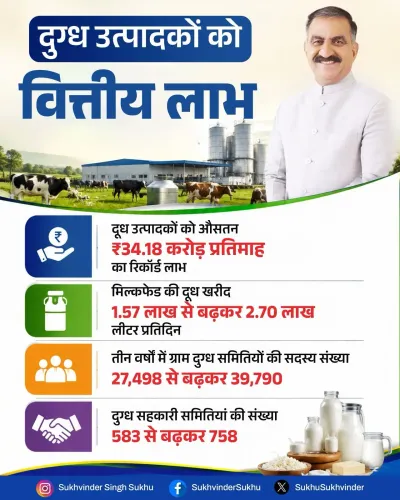
The Milk Incentive Scheme previously offered Rs 3 per litre to enrolled dairy farmers in Himachal Pradesh. The doubling of this rate to Rs 6 per litre represents a significant step-up in the state's support architecture for the dairy sector. The Sukhu government has also cited the introduction of a Minimum Support Price (MSP) for milk as part of its broader effort to stabilise farmer incomes in the animal husbandry segment.
Across India's Himalayan states, dairy farming has long been promoted as a stable alternative to rain-dependent crop agriculture. The use of DBT to deliver incentives directly reflects a wider national push to reduce leakages in subsidy delivery and ensure that benefits reach intended beneficiaries without delay or diversion.
Stakeholders and Impact
The primary beneficiaries are dairy farmers and livestock owners enrolled in the Milk Incentive Scheme across Himachal Pradesh. With Rs 11 crore earmarked for direct transfer in the current financial year, the policy has an immediate and measurable fiscal footprint for rural households dependent on milk production.
The hike also signals the state government's intent to strengthen the dairy value chain at the producer end — improving farm-gate returns and potentially incentivising greater investment in herd quality and milk yield. Animal husbandry departments and cooperative dairy networks stand to benefit from increased farmer participation in formal procurement channels.
What's Next
Official milk production statistics for the current financial year will be a key indicator of whether the doubled incentive translates into a measurable increase in output and farmer enrolment. Any further revision to the incentive rate or expansion of the scheme's coverage is likely to feature in the next state budget or agriculture policy review.
If the Rs 11 crore DBT disbursement proceeds on schedule, it will serve as a proof-of-concept for using direct transfers to support animal husbandry at scale — a model other hill states may consider replicating as they look to diversify rural income sources beyond traditional crop farming.
Point of View
Bypassing cooperative intermediaries. The Rs 11 crore commitment, while modest at the state level, follows a broader national pattern of Himalayan governments using per-litre incentives to formalise dairy supply chains in terrain where crop agriculture is constrained. Whether the hike meaningfully shifts farmer behaviour will depend on procurement infrastructure and whether MSP implementation is consistent across districts.
NationPress
20 Oct 2026
Frequently Asked Questions
What is the new milk incentive rate in Himachal Pradesh?
The Himachal Pradesh government has increased the milk incentive under the Milk Incentive Scheme from Rs 3 to Rs 6 per litre, delivered directly to enrolled farmers via DBT.
Who announced the milk incentive hike in Himachal Pradesh?
Chief Minister Sukhvinder Singh Sukhu announced the hike on World Milk Day, 1 June 2026, via a post on X.
How much money will be transferred to dairy farmers in Himachal Pradesh this year?
Approximately Rs 11 crore will be transferred directly into the bank accounts of dairy farmers enrolled in the Milk Incentive Scheme during the current financial year through DBT.
What is the Milk Incentive Scheme in Himachal Pradesh?
The Milk Incentive Scheme is a Himachal Pradesh state programme that provides a per-litre cash incentive to dairy farmers to encourage milk production, with payments made through Direct Benefit Transfer.
Does Himachal Pradesh have an MSP for milk?
Yes, the Sukhu government has introduced a Minimum Support Price for milk as part of its policy to support livestock owners and stabilise dairy farmer incomes in the state.