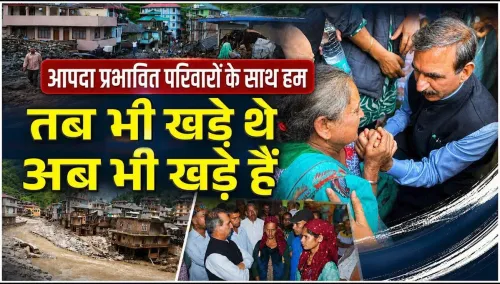
CM Sukhu raises livestock compensation for HP disaster victims
Synopsis
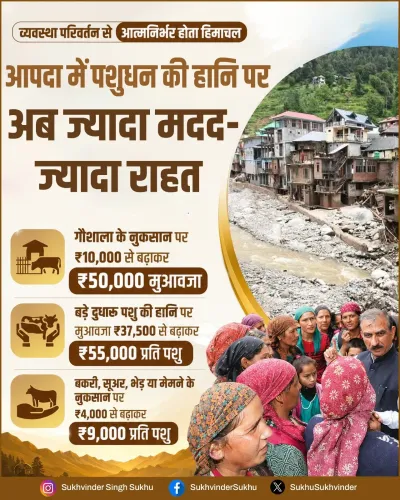
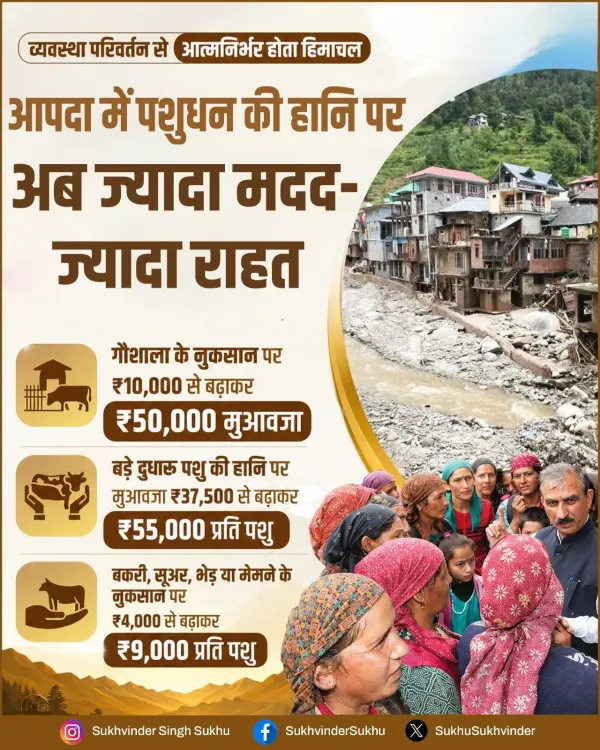
Himachal Pradesh Chief Minister Sukhvinder Singh Sukhu announced a historic hike in compensation for livestock losses — covering cowsheds, milch animals, goats, pigs, sheep, and lambs — to help thousands of rural families rebuild livelihoods after natural disasters devastated the state.
Key Takeaways
CM Sukhvinder Singh Sukhu announced a historic increase in livestock loss compensation for disaster-affected rural families in Himachal Pradesh .
Compensation covers damage to cowsheds (gaushaalas) , large milch animals, goats, pigs, sheep, and lambs.
Thousands of rural families faced acute livelihood crises following livestock losses caused by natural calamities.
The government says financial assistance was delivered on time , enabling families to restore their livelihoods.
The revision aligns with Himachal Pradesh's State Disaster Response Fund framework under the national Disaster Management Act.
The move is part of a recurring post-monsoon relief cycle in one of India's most disaster-prone hill states.
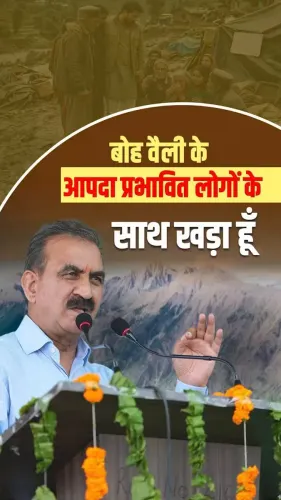
Himachal Pradesh Chief Minister Sukhvinder Singh Sukhu announced on Sunday, 5 July 2026, that his government has made a historic increase in compensation for livestock losses suffered by rural families affected by natural disasters in the state, covering damage to cowsheds, large milch animals, goats, pigs, sheep, and lambs.
Context
Posting in Hindi on X, CM Sukhu stated that natural calamities had pushed thousands of rural households into a severe livelihood crisis. 'पशुधन की क्षति से हजारों परिवारों के सामने रोज़ी-रोटी का गंभीर प्रश्न खड़ा हो गया' [The loss of livestock raised a grave question of daily sustenance for thousands of families], he wrote, underlining the scale of hardship faced by pastoral and farming communities.
The Chief Minister said timely financial assistance was delivered to affected families so they could restore their livelihoods. He described the compensation revision as a response to what he termed a challenging period for the state's rural economy.
Policy Backdrop
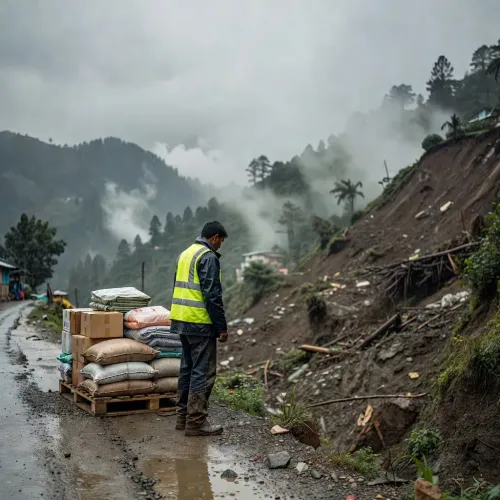
Himachal Pradesh, a northern Himalayan state, is among India's most disaster-prone regions, regularly battered by monsoon floods, cloudbursts, and landslides that destroy rural infrastructure and kill livestock. State governments in such regions are empowered under the national Disaster Management Act framework to disburse ex-gratia payments through the State Disaster Response Fund (SDRF).
Himachal Pradesh administrations have periodically revised compensation norms under the state's Relief Manual to align with ground realities after major calamities. The Sukhu government's latest revision follows this established post-monsoon relief cycle, which aims to partially offset income losses for households dependent on animal husbandry.
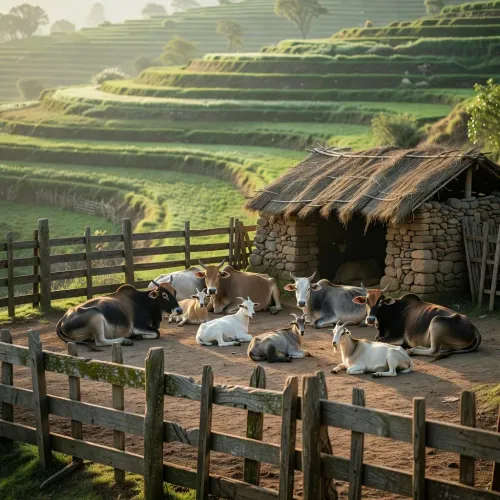
Livestock rearing — including cattle, goats, sheep, and pigs — is a primary source of income for a large share of rural families across Himachal Pradesh's hilly districts, making compensation for animal losses a direct intervention in household food and income security.
Stakeholders and Impact
The beneficiaries of the enhanced compensation are rural families who lost animals or suffered damage to cowsheds and animal shelters during disaster events. The revision covers multiple livestock categories: large milch animals, as well as smaller animals including goats, sheep, pigs, and lambs — reflecting the diversity of pastoral livelihoods across different altitudinal zones of the state.
CM Sukhu said the government's efforts ensured that affected families received economic support 'on time,' enabling them to get back on their feet. The emphasis on timeliness signals an attempt to address a longstanding criticism of disaster relief systems — that compensation arrives too late to prevent distress sales or permanent livelihood loss.
What's Next
State assembly discussions on disaster management budget allocations and any formal revision to the Himachal Pradesh Relief Manual will be closely watched to understand the full scope and permanence of these compensation changes. With the monsoon season ongoing, the pressure on state relief mechanisms is likely to continue through the coming months.
The government's framing of this as a 'historic' increase sets a political benchmark; whether the revised rates are institutionalised or remain ad hoc will determine the long-term impact on rural resilience in the state.
Point of View
' the Congress government is staking a political claim to being more responsive to rural distress than its predecessors. Livestock compensation has long been a weak link in India's disaster relief architecture, with rates that lagged inflation for years, so any upward revision carries genuine policy weight in a state where animal husbandry underpins rural incomes. The emphasis on timely disbursal is equally pointed, targeting a systemic failure that has historically blunted the impact of relief packages. How the revision is codified — whether in a formal amendment to the Relief Manual or as a one-time administrative order — will determine whether this becomes durable policy or remains an election-cycle gesture.
NationPress
5 Oct 2026
Frequently Asked Questions
What has the Himachal Pradesh government done for livestock loss compensation?
The Himachal Pradesh government under CM Sukhvinder Singh Sukhu has made a historic increase in compensation for livestock losses caused by natural disasters, covering large milch animals, cowsheds, goats, pigs, sheep, and lambs.
Who benefits from the Himachal Pradesh livestock disaster compensation?
Rural families across Himachal Pradesh who lost livestock or suffered damage to cowsheds and animal shelters due to natural calamities such as floods, cloudbursts, and landslides are the primary beneficiaries.
Under what fund is livestock compensation paid in Himachal Pradesh?
Livestock compensation in Himachal Pradesh is disbursed through the State Disaster Response Fund (SDRF), which operates under the national Disaster Management Act framework.
Why is livestock loss such a serious issue for Himachal Pradesh families?
Animal husbandry — including cattle, goats, sheep, and pigs — is a primary source of income for a large share of rural households in Himachal Pradesh's hilly districts, so livestock deaths directly threaten daily sustenance.
What is the Himachal Pradesh Relief Manual?
The Himachal Pradesh Relief Manual is the state's governing document that sets compensation rates and procedures for disaster relief, including payments for livestock losses and damage to rural assets.