Kazakhstan's Chinese debt surges to $12.87 billion amid fresh borrowing
Synopsis
Kazakhstan's debt to China quietly tripled its three-year growth rate in a single year, jumping from $9.29 billion to $12.87 billion in 2025. With fresh panda bonds worth over $500 million now in play and a Chinese 'AAA' rating lowering borrowing costs further, Astana's financial trajectory toward Beijing is accelerating — even as a mass arrest of Chinese workers at a Shymkent plant exposes the raw tensions that come with it.
Key Takeaways
Kazakhstan's total debt to China reached $12.87 billion in 2025 , up from $9.29 billion at end- 2024 .
Over $3.5 billion in new Chinese credit was obtained in 2025 alone — more than the cumulative change over the prior three years.
In late May 2026 , Kazakhstan issued panda bonds worth 3.4 billion yuan (over $500 million ) at a coupon rate of 1.9% .
A Chinese rating agency assigned Kazakhstan a 'AAA' sovereign credit rating, easing access to further Chinese financing.
About 80 Chinese nationals were arrested at the Xin Yuan Stil plant in Shymkent , including two investors planning a $30 million commitment.
A second Luban vocational workshop has opened in Astana ; a third is expected before end- 2026 .
Kazakhstan's total debt to China has climbed to $12.87 billion following a sharp acceleration in borrowing that began in 2025, according to a report by Eurasianet, the New York-headquartered news outlet covering Central Asia and the Caucasus. The surge has prompted analysts to raise concerns about the Central Asian nation's deepening financial dependence on Beijing.
The Debt Trajectory
For three consecutive years, Kazakhstan's Chinese debt load remained largely flat — standing at $9 billion in 2022, $9.25 billion in 2023, and $9.29 billion at the close of 2024. That changed sharply in 2025, when Astana obtained over $3.5 billion in fresh Chinese credit, pushing the cumulative figure to $12.87 billion.
The trajectory shows no sign of reversing. In late May 2026, Kazakhstan's government launched so-called 'panda bonds' — yuan-denominated securities sold within mainland China's domestic bond market — with a placement volume of 3.4 billion yuan (over $500 million), a maturity of three years, and a coupon rate of 1.9 percent per annum.
China's AAA Rating and What It Unlocks
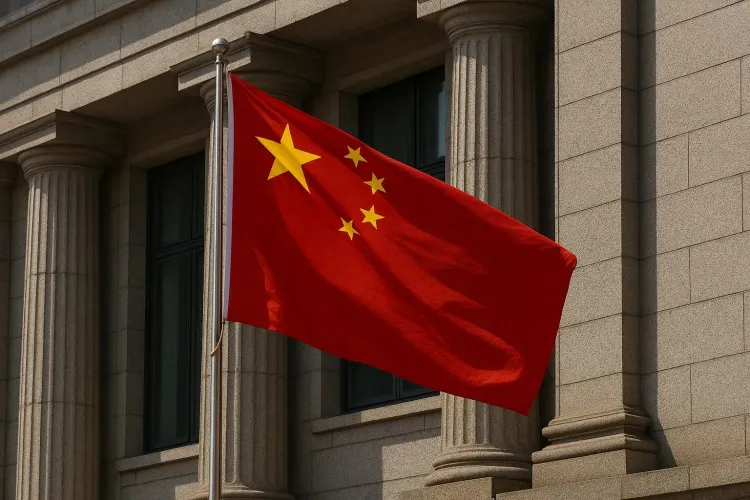
China's national rating agency has assigned Kazakhstan a sovereign credit rating of 'AAA' with a 'stable' outlook, according to the Eurasianet report. Critics argue the rating — issued by a Chinese agency for a borrower from whom China seeks deeper economic ties — effectively lowers the cost of future borrowing, potentially drawing Astana further into Beijing's financial orbit.
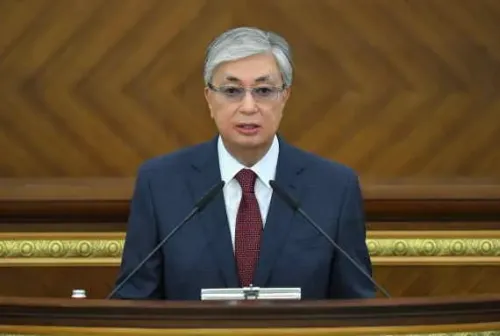
In late 2025, Kazakh President Kassym-Jomart Tokayev unveiled an ambitious programme to build what he described as a 'cognitive economy,' with a significant portion of state borrowing reportedly earmarked for the country's digital transformation agenda.
Soft Power: Luban Workshops Expand
Alongside financial instruments, China has been expanding its vocational soft-power footprint in Kazakhstan. A second Chinese Luban workshop has opened in Astana, with a third projected to follow later in 2026. Luban workshops offer vocational training in 30 countries worldwide and are widely regarded as instruments of Chinese soft power.
According to an analysis published by the Carnegie Russia Eurasia Centre, 'In the wake of mounting public backlash against its growing influence in Central Asia, China is betting on vocational education to reshape perceptions.' Some observers in the region argue that Beijing is deploying these programmes specifically to blunt grassroots wariness about China's economic expansion.
Strains in the Relationship
Not all aspects of the Kazakh-Chinese partnership are running smoothly. The Kazakh General Prosecutor's Office has launched an investigation into an incident at the Xin Yuan Stil metallurgical plant in Shymkent, where approximately 80 Chinese nationals were arrested. Authorities stated they were acting on a report of an illegally detained foreign citizen; during the investigation, officials allegedly identified workers lacking valid authorisation documents.
Among those detained were reportedly two Chinese investors who had been planning to commit $30 million to the plant's development and expansion, according to Ulys Media. The plant's management has alleged significant financial damages, citing a forced halt to operations as a direct consequence of the incident.
As Kazakhstan deepens its financial ties with China, the Shymkent episode underscores the friction points that large-scale economic integration can produce — and raises questions about how Astana will manage the political costs of its borrowing strategy going forward.
Point of View
Astana is not just borrowing from Beijing but embedding itself in Chinese financial infrastructure in ways that are difficult to unwind. The 'AAA' rating from a Chinese agency, awarded to a country that is simultaneously increasing its dependence on Chinese credit, deserves scrutiny. Meanwhile, the Shymkent arrests reveal the social and political underbelly of this economic integration — public wariness in Central Asia about Chinese labour and capital is real, and no number of Luban workshops will fully neutralise it.
NationPress
17 Sept 2026
Frequently Asked Questions
How much does Kazakhstan owe China?
As of 2025, Kazakhstan's total debt to China stands at $12.87 billion, up sharply from $9.29 billion at the end of 2024. The increase of over $3.5 billion in a single year represents more growth than the prior three years combined.
What are panda bonds and why is Kazakhstan issuing them?
Panda bonds are yuan-denominated securities sold within mainland China's domestic bond market. Kazakhstan issued 3.4 billion yuan worth (over $500 million) in late May 2026 at a coupon rate of 1.9% and a three-year maturity, as part of its strategy to fund a national digital transformation programme.
What is Kazakhstan's 'cognitive economy' plan?
President Kassym-Jomart Tokayev announced the 'cognitive economy' initiative in late 2025, an ambitious programme focused on digital transformation. A significant share of the country's state borrowing — including from China — is reportedly being directed toward funding this agenda.
What happened at the Xin Yuan Stil plant in Shymkent?
The Kazakh General Prosecutor's Office launched an investigation at the Xin Yuan Stil metallurgical plant in Shymkent, during which approximately 80 Chinese nationals were arrested. Authorities allegedly found workers without valid authorisation documents; among those detained were two Chinese investors reportedly planning a $30 million investment in the plant.
What are Luban workshops and what role do they play in Kazakhstan?
Luban workshops are Chinese government-backed vocational training centres operating in 30 countries, widely seen as soft-power tools. A second such workshop has opened in Astana, with a third expected later in 2026. Analysts at the Carnegie Russia Eurasia Centre say China is using these programmes to counter public backlash against its growing economic presence in Central Asia.