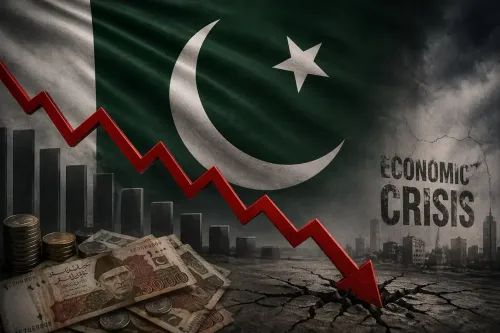
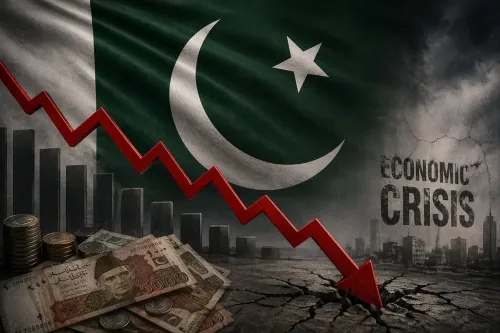
Pakistan's Panda bond push deepens China financial dependence fears
Synopsis
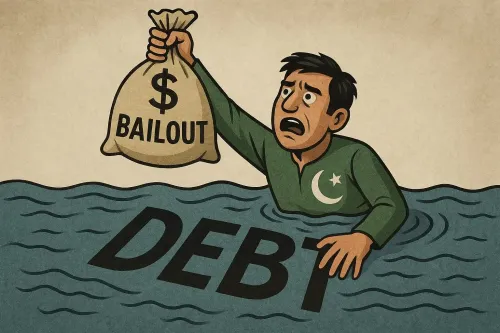
Pakistan's move to explore Panda bonds isn't just a financing workaround — it's the latest step in a deepening financial embrace of China, which already holds over $25 billion in bilateral exposure. With currency swaps, yuan trade settlements, and now potential onshore bond issuance, Islamabad's room to manoeuvre outside Beijing's financial orbit is narrowing fast.
Key Takeaways
Pakistan is exploring Panda bonds — yuan-denominated instruments issued in China's domestic market — to diversify external financing sources.
China is already Pakistan's largest bilateral creditor, with total exposure estimated at over $25 billion in loans, deposits, and energy-sector liabilities.
Existing financial ties include currency swap arrangements between the State Bank of Pakistan and the People's Bank of China , and rising yuan-based trade settlements.
Analysts warn the move deepens structural financial interdependence and creates longer-term concentration risks, even as it provides short-term liquidity relief.
Pakistan continues to engage with the IMF and World Bank , but sustained macroeconomic vulnerability is reportedly narrowing its financing alternatives.
Pakistan's move to explore Panda bonds — yuan-denominated debt instruments issued in China's domestic bond market — has intensified concerns over Islamabad's deepening financial reliance on Beijing, even as the cash-strapped nation seeks to diversify its funding sources beyond traditional Western lenders and multilateral institutions, according to a report by Pakistan Today.
What Are Panda Bonds and Why Is Pakistan Exploring Them
Panda bonds are debt instruments issued by foreign entities in China's onshore bond market, denominated in Chinese yuan (renminbi). For Pakistan, the instrument is reportedly being viewed as a mechanism to tap alternative liquidity pools amid persistent balance-of-payments pressures driven by heavy debt servicing, import dependence, and weak export growth. The move is part of a broader effort to reduce reliance on the International Monetary Fund (IMF), the World Bank, and Western capital markets.
China Already Pakistan's Largest Bilateral Creditor
China is already Pakistan's single largest bilateral creditor, with total financial exposure estimated at over $25 billion, encompassing commercial loans, deposits, and energy-sector liabilities. The proposed Panda bond issuance would add another layer to this already substantial financial architecture. This comes amid an expanding web of monetary linkages between the two countries, including currency swap arrangements between the State Bank of Pakistan and the People's Bank of China, as well as rising yuan-denominated trade settlements, according to the report.
Short-Term Relief, Long-Term Concentration Risk
Analysts cited in the report acknowledge that these financing mechanisms offer genuine short-term benefits — providing liquidity support and easing immediate pressure on Pakistan's foreign exchange reserves. However, critics argue that each new instrument deepens structural financial interdependence, narrowing Islamabad's policy autonomy over time. The Panda bond development is therefore being viewed not merely as a standalone financing tool, but as part of a broader trend of accelerating economic integration with China — one that carries both near-term relief and longer-term concentration risks.
Pakistan's Shrinking Financing Options
Pakistan continues to engage with multiple external lenders, including the IMF and the World Bank, but its sustained macroeconomic vulnerability and limited export diversification have reportedly narrowed its financing options considerably. The growing tilt toward Chinese financial systems is being read by observers as a reflection of constrained alternatives rather than a purely strategic preference. Notably, this is not the first time Islamabad's deepening economic ties with Beijing have drawn scrutiny — similar concerns have been raised over China-Pakistan Economic Corridor (CPEC) debt structures in previous years.
What to Watch
Whether Pakistan formally proceeds with a Panda bond issuance will be a key indicator of how far Islamabad is willing to go in anchoring its external financing to the Chinese financial system. Any such issuance would likely draw fresh scrutiny from the IMF, which has previously flagged debt transparency concerns in its engagement with Pakistan. The trajectory of Pakistan's external debt composition over the next 12 to 18 months will be closely watched by regional analysts and multilateral lenders alike.
Point of View
Adding onshore Chinese bond exposure compounds concentration risk rather than reducing it. The IMF has repeatedly flagged debt transparency in its Pakistan programme reviews; a Panda bond issuance will test how far multilateral lenders are willing to look the other way. The deeper question is whether Pakistan has genuine alternatives — and if not, what that means for its sovereignty over economic policy in the decade ahead.
NationPress
7 Oct 2026
Frequently Asked Questions
What are Panda bonds and why is Pakistan considering them?
Panda bonds are yuan-denominated debt instruments issued by foreign entities in China's domestic bond market. Pakistan is reportedly exploring them as a way to diversify funding sources beyond Western lenders and multilateral institutions amid persistent balance-of-payments pressures.
How much does Pakistan owe China?
China is Pakistan's largest bilateral creditor, with total financial exposure estimated at over $25 billion, including commercial loans, deposits, and energy-sector liabilities. This figure does not yet include any potential Panda bond issuance.
What other financial ties exist between Pakistan and China?
Beyond bilateral loans, the two countries have currency swap arrangements between the State Bank of Pakistan and the People's Bank of China, and trade settlements increasingly conducted in yuan rather than dollars.
What are the risks of Pakistan's growing financial reliance on China?
Analysts warn that while Chinese financing provides short-term liquidity relief, it deepens structural financial interdependence and creates longer-term concentration risks. Critics argue it narrows Pakistan's policy autonomy and reduces its leverage with other lenders, including the IMF.
How does this fit into Pakistan's broader debt situation?
Pakistan continues to face recurring balance-of-payments stress driven by heavy debt servicing, import dependence, and weak export growth. Its engagement with the IMF and World Bank continues, but the growing tilt toward Chinese financial systems reflects a narrowing set of viable alternatives.