Is Pakistan Ignoring the Risks of China's Debt Trap?

Synopsis
As Pakistan grapples with a staggering $30 billion debt to China amid ongoing economic challenges, the nation faces the dilemma of pursuing essential infrastructure projects while navigating the precarious waters of debt diplomacy. Will it succumb to the pitfalls of dependency or find a sustainable path forward?
Key Takeaways
Pakistan currently faces a $30 billion debt to China under the CPEC .
The country is experiencing a critical balance-of-payments crisis.
Political instability and external shocks are significant risk factors.
Debt-trap diplomacy poses a challenge for nations borrowing from China .
Pakistan's government is pursuing a multi-pronged bailout strategy.
New Delhi, Dec 1 (NationPress) The lending practices of China, particularly through initiatives like the Belt and Road Initiative (BRI), have imposed significant repayment challenges on numerous low- and middle-income nations. These countries, including Sri Lanka, Laos, Zambia, and the Maldives, have grappled with extensive loans for infrastructure, currency mismatches, and disappointing project returns.
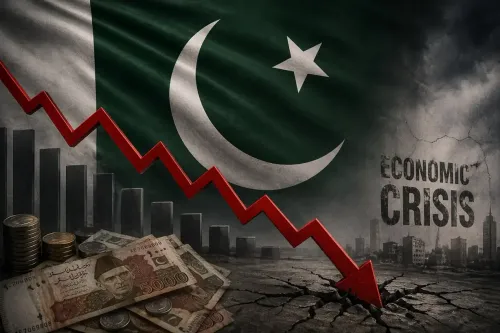
Recent reports indicate that Pakistan now bears a staggering $30 billion debt to Beijing as part of the ambitious China-Pakistan Economic Corridor (CPEC) project.
Many of these initiatives remain unfinished amid significant economic, security, and environmental obstacles.
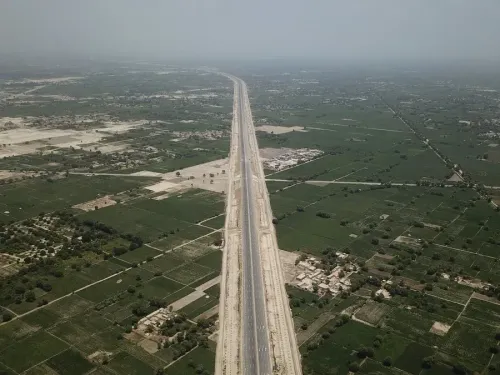
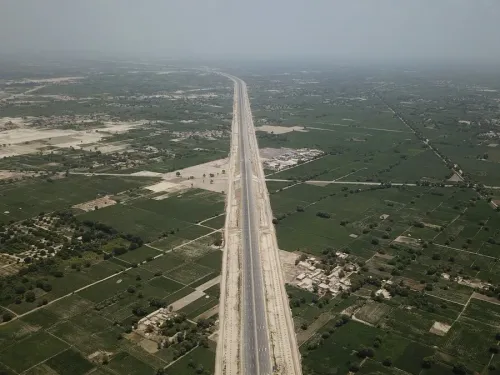
While Islamabad monitored other nations struggling under similar debt weights, it recognized the necessity of CPEC projects to enhance its infrastructure, such as roads and railways.
Currently, Pakistan is experiencing a critical balance-of-payments crisis and fiscal strain fueled by elevated external debt, dwindling foreign-exchange reserves, and sluggish growth.
The country is implementing a comprehensive bailout strategy, which includes an IMF program supported by bilateral commitments from China, Saudi Arabia, and the UAE, along with short-term funding and debt restructuring discussions.
The economic landscape in Pakistan faces immense pressure from significant external obligations, a depreciating currency, and soaring inflation, which have depleted reserves and fiscal flexibility.
The government has secured a new $7 billion IMF Extended Fund Facility with pledges of support from regional partners to bridge financing shortfalls and ensure implementation.
Moreover, Pakistan sought and obtained financial assurances and rollover commitments from China, Saudi Arabia, and the UAE, enabling it to avert an immediate sovereign default and encouraging the IMF to advance its program.
A substantial portion of Pakistan's external liabilities comprises bilateral and commercial loans, with notable commitments owed to Chinese firms associated with CPEC projects.
High debt-service ratios imply that even minor currency devaluations can sharply increase the rupee cost of servicing foreign currency debt, straining the budget and crowding out critical development and social expenditures.
Now, the nation is faced with multiple risk factors, including political instability that could hinder reform efforts, slower growth than anticipated that jeopardizes revenue goals, and external shocks such as spikes in commodity prices.
Interestingly, the term debt-trap diplomacy refers to scenarios where Beijing intentionally provides excessive credit to vulnerable nations, subsequently using repayment difficulties to secure strategic concessions like long leases or asset control.
This pattern is characterized by a cycle of substantial loans for flagship projects, cost overruns, weak revenue, foreign-exchange strains, and restructuring that may involve equity stakes, long leases, or burdensome repayment conditions.
In the case of Sri Lanka, the Hambantota port exemplifies this scenario, where heavy borrowing for construction with limited commercial viability left the country unable to meet its loan obligations, resulting in a 99-year lease of the facility to a Chinese enterprise in 2017.
This economic fallout led to a loss of sovereign control over a strategic asset and a political backlash that necessitated policy adjustments and costly restructuring.
Similarly, in the Maldives, rapid borrowing for airports, ports, and resorts coincided with a sharp increase in external liabilities and dwindling reserves, ringing alarm bells regarding the country's impending sovereign-debt crisis that constrained fiscal options and necessitated austerity measures, with China being a significant creditor.
In other instances, the China–Laos railway improved connectivity but also intensified asymmetric dependencies, with Vientiane facing substantial foreign currency loans, limited export capacity to service those debts, soaring inflation, and reduced domestic investment.
Heavy borrowing for infrastructure and resource sector deals also contributed to Zambia's default in 2020 and ongoing restructuring negotiations.
China's state banks have played a pivotal role as creditors in restructuring agreements, and the fiscal adjustments in Zambia have entailed spending cuts and renegotiated terms that restrict growth potential.
Point of View
We recognize the complexities of Pakistan's economic landscape. The government's pursuit of CPEC projects is essential for infrastructure development, yet it must tread carefully to avoid the pitfalls of debt dependency. The balance between growth and sustainability is crucial for the nation's future.
NationPress
30 Sept 2026
Frequently Asked Questions
What is China's Belt and Road Initiative?
The Belt and Road Initiative (BRI) is a global development strategy adopted by China to enhance regional connectivity and embrace a brighter economic future through infrastructure investments.
How does debt-trap diplomacy work?
Debt-trap diplomacy occurs when a creditor nation extends excessive loans to vulnerable countries, leveraging repayment difficulties to secure strategic advantages like asset control.
What challenges does Pakistan face due to its external debt?
Pakistan grapples with high external debt, low foreign-exchange reserves, and rising inflation, which strain its fiscal capacity and threaten economic stability.
What are the implications of the CPEC project for Pakistan?
The CPEC project aims to improve Pakistan's infrastructure but carries significant debt obligations to China, raising concerns over economic sovereignty and long-term stability.
What can be done to alleviate Pakistan's economic crisis?
Alleviating Pakistan's economic crisis requires a multi-faceted approach, including securing international financial support, implementing structural reforms, and fostering sustainable economic growth.