Pakistan's Escalating Debt Poses Risks to Economic Growth and Job Opportunities

Synopsis
As Pakistan's central government debt skyrockets by over Rs 7 trillion in 2025, a new report reveals the potential dangers this poses to the country’s economic stability and job creation, urging immediate action to avert a bleak future.
Key Takeaways
Debt Surge: Pakistan’s government debt rose over Rs 7 trillion in 2025.
Impact on Economy: Increased debt diverts funds from private investment and job creation.
Domestic Borrowing: The government relies heavily on local markets to cover fiscal deficits.
Economic Viability: Rising debt threatens long-term economic sustainability.
IMF Engagement: Pakistan has entered 26 IMF programs, highlighting its reliance on foreign aid.
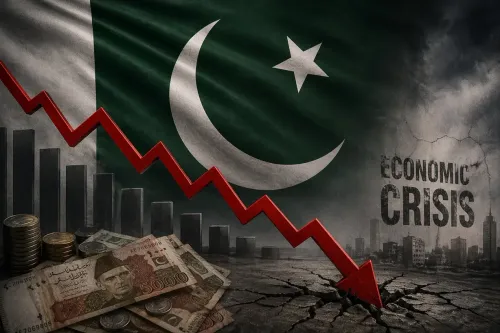
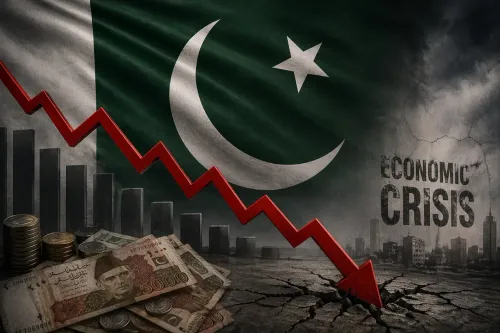
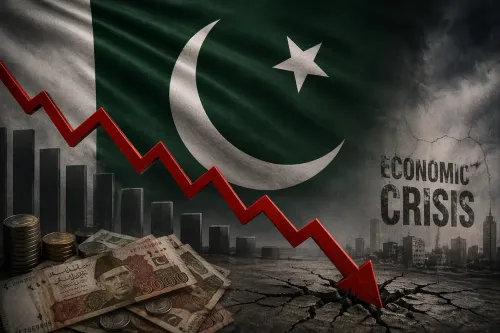
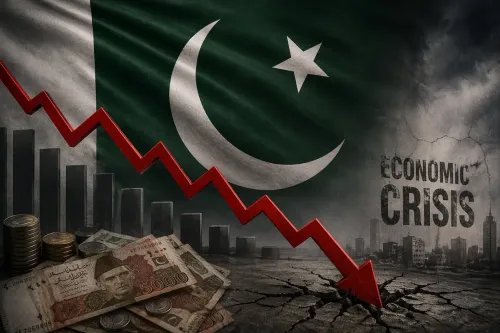
New Delhi, March 13 (NationPress) The debt of Pakistan’s central government surged by more than Rs 7 trillion in 2025, reflecting a nearly 10% increase—an alarming trend that threatens to divert essential resources from private investment, job creation, and public services, according to a report released on Friday.
An opinion piece in The Express Tribune cautioned that at the current trajectory, Pakistan risks becoming "a perennial contender for the world's worst-run country" unless rapid corrective measures are employed.
"Failure to address this issue expeditiously will result in debt management consuming resources that could otherwise fuel private investment and job growth, thereby dooming us to a future of shattered aspirations," stated the report.
The dramatic rise in Pakistan's debt has been primarily fueled by domestic borrowing, as the financially strained government has turned to local sources to cover fiscal deficits, even as external debt levels remained relatively stable.
The swift escalation of debt is a cause for concern among all Pakistanis, as it renders the state economically unsustainable for upcoming generations, despite optimistic assurances from politicians, the report emphasized.
The increase in short-term borrowing has escalated debt servicing costs, making the state reliant on new borrowing to cover maturing obligations, the report highlighted.
"For the wider economy, this translates to a reduction in funds available for private investments, as banks and financial institutions lean towards government bonds rather than riskier entrepreneurial ventures," the media outlet noted.
Another recent analysis indicated that Pakistan has ensnared itself in a "perilous economic trap" by favoring immediate expatriate remittances and foreign aid over long-term productive development.
Currently, remittances constitute nearly 10% of the GDP, competing with export revenues and obscuring systemic failures such as idle factories, soaring unemployment, and underutilization of the workforce, it pointed out.
Since 1958, Pakistan has engaged in 26 IMF programs, the highest globally, amounting to over $34 billion, with the most recent $7 billion Extended Fund Facility in 2024 extended through 2025-26, underscoring the country's growing reliance on foreign aid.
aar/
Point of View
The rising debt is a critical issue that not only threatens the current economic landscape but also the future prospects of the nation. Urgent measures are necessary to ensure that resources are allocated effectively to foster investment and job creation, which are vital for sustainable growth.
NationPress
26 Sept 2026
Frequently Asked Questions
What is the current status of Pakistan's debt?
As of 2025, Pakistan's central government debt has increased by over Rs 7 trillion, marking a nearly 10% rise.
How does rising debt affect job creation in Pakistan?
The increase in debt diverts resources away from private investment, which hinders job creation and economic growth.
What are the primary causes of the debt surge?
The surge is primarily driven by domestic borrowing as the government seeks to address fiscal shortfalls.
How has Pakistan's reliance on foreign aid changed over the years?
Since 1958, Pakistan has participated in 26 IMF programs, reflecting an increasing dependence on foreign aid.
What percentage of GDP do remittances account for in Pakistan?
Remittances currently account for nearly 10% of Pakistan's GDP.