Pakistan's central govt debt hits record Rs 81.93 trillion in FY2025
Synopsis
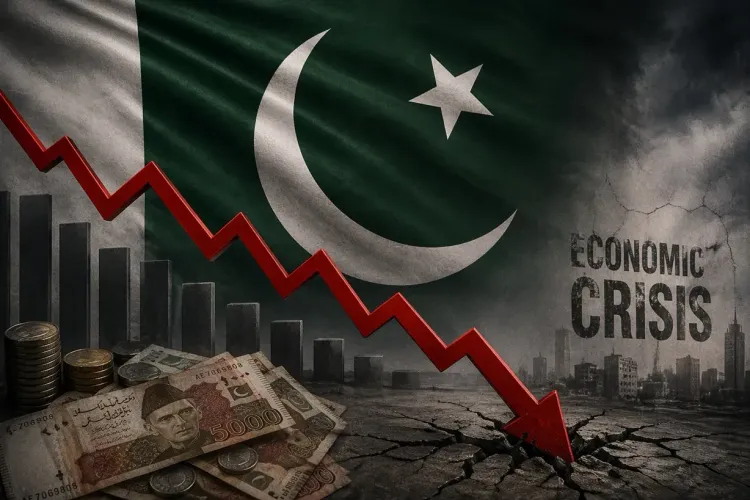
Pakistan's central government debt has crossed a record Rs 81.93 trillion — rising Rs 1.4 trillion in April alone — exposing a borrowing cycle that successive governments have failed to break. With debt servicing crowding out education and healthcare spending, and West Asia tensions threatening to widen the import bill, the fiscal math is getting harder to ignore.
Key Takeaways
Pakistan's central government debt reached a record Rs 81.93 trillion , rising Rs 1.4 trillion in April alone.
Debt grew by more than Rs 4 trillion in the first 10 months of the current fiscal year.
Domestic debt accounted for over Rs 3.6 trillion of the increase; external debt rose by more than Rs 400 billion .
Rising debt servicing is crowding out spending on education , healthcare , infrastructure , and social welfare .
Geopolitical tensions in West Asia are adding pressure through higher oil import costs, straining external accounts.
Analysts and the report call for stronger revenue mobilisation, expenditure discipline, and structural reforms to arrest the debt spiral.
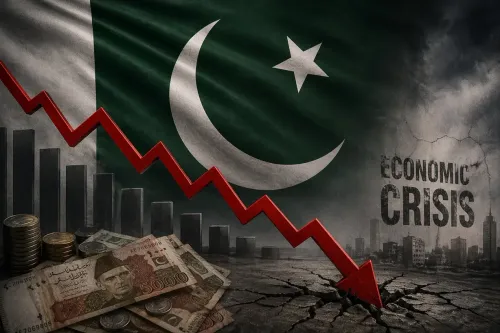
Pakistan's central government debt has surged to a record Rs 81.93 trillion, climbing by Rs 1.4 trillion in April alone, according to a report published by Business Recorder. The figure underscores deepening fiscal pressures and the country's entrenched dependence on borrowing to fund both current expenditure and debt repayments.
Scale of the Debt Surge
Central government debt rose by more than Rs 4 trillion during the first 10 months of the current fiscal year. Domestic debt accounted for over Rs 3.6 trillion of that increase, while external debt contributed more than Rs 400 billion. The sharp April spike was driven by simultaneous domestic and foreign borrowing, reflecting the government's continued need to bridge fiscal deficits and meet existing repayment obligations.
Structural Weaknesses Behind the Numbers
According to the report, successive Pakistani governments have relied on escalating borrowing to finance current spending and service existing debt — a cycle that analysts describe as increasingly difficult to break. Despite repeated warnings from economists, international financial institutions, and domestic policymakers about weak revenue mobilisation and persistent fiscal deficits, the debt burden has continued to expand. The report characterised the latest figures as reflecting deep-rooted structural weaknesses in Pakistan's public finances.
Impact on Public Services and the Economy
A growing share of public resources is being diverted toward debt servicing, the report noted, squeezing allocations for critical sectors including education, healthcare, infrastructure, and social welfare. This crowding-out effect compounds the long-term economic cost of the debt spiral. Notably, the rising debt burden arrives at a time when Pakistan's economy is already under strain from subdued growth and elevated inflation.
Geopolitical Risks Add Fresh Pressure
The report also flagged that geopolitical tensions in West Asia have introduced additional uncertainty, putting upward pressure on global energy markets. For Pakistan — a significant oil importer — higher crude prices translate directly into a wider current account deficit and greater stress on external accounts, further complicating efforts to stabilise public finances.
What Needs to Change
The report called for stronger revenue generation, tighter expenditure management, and sustained structural reforms to place Pakistan's public finances on a more sustainable trajectory. Without addressing the root causes of runaway borrowing, the country risks confronting even sharper fiscal constraints in the years ahead. International lenders, including the International Monetary Fund (IMF), have long pressed Islamabad for credible fiscal consolidation measures as a condition of continued financial support.
Point of View
Which crowds out private credit and keeps interest rates elevated. The real danger is the feedback loop — higher debt servicing means less fiscal space, which forces more borrowing, which raises servicing costs further. IMF programme conditions have repeatedly targeted this cycle without breaking it. Until Pakistan's tax-to-GDP ratio — among the lowest in the region — is structurally raised, debt sustainability will remain a recurring headline rather than a resolved problem.
NationPress
25 Sept 2026
Frequently Asked Questions
What is Pakistan's current central government debt?
Pakistan's central government debt has risen to a record Rs 81.93 trillion , according to a report by Business Recorder. The debt climbed by Rs 1.4 trillion in April alone and by more than Rs 4 trillion over the first 10 months of the current fiscal year.
Why is Pakistan's debt rising so rapidly?
The rise is driven by the government's continued reliance on both domestic and foreign borrowing to finance current expenditure and service existing debt obligations. Weak revenue mobilisation and persistent fiscal deficits have created a borrowing cycle that successive governments have struggled to break.
How does the rising debt affect ordinary Pakistanis?
A growing share of public resources is being diverted to debt servicing, leaving less funding available for education, healthcare, infrastructure, and social welfare. This crowding-out effect has direct consequences for public service delivery and long-term economic development.
What role do geopolitical tensions play in Pakistan's fiscal outlook?
Tensions in West Asia are pressuring global energy markets, raising oil import costs for Pakistan. Higher crude prices widen the current account deficit and add stress to external accounts, compounding the country's existing fiscal vulnerabilities.
What reforms are needed to stabilise Pakistan's finances?
The report calls for stronger revenue generation, tighter expenditure control, and sustained structural reforms. Credible fiscal consolidation — including improving Pakistan's low tax-to-GDP ratio — is widely seen as essential to breaking the debt-dependence cycle.