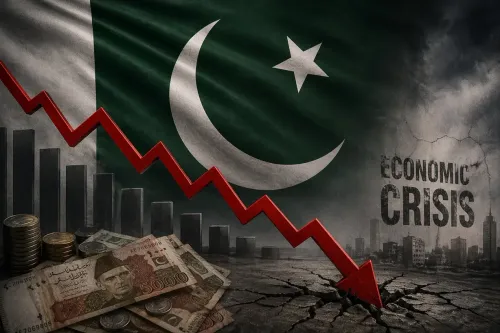
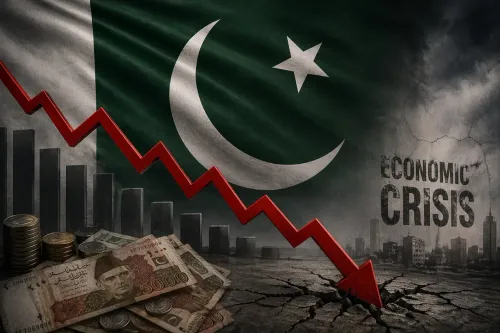
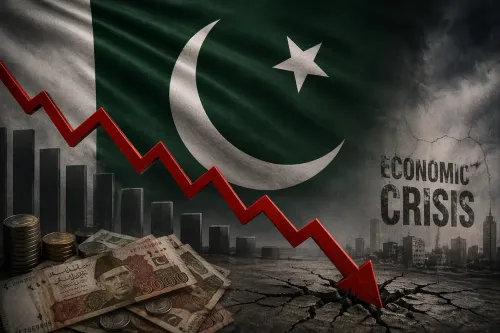
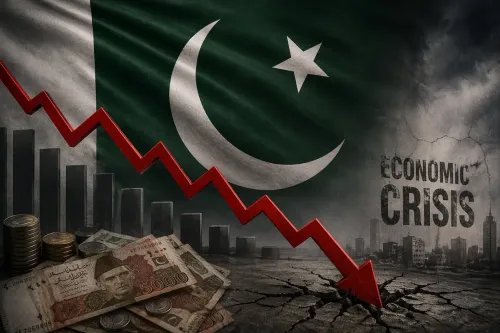
Pakistan's Public Debt Hits Rs 80 Trillion: Daily Borrowing Stands at Rs 26 Billion

Synopsis
Discover the alarming rise of Pakistan's public debt, which has surged to Rs 80.5 trillion in just one year. This report reveals the implications for the economy and essential services, highlighting a critical moment for fiscal reform.
Key Takeaways
Pakistan's public debt has increased to Rs 80.5 trillion.
Daily borrowing stands at Rs 26 billion .
Debt-to-GDP ratio has reached 72% .
Significant losses from state-owned enterprises have contributed to the debt rise.
Urgent reforms are needed to address the economic crisis.
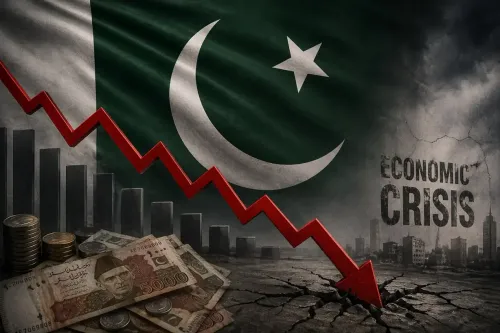
New Delhi, April 6 (NationPress) In the past year, Pakistan's public debt has escalated from Rs 71 trillion to an alarming Rs 80.5 trillion, according to a recent fiscal report released by the government. This marks an increase of Rs 9 trillion during a time that the government has described as a phase of economic stabilization.
The report from The News International highlights that this increase amounts to approximately Rs 26 billion borrowed each day, even when accounting for 19 public holidays.
On an hourly basis, Pakistan's government is taking on Rs 1.08 billion in new debt, which breaks down to around Rs 18 million every minute.
Furthermore, it is concerning to note that for every Rs 100 generated by Pakistan's economy, Rs 72 is already committed to debt repayment before funding any public services. The debt-to-GDP ratio has now reached a staggering 72 percent.
Out of the Rs 9 trillion increase, Rs 2 trillion has been allocated for grants, while another Rs 2 trillion has been absorbed by losses from state-owned enterprises.
Major loss-making entities, such as power utilities, gas companies, railways, and the national airline, have yet to undergo any structural reforms.
The government currently operates a fleet of 85,500 vehicles that consume Rs 114 billion in fuel each year.
Looking ahead, the report warns that by 2030, servicing this debt will consume a significant portion of tax revenue. It emphasizes that every IMF program merely provides temporary relief and does not guarantee necessary reforms. If the situation does not improve, there may be no resources left to manage, according to the report.
Historically, in 1971, a newborn in Pakistan was born with a debt share of Rs 462. Today, that amount has skyrocketed to Rs 333,041, all before the child has taken its first breath or received any government services.
Economists and fiscal analysts stress that as debt servicing takes precedence over discretionary spending, investments in crucial sectors like education and health will continue to dwindle.
Since gaining independence, Pakistan has had four governors-general, fourteen presidents, and twenty prime ministers. Currently, the pace at which debt is accumulating is unprecedented in the country’s 79-year history.
Point of View
It is crucial to highlight the urgency of addressing Pakistan's escalating public debt. The current financial trajectory raises significant concerns about the country's economic stability and the potential impacts on vital public services. A strategic approach is necessary to mitigate these challenges and foster long-term growth.
NationPress
15 Oct 2026
Frequently Asked Questions
What is the total public debt of Pakistan as of now?
As of now, Pakistan's total public debt stands at Rs 80.5 trillion.
How much is Pakistan borrowing daily?
Pakistan is borrowing approximately Rs 26 billion every day.
What is the debt-to-GDP ratio of Pakistan?
The debt-to-GDP ratio of Pakistan has reached 72 percent.
What impact does the rising debt have on public services?
The rising debt is crowding out discretionary expenditure, leading to decreased investment in education and health.
How has the debt situation changed since 1971?
In 1971, a child was born with a debt share of Rs 462. Today, that figure has ballooned to Rs 333,041.