Amit Shah Challenges Opposition: Debate Now or Face Public Verdict
Synopsis
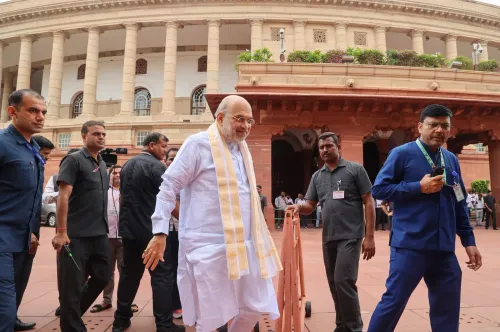
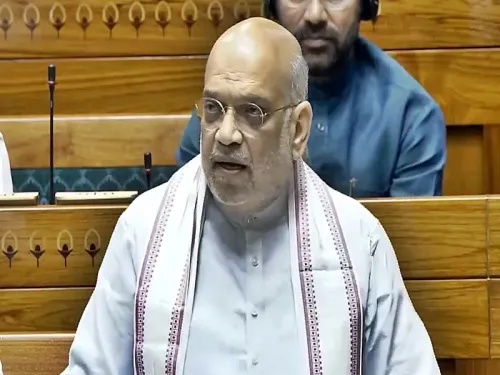
Union Home Minister Amit Shah on August 12, 2026 challenged the opposition to submit a formal notice to the Lok Sabha Speaker for a 24-hour debate starting 3 PM, pledging to personally answer every question — and warning the public will judge who is running away.
Key Takeaways
Amit Shah issued a 24-hour debate challenge to the opposition on August 12, 2026 .
The government offered to debate from 3 PM August 12 to 3 PM August 13 , contingent on a formal notice to the Lok Sabha Speaker .
Shah personally pledged to answer 'each and every question' from the opposition during the debate.
Shah accused the opposition of seeking disruption rather than genuine discussion in Parliament.
The offer shifts the political burden to the opposition — submit the notice or face a public narrative of obstruction.
This follows a pattern of government-opposition procedural standoffs in Parliament dating back to at least 2014 .
A gauntlet has been thrown on the floor of Indian politics. Union Home Minister Amit Shah, posting on X on Wednesday, August 12, 2026, issued a direct, time-stamped challenge to opposition parties: submit a formal discussion notice to the Lok Sabha Speaker by 3 PM today, and the government will debate — straight through to 3 PM tomorrow. Twenty-four hours. Every question answered.
Shah's post, in Hindi, drew a sharp line: 'Modi sarkar sansad mein har tarah ki charcha ke liye taiyar hai. Magar vipaksh ka uddeshya charcha karna nahin, hungama karna hai.' ('The Modi government is ready for every kind of discussion in Parliament. But the opposition's purpose is not to discuss — it is to disrupt.')
The 24-Hour Clock and What It Demands
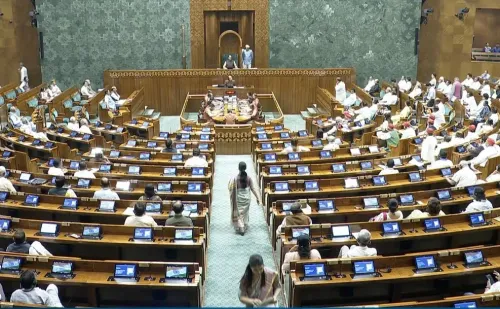
The offer is procedurally precise, which is the point. Under parliamentary convention, a formal notice to the Lok Sabha Speaker is the legitimate gateway to a structured debate. By demanding that the opposition route its grievances through the Speaker, Shah is not just making a political argument — he is invoking the rules of the House itself. If the opposition declines or fails to submit the notice, the government gets to say the disruption was always the goal. If they do submit, a 24-hour marathon debate begins, with Shah personally pledging to answer 'each and every question' from the opposition. 'Then the public will decide,' Shah wrote, 'who wants to discuss and who is running away.' That closing line is the real payload — it redirects the political jury from Parliament to the electorate.A Recurring Pattern, Sharpened This Time
This kind of government-versus-opposition standoff over parliamentary procedure is not new. Since at least 2014, sessions of the Indian Parliament have cycled through a familiar rhythm: the ruling coalition signals openness to debate, the opposition protests or walks out over specific grievances, and both sides claim the moral high ground with the public. What sharpens this particular exchange is the specificity — a named window, a named venue, and a named minister staking personal accountability. Shah's willingness to personally field opposition questions for a full day is a significant escalation of that standard formula. It turns an institutional offer into an individual one, raising the political stakes considerably.What Happens in the Next 24 Hours
The clock is now running. The critical variable is whether the opposition bloc treats this as a genuine opening or a trap. Submitting the notice means engaging on the government's terms and timeline. Refusing — or continuing disruptions — hands the ruling coalition a ready-made narrative about obstruction over accountability. Either way, Amit Shah has ensured that the next move, and the political cost of that move, belongs entirely to the opposition.Point of View
Turning institutional rules into campaign arguments. The personal accountability Shah attaches — 'I will answer every question' — also reinforces his image as the government's frontline combatant, a role he has consistently occupied since the NDA's return to power.
NationPress
12 Aug 2026
Frequently Asked Questions
What did Amit Shah say about parliament debate on August 12 2026?
Amit Shah challenged the opposition to submit a formal notice to the Lok Sabha Speaker for a 24-hour debate starting 3 PM on August 12, saying he would personally answer every opposition question and that the public would judge who was avoiding discussion.
How can the opposition accept Amit Shah's debate offer?
The opposition must submit a formal discussion notice to the Lok Sabha Speaker — the standard parliamentary procedure for initiating a structured debate in the lower house.
Why did Amit Shah accuse the opposition of disruption?
Shah stated that the opposition's goal in Parliament is 'hungama' (disruption) rather than genuine discussion, a charge the government has used during sessions marked by walkouts and protests rather than legislative debate.
What happens if the opposition does not submit the debate notice?
If the opposition declines to submit the notice, the government is positioned to argue publicly that the disruptions were never about accountability but about political theatre — a narrative Shah telegraphed explicitly in his post.
Is government challenging opposition to debate common in Indian Parliament?
Yes. Since at least 2014, Indian parliamentary sessions have seen recurring cycles where the ruling coalition offers debate and the opposition protests over procedural or substantive grievances, with both sides appealing to public opinion.