CM Mohan Yadav Backs Amit Shah's Open Debate Challenge to Opposition
Synopsis
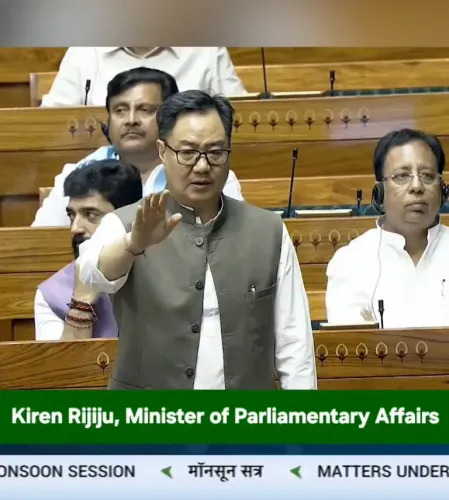
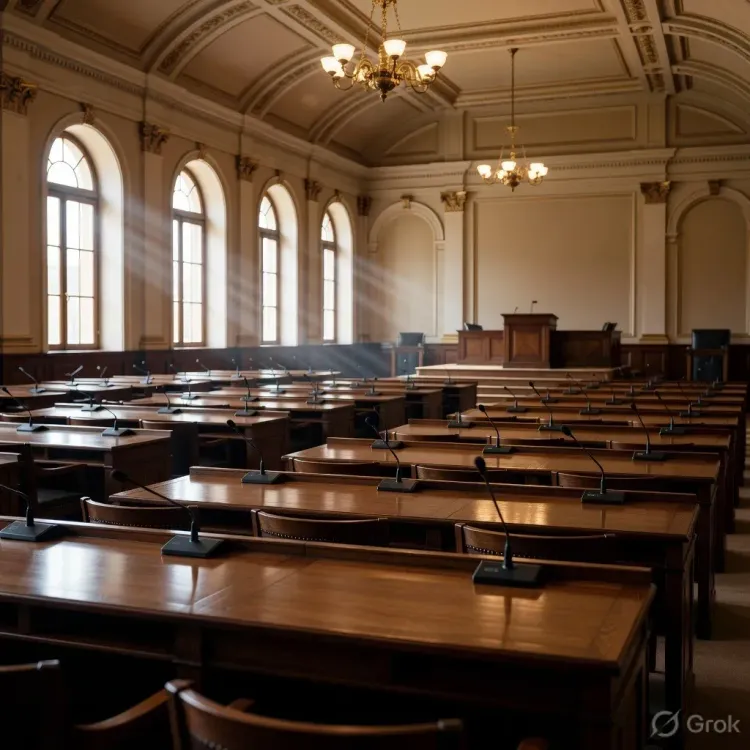
MP Chief Minister Dr. Mohan Yadav amplified Union Home Minister Amit Shah's direct challenge to the opposition: submit a debate letter to the Lok Sabha Speaker and the government will engage for 24 hours straight — or face public judgment for choosing disruption over dialogue.
Key Takeaways
Amit Shah offered a 24-hour debate window from 3 PM Wednesday to 3 PM Thursday , promising to personally answer every opposition question.
MP Chief Minister Dr.
Mohan Yadav amplified Shah's statement on X on August 12, 2026 , backing the government's debate challenge.
The government asked the opposition to submit a formal debate request to the Lok Sabha Speaker .
Shah accused the opposition of seeking 'uproar' rather than genuine discussion in Parliament.
The statement ends with a direct appeal to voters to judge who is willing to debate and who is 'running away.'
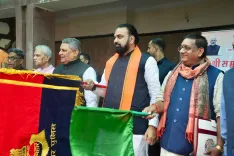
When Union Home Minister Amit Shah threw open a 24-hour debate window — from 3 PM on Wednesday to 3 PM on Thursday — and promised to answer every opposition question personally, Madhya Pradesh Chief Minister Dr. Mohan Yadav amplified the challenge to the national stage, squarely putting the onus back on the opposition to either sit down and talk or stand exposed before voters.
Dr. Yadav shared Shah's pointed statement verbatim: 'Vipaksh Lok Sabha Adhyaksh ji ke paas charcha ka patra de' — 'Let the opposition submit a letter to the Lok Sabha Speaker for discussion.' The message was unambiguous: the government's door is open, the clock is ticking, and the next move belongs to the other side.
Shah's 24-Hour Offer — and the Political Trap Behind It
Shah's statement, as relayed by Dr. Yadav, draws a sharp line between structured parliamentary debate and what the government calls deliberate disruption. 'The opposition's goal is not discussion but uproar,' Shah said, according to the post. The framing is calculated: by naming a specific time window and offering to answer 'each and every question,' the government dares the opposition to either accept and engage, or refuse and hand the BJP a ready-made narrative of obstruction.
The closing line carries the real political sting — 'Phir janta tay karegi ki kaun charcha karna chah raha hai aur kaun bhaag raha hai' — 'Then the public will decide who wants to discuss and who is running away.' It is a direct appeal over the opposition's head, straight to the voter.
A Pattern as Old as the Parliament Itself
Lok Sabha disruptions are not new. Indian parliamentary sessions have repeatedly seen opposition walkouts, placard protests, and well-of-the-House demonstrations, often on issues of public urgency. Successive governments — including the current BJP-led administration under Prime Minister Narendra Modi — have responded with offers of structured debate, simultaneously positioning themselves as the responsible adult in the room while painting the opposition as allergic to accountability.
What makes this moment notable is the specificity: a named minister, a named timeframe, a named forum — the Lok Sabha Speaker's office — and a personal guarantee to field every question. Vague offers are easy to dismiss. This one is harder to sidestep.
Whether opposition parties submit that letter to the Speaker — and what subject ultimately lands on the floor — will determine if this exchange stays a Twitter skirmish or becomes a genuine parliamentary reckoning.
Point of View
A specific forum, and a personal accountability pledge, the government converts a parliamentary standoff into a public-relations contest it believes it wins either way. If the opposition engages, the government gets a platform; if it refuses, the government gets a narrative. Dr. Yadav's amplification signals that this is not just a Delhi story — state BJP leaders are being mobilised to carry the message to their constituencies. The real test is whether the opposition calls the bluff or lets the framing stick.
NationPress
26 Sept 2026
Frequently Asked Questions
What did Amit Shah offer the opposition in Parliament?
Amit Shah offered a 24-hour open debate in the Lok Sabha, from 3 PM on Wednesday to 3 PM on Thursday , promising to personally answer every question the opposition raises, provided they submit a formal debate request to the Lok Sabha Speaker.
Why did CM Mohan Yadav share Amit Shah's statement?
Madhya Pradesh Chief Minister Dr. Mohan Yadav shared Shah's statement to amplify the BJP government's position that it is ready for parliamentary debate and to put public pressure on the opposition to accept the debate offer.
What does the opposition need to do to accept the debate?
According to Shah's statement, the opposition must submit a formal letter requesting discussion to the Lok Sabha Speaker , after which the government says it is ready to begin debate immediately.
What is the BJP accusing the opposition of in Parliament?
The BJP has accused the opposition of deliberately choosing disruption and 'uproar' over constructive debate, framing the opposition's parliamentary conduct as an avoidance of accountability rather than a pursuit of public interest.
What happens if the opposition does not respond to the debate offer?
Shah's statement suggests the matter will then be left to public judgment — 'janta tay karegi' (the public will decide) — who wanted genuine debate and who chose to walk away, turning the parliamentary standoff into an electoral argument.