Gujarat CM Patel Disburses ₹646 Cr Scholarships to 4.72 Lakh Students
Synopsis
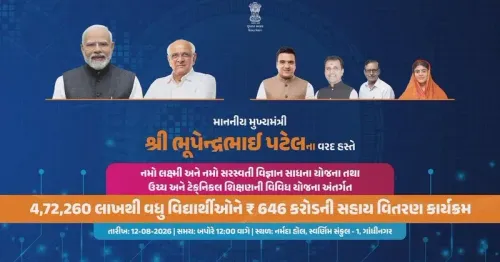
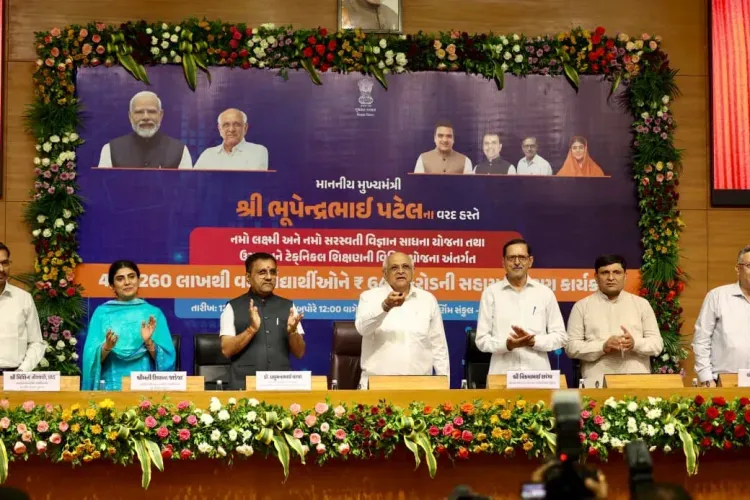
Chief Minister Bhupendra Patel disbursed ₹646 crore in scholarships to over 4.72 lakh Gujarat students via Direct Benefit Transfer on 12 August 2026 in Gandhinagar, covering Namo Lakshmi, Namo Saraswati Vigyan Sadhana Yojana, and higher and technical education schemes.
Key Takeaways
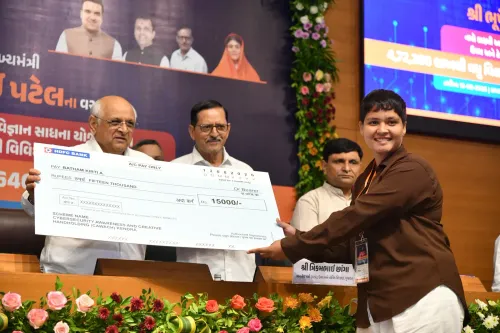
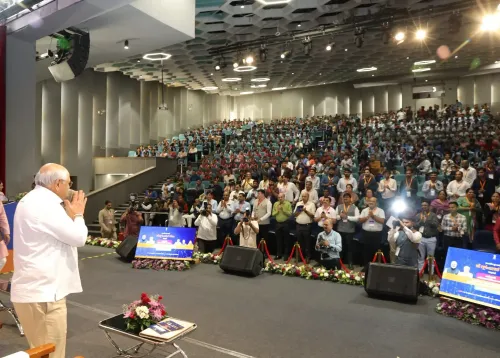
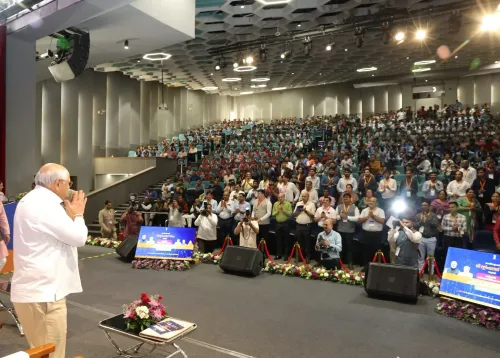
Chief Minister Bhupendra Patel presided over a scholarship disbursement ceremony in Gandhinagar on 12 August 2026 .
More than 4.72 lakh students received a combined ₹646 crore via Direct Benefit Transfer.
Three scheme categories were covered: Namo Lakshmi , Namo Saraswati Vigyan Sadhana Yojana , and higher and technical education scholarships.
Namo Lakshmi and Namo Saraswati specifically target girl students , including those in science streams.
Education Minister Dr.
Pradyumanbhai Vaja and three Ministers of State attended the ceremony.
The event continues Gujarat's practice of consolidating large-scale beneficiary payouts through the national DBT infrastructure .
In a single sweep, Chief Minister Bhupendra Patel channelled ₹646 crore in scholarships directly into the bank accounts of more than 4.72 lakh students across Gujarat on Wednesday, 12 August 2026 — a mass education payout delivered through Direct Benefit Transfer at a state ceremony in Gandhinagar.
The disbursement covered beneficiaries under three major programmes: the state's Namo Lakshmi scheme, the Namo Saraswati Vigyan Sadhana Yojana, and a clutch of higher and technical education scholarship schemes. Every rupee went directly to students — no middlemen, no delay.
Namo Lakshmi and Namo Saraswati: Gujarat's twin bets on girls in STEM
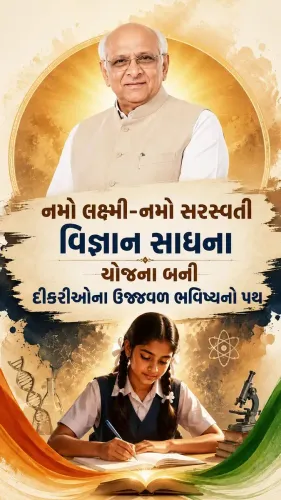
The Namo Lakshmi scheme targets girl students at the secondary level, providing financial support to keep them in school through critical transition years. Namo Saraswati Vigyan Sadhana Yojana is aimed squarely at girls pursuing science streams in higher secondary education — a deliberate push to widen female participation in STEM pathways that feed into technical and professional careers.
Together, the two schemes reflect a strategy Gujarat has pursued consistently: pair cash transfers with enrolment incentives so that economic pressure does not become the reason a girl student drops out or avoids science.
DBT as the delivery rail — and why it matters
India's Direct Benefit Transfer architecture, launched nationally in 2013, was built precisely to solve the leakage problem that plagued welfare spending for decades. By routing funds straight to Aadhaar-linked bank accounts, states can verify that scholarships reach the intended student rather than disappearing in transit. Gujarat's use of DBT for a payout of this scale — nearly half a million students in one event — is a demonstration of how far the infrastructure has matured.
The Gandhinagar ceremony was attended by Education Minister Dr. Pradyumanbhai Vaja, Ministers of State Trikambhai Chhanga, Rivaba Jadeja, and Kamleshbhai Patel, alongside other senior officials — a ministerial turnout that signals the political weight the state government places on visible education delivery.
What ₹646 crore at one go tells us about Gujarat's education budget posture
Consolidating multiple scheme payouts into a single high-profile event is a pattern Gujarat has used before — it maximises administrative efficiency while also creating a clear public moment of accountability. For students and families, the message is concrete: the money arrived, on this date, in this amount.
With the 2026-27 academic year now underway, the next question for Gujarat's education department is whether scholarship amounts and eligibility thresholds will be revised upward in the coming budget cycle — a watch point for the state's higher and technical education institutions.
Nearly half a million students now have funds in hand. The semester has begun. The real test is whether that money translates into classrooms that stay full.
Point of View
Namo Saraswati, and higher-education scholarships into a single DBT event is not merely administrative tidiness — it is a political statement about delivery credibility ahead of a budget cycle. Gujarat's twin girl-student schemes signal that the state is positioning female STEM enrolment as a flagship metric, not a footnote. The scale — nearly half a million beneficiaries in one transfer — also tests whether DBT infrastructure can sustain mass simultaneous payouts without exclusion errors, a challenge that will define the programme's credibility going forward. If the 2026-27 budget revises eligibility thresholds upward, this ceremony will read as the opening act of a larger education-spending push.
NationPress
27 Sept 2026
Frequently Asked Questions
What is the Namo Lakshmi scheme in Gujarat?
Namo Lakshmi is a Gujarat state scholarship scheme that provides financial support to girl students at the secondary level, aimed at reducing dropout rates and keeping girls in school through critical academic years.
What is Namo Saraswati Vigyan Sadhana Yojana?
Namo Saraswati Vigyan Sadhana Yojana is a Gujarat government scholarship programme targeting girl students who opt for the science stream in higher secondary education, designed to boost female participation in STEM fields.
How much scholarship money did Gujarat distribute on 12 August 2026?
Gujarat distributed approximately ₹646 crore in scholarships to more than 4.72 lakh students through Direct Benefit Transfer at a ceremony in Gandhinagar on 12 August 2026.
What is Direct Benefit Transfer (DBT) and how does it work for scholarships?
Direct Benefit Transfer is a national mechanism launched in 2013 that sends government funds — including scholarships — directly to beneficiaries' Aadhaar-linked bank accounts, cutting out intermediaries and reducing leakages.
Who attended the Gujarat scholarship disbursement ceremony in Gandhinagar?
The ceremony was attended by Chief Minister Bhupendra Patel, Education Minister Dr. Pradyumanbhai Vaja, and Ministers of State Trikambhai Chhanga, Rivaba Jadeja, and Kamleshbhai Patel, along with other senior officials.