CM Saini Marks Kedarnath Winter Closure With Army Band

Synopsis
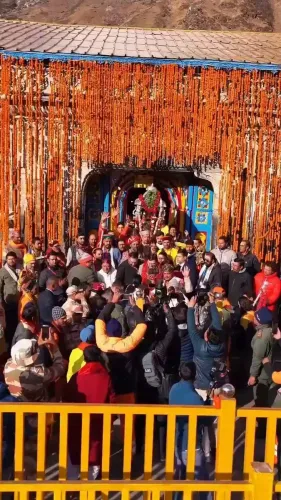
Haryana CM Nayab Singh Saini on 11 November 2026 saluted the winter closure of Kedarnath — one of the twelve Jyotirlingas — where an Indian Army ceremonial band accompanied Vedic chants as thousands of pilgrims witnessed the sacred doors shut for the season.
Key Takeaways
The doors of Kedarnath temple were ceremonially closed for winter on 11 November 2026 .
Indian Army band musicians performed alongside Vedic chanting at the closure ritual.
Kedarnath is both one of the twelve Jyotirlingas and part of the Char Dham pilgrimage circuit in Uttarakhand .
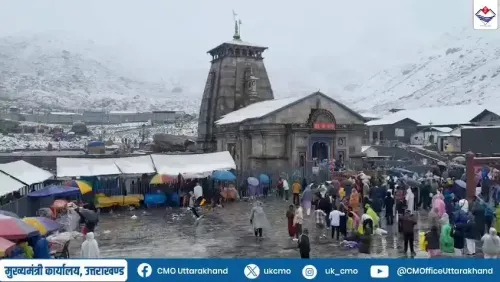
The temple closes each year due to heavy Himalayan snowfall and traditionally reopens in April–May .
Haryana CM Nayab Singh Saini posted a devotional tribute on X marking the occasion with the salutation 'Jay Baba Kedar, Har Har Mahadev'.
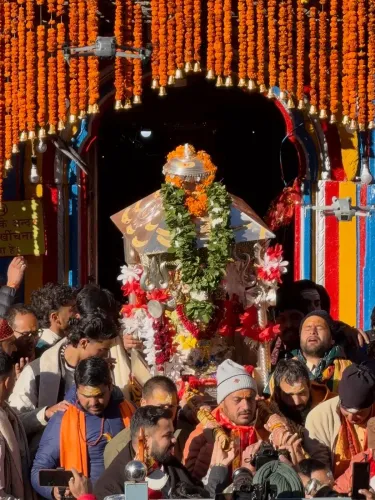
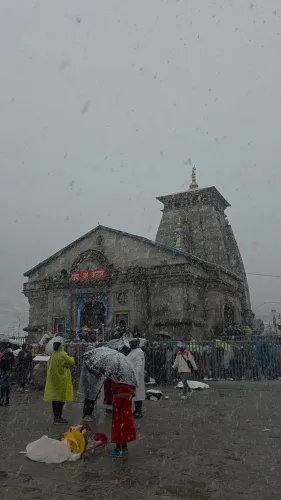
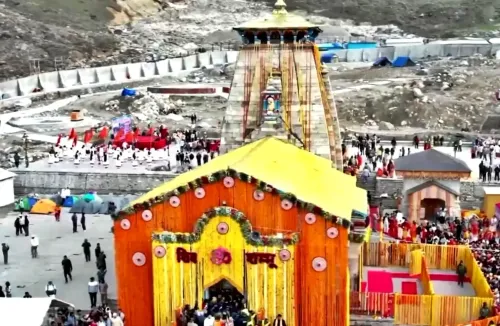
To the resonant notes of an Indian Army band and the cadence of Vedic chants, the sacred doors of Kedarnath temple closed for the winter season on Wednesday, 11 November 2026 — and Haryana Chief Minister Nayab Singh Saini marked the moment with a devotional tribute that captured the dual spirit of the ceremony.
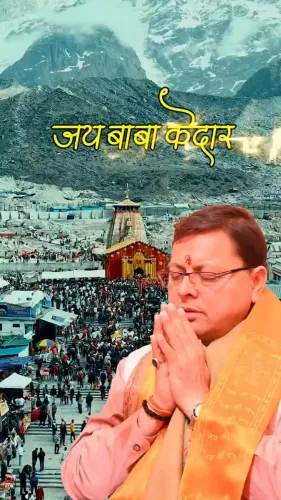
Posting on X with the salutation 'Jay Baba Kedar! Har Har Mahadev!' — 'Victory to Baba Kedar! Glory to Mahadev!' — CM Saini described the occasion as 'ek adbhut sangam', an extraordinary confluence of patriotic melody and divine devotion. 'Thousands of devotees who witnessed this divine moment are fortunate,' he wrote. 'The whole of Kedarpuri rang out with the Lord's victory chants.'
When the Army Plays at 11,755 Feet
The presence of an Indian Army ceremonial band at a Himalayan temple is not incidental — it is established practice. The Army provides both logistical muscle and ceremonial support at high-altitude shrines in the Garhwal Himalayas, where the terrain and altitude demand institutional capacity that few civilian agencies can match. The pairing of regimental brass with Vedic Sanskrit chanting at Kedarnath, sitting at roughly 3,583 metres above sea level in Uttarakhand, has become one of the more striking visual and sonic signatures of the annual closure ritual.
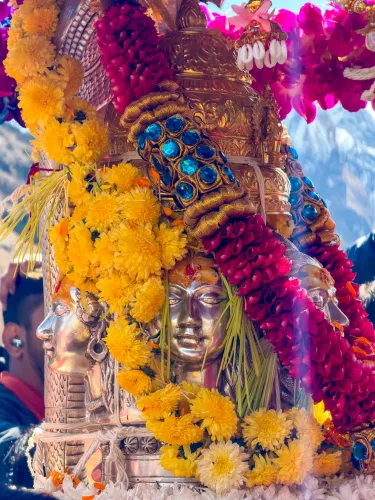
The closure itself is a long-standing seasonal imperative. Heavy snowfall renders the high-altitude valley inaccessible through winter, and the idol of Lord Shiva is ceremonially relocated — traditionally to Ukhimath in the valley — until the shrine reopens, typically around April–May, when the next pilgrimage season begins.
One of Twelve Jyotirlingas, One of Four Dhams
Kedarnath carries a double distinction in Hindu religious geography: it is simultaneously one of the twelve Jyotirlingas — the most sacred abodes of Lord Shiva — and one of the Char Dham pilgrimage sites that devout Hindus aspire to visit in a single Himalayan circuit. That layered sanctity draws pilgrims from every corner of India each season, and the opening and closing rituals are watched — and increasingly shared on social media — with corresponding devotion.
CM Saini closed his post with a line that struck a quieter, more lasting note: 'The seasons will change, the weather will change — but the love of Bholenath's devotees will never change.' It is the kind of sentiment that travels well across a pilgrim nation.
The next chapter is already written in the almanac: when spring thaws the valley and the doors open again, the cycle will begin once more.
Point of View
With BJP leaders in particular using it to signal cultural alignment with Shaivite devotion. CM Saini's post — amplified by the Army band visual — fits a broader pattern of using sacred Himalayan milestones to reinforce both religious identity and institutional pride simultaneously. As Char Dham infrastructure continues to expand under central and state government initiatives, the pilgrim circuit is as much a governance narrative as a spiritual one. The Army's ceremonial presence adds a layer of national-security prestige to what is fundamentally a religious event, a framing that resonates strongly with the BJP's core messaging.
NationPress
11 Nov 2026
Frequently Asked Questions
When did Kedarnath temple close for winter in 2026?
Kedarnath temple closed for the winter season on 11 November 2026 , with an Indian Army band and Vedic chanting marking the ceremony.
Why does Kedarnath temple close every year?
Kedarnath sits at over 3,500 metres in the Garhwal Himalayas and closes each winter because heavy snowfall makes the valley inaccessible. The idol is traditionally relocated to Ukhimath until the shrine reopens in spring.
What is the Indian Army's role at Kedarnath?
The Indian Army provides logistical support and ceremonial band services at Kedarnath and other high-altitude shrines, a long-established practice given the challenging terrain and altitude of the region.
Is Kedarnath one of the Char Dham pilgrimage sites?
Yes. Kedarnath is part of the Char Dham circuit in Uttarakhand and is also counted among the twelve Jyotirlingas , making it one of the most sacred Shiva temples in India.
When will Kedarnath temple reopen after winter?
Kedarnath traditionally reopens for pilgrims in April or May , depending on the auspicious date determined by the temple's priestly tradition, marking the start of the next pilgrimage season.