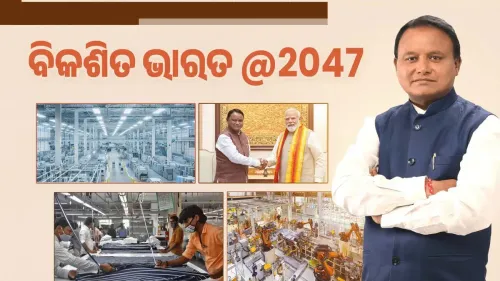
CM Majhi rolls out free Wi-Fi to 601 Odisha colleges

Synopsis
Odisha Chief Minister Mohan Charan Majhi has announced the ShikshaNet scheme, promising free high-speed Wi-Fi across 601 state colleges to strengthen digital infrastructure in higher education and support the vision of a Samruddha Odisha.
Key Takeaways
Odisha CM Mohan Charan Majhi announced the ' Odisha ShikshaNet ' scheme on 11 November 2026 .
The scheme will provide free, high-speed Wi-Fi to 601 colleges across Odisha.
The initiative is part of the BJP-led state government's drive to strengthen digital infrastructure in higher education under its ' Samruddha Odisha ' vision.
The move aligns with India's National Education Policy 2020 and the broader Digital India programme emphasising campus connectivity.
Key open questions include budget allocation, implementation timelines, and integration with national platforms like SWAYAM and e-Vidya .
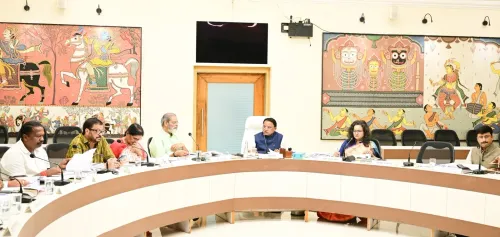
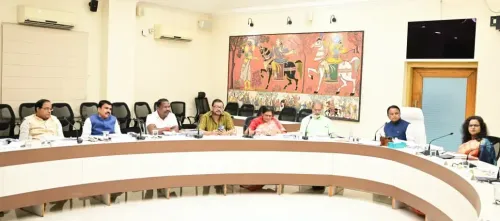
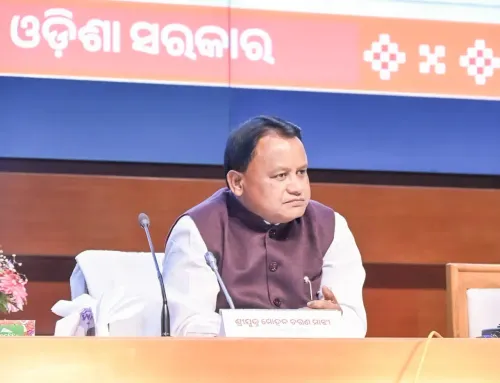
A quiet but consequential shift is under way in Odisha's higher education landscape. Odisha Chief Minister Mohan Charan Majhi announced on Wednesday, 11 November 2026 that the state's 'Odisha ShikshaNet' scheme will deliver free, high-speed Wi-Fi connectivity to 601 colleges across the state — framing digital access as the foundation of a Samruddha Odisha (prosperous Odisha).
What ShikshaNet promises — and who it reaches
The scheme's headline number is striking: 601 colleges in a single state rollout. For students in Odisha's smaller towns and rural districts, where private broadband is patchy and expensive, campus Wi-Fi is not a convenience — it is often the only reliable gateway to online course materials, government skill portals, and digital libraries. CM Majhi posted in both Odia and English, signalling an intentional pitch to both local constituents and national audiences: 'Digital connectivity in education, creating new opportunities for a Samruddha Odisha.'
The state government has positioned ShikshaNet under its broader 'people's government' (lokanka sarkar) branding — a phrase Majhi has repeatedly used since the BJP swept Odisha's assembly elections in June 2024, ending 24 years of BJD rule. Connecting colleges to high-speed internet is a visible, measurable deliverable that lands squarely in the education-reform narrative the new administration has been building.
Where ShikshaNet fits in India's digital-education push
Odisha's move does not happen in a vacuum. India's National Education Policy 2020 made digital infrastructure expansion in higher education a national priority, and the Digital India programme has pushed states to wire up campuses since the mid-2010s. The post-pandemic years accelerated that push dramatically, as colleges scrambled to support hybrid and online learning. Odisha's announcement is the latest chapter in that national pattern — but it arrives under a government that is acutely aware it must demonstrate administrative competence after inheriting a state from a long-dominant incumbent.
Nationally, platforms such as SWAYAM and e-Vidya offer thousands of free college-level courses — but their utility is capped entirely by bandwidth. A student who cannot stream a lecture gains nothing from a course library. ShikshaNet, if implemented at scale, removes that bottleneck for 601 institutions at once.
The delivery test ahead
Announcements of campus Wi-Fi schemes are not new in Indian state politics; execution is where they tend to diverge sharply. The questions that will determine ShikshaNet's real impact — budget allocation, vendor timelines, bandwidth guarantees, and maintenance commitments — remain to be detailed publicly. Integrating the network with national digital learning platforms would amplify returns further, but that linkage has not yet been confirmed.
What is already clear is that CM Majhi is placing digital education at the centre of his administration's early identity — and that 601 colleges worth of students are watching to see the scheme move from post to practice.
Point of View
Countable deliverable — 601 colleges, free Wi-Fi — that doubles as a contrast with the previous 24-year BJD era. For CM Majhi, digital education is low-controversy, high-visibility territory where the BJP can demonstrate administrative seriousness without political friction. The broader pattern matters too: state-level campus connectivity schemes increasingly function as the last-mile delivery mechanism for central digital-learning investments like SWAYAM, meaning Odisha's execution quality will determine whether those national assets actually reach its students. If ShikshaNet rolls out on schedule and at genuine bandwidth, it sets a credibility baseline for the administration's larger reform promises.
NationPress
11 Nov 2026
Frequently Asked Questions
What is the Odisha ShikshaNet scheme?
Odisha ShikshaNet is a state government initiative announced by Chief Minister Mohan Charan Majhi to provide free, high-speed Wi-Fi connectivity to 601 colleges across Odisha, aiming to strengthen digital infrastructure in higher education.
How many colleges will get free Wi-Fi under ShikshaNet?
A total of 601 colleges in Odisha are set to receive free high-speed Wi-Fi under the ShikshaNet scheme.
Who announced the Odisha ShikshaNet scheme?
Odisha Chief Minister Mohan Charan Majhi announced the scheme on 11 November 2026 via a post on X.
How does ShikshaNet relate to India's National Education Policy?
India's National Education Policy 2020 prioritised digital infrastructure expansion in higher education. ShikshaNet directly supports that goal by wiring up 601 Odisha colleges with free high-speed internet.
What is 'Samruddha Odisha'?
'Samruddha Odisha' means 'Prosperous Odisha' and is the development vision articulated by the BJP-led state government under CM Mohan Charan Majhi since taking office in June 2024.