CM Majhi Pitches Samruddha Odisha 2036, Viksit Bharat 2047 Vision
Synopsis
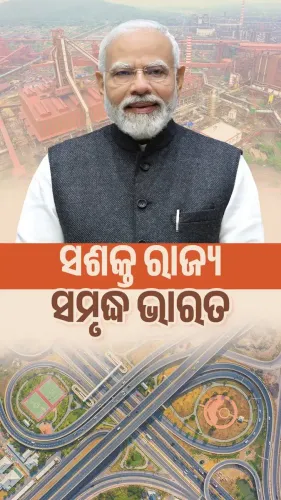
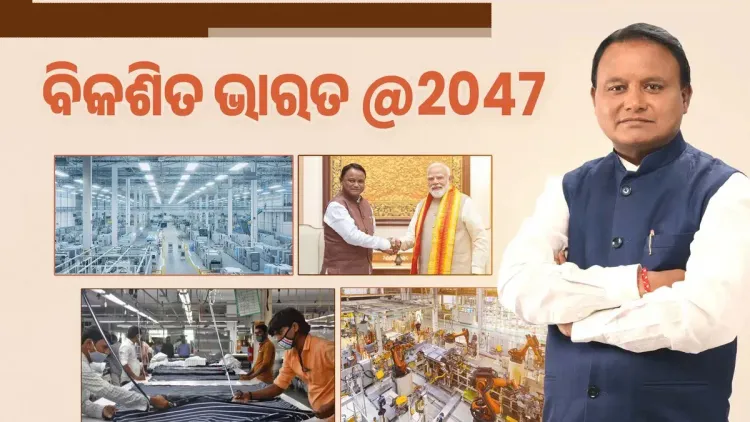
Odisha Chief Minister Mohan Charan Majhi has said the state is moving ahead with a firm resolve to achieve Samruddha Odisha 2036 and Viksit Bharat 2047, pledging a prosperous, empowered and self-reliant Odisha by the centenary of its formation, anchored in education, skills, culture, economy and public participation.
Key Takeaways
CM Mohan Charan Majhi linked Odisha's roadmap to Samruddha Odisha 2036 and Viksit Bharat 2047 .
Target: a prosperous, empowered, self-reliant Odisha by the 100th year of statehood in 2036 .
Five priority verticals: education, culture, knowledge, skills and economy .
Delivery framework rests on public participation, innovation and good governance.
Post positions Odisha as a key growth engine of a developed India.
No specific schemes, outlays or timelines were disclosed in the message.
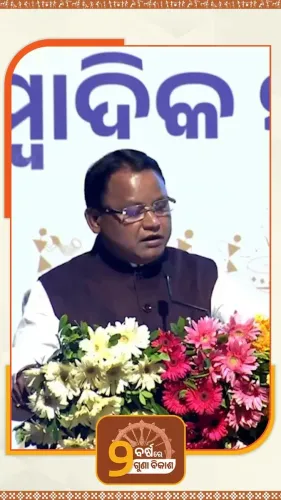
Odisha Chief Minister Mohan Charan Majhi on 3 June 2026 said the state is advancing with a firm resolve to realise the twin goals of Samruddha Odisha 2036 and Viksit Bharat 2047, framing the next two decades as a defining stretch for the state's economic and social transformation. In a post on X, the Chief Minister set the target of building a 'prosperous, empowered and self-reliant Odisha' by the time the state completes 100 years of its formation as a separate province.
Writing in Odia, Majhi said the 'people's government' is working with a 'visionary roadmap' to take Odisha to the 'pinnacle of excellence' across education, culture, knowledge, skills and the economy. He added that on the strength of jana bhagidari (public participation), innovation and good governance, 'Odisha will emerge as a key growth engine of a Viksit Bharat'. The post closed with the hashtag #SamruddhaOdisha.
Context
Majhi, a BJP leader, has led Odisha since June 2024, when the party formed the government in the state for the first time after winning the assembly election held alongside the Lok Sabha polls. His tenure has been marked by repeated efforts to align state-level programmes with the central government's long-term development goals.
The reference to 100 years of statehood points to 2036, the centenary of Odisha's creation as a separate province on 1 April 1936 after a sustained Odia linguistic movement associated with leaders such as Madhusudan Das. The state was among the first in British India to be carved out on a linguistic basis.
Policy backdrop
Viksit Bharat 2047 is the long-term national development vision articulated by Prime Minister Narendra Modi, formally outlined by the Government of India in 2023, that targets a developed Indian economy by the centenary of independence. Several BJP-ruled states have since adopted parallel state-level frameworks pegged to their own milestones, and Odisha's Samruddha Odisha 2036 aspiration sits within that pattern.
The Chief Minister's framing places education, culture, knowledge, skills and economy as the five priority verticals, with delivery anchored in public participation, innovation and governance reforms. The message does not specify scheme architecture, financial outlays or sectoral targets.
Stakeholders and impact
The intended beneficiaries span Odia citizens, students and young job-seekers, and domestic and foreign investors scanning the state for opportunities in minerals, manufacturing, ports and tourism. Odisha's mineral wealth, long coastline and cultural assets have historically positioned it as a resource-rich but per-capita-lagging state, and the Chief Minister's pitch implicitly addresses that gap.
For the bureaucracy, the dual-horizon framing — 2036 for the state, 2047 for the country — signals that medium-term planning documents, departmental targets and budget cycles are likely to be recalibrated around these dates. For industry, the language of a 'growth engine' suggests continued emphasis on investment promotion and ease-of-doing-business reforms.
What's next
Attention will turn to how the Samruddha Odisha 2036 aspiration is translated into sector-specific policies, state budget allocations and investment outreach. Future state budgets, skilling missions and any investor summits convened by the Majhi government are likely to be packaged around the 2036-2047 timeline, offering the first concrete tests of how the rhetorical roadmap maps onto measurable outcomes.
Until those details emerge, the Chief Minister's post functions primarily as a political-economic signalling exercise — one that ties Odisha's trajectory tightly to the national vision while staking a distinct centenary milestone of its own.
Point of View
Majhi gives Odisha a distinct, locally resonant deadline that predates the national one, useful both for galvanising the bureaucracy and for differentiating his government from the long Biju Janata Dal era. The real test, however, lies beyond rhetoric: whether budget priorities, investment pipelines and human-development indicators begin to move in step with the roadmap's stated verticals.
NationPress
25 Sept 2026
Frequently Asked Questions
What is Samruddha Odisha 2036?
Samruddha Odisha 2036 is the Odisha government's aspirational framework to build a prosperous, empowered and self-reliant state by the 100th year of its formation as a separate province in 2036. Chief Minister Mohan Charan Majhi has identified education, culture, knowledge, skills and the economy as its priority areas.
When was Odisha formed as a separate state?
Odisha was constituted as a separate province on 1 April 1936 following a sustained linguistic movement led by figures such as Madhusudan Das. It was among the earliest provinces in British India carved out on a linguistic basis.
What is Viksit Bharat 2047?
Viksit Bharat 2047 is the long-term national vision articulated by Prime Minister Narendra Modi to make India a developed economy by the centenary of independence in 2047. It was formally outlined by the Government of India in 2023 as the guiding development framework.
Who is Mohan Charan Majhi?
Mohan Charan Majhi is a BJP leader serving as the Chief Minister of Odisha since June 2024, when the party formed the state government for the first time after winning the assembly election.
What did CM Majhi say in his latest post?
CM Majhi said Odisha is advancing with a firm resolve to achieve Samruddha Odisha 2036 and Viksit Bharat 2047, aiming to become a prosperous, empowered and self-reliant state and a key growth engine of a developed India, driven by education, skills, culture, economy and good governance.