CM Bhupendra Patel Distributes Rs 646 Crore in Scholarships at Gandhinagar
Synopsis
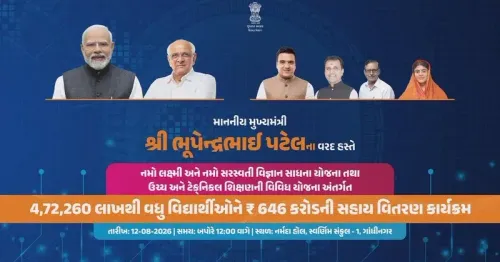
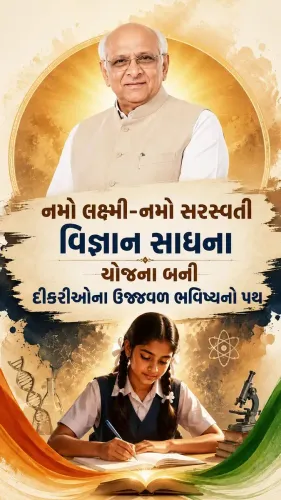
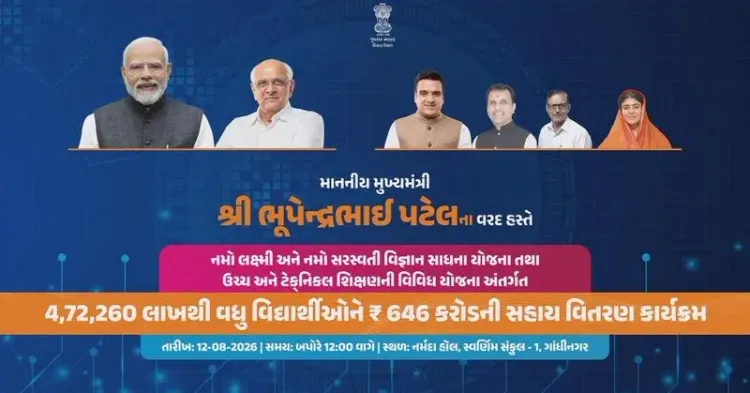
Chief Minister Bhupendra Patel presided over a Rs 646 crore scholarship disbursement in Gandhinagar on 12 August 2026, distributing funds under the Namo Lakshmi Yojana, Namo Saraswati Vigyan Sadhana Yojana, and allied state scholarship programmes to girl and science students across Gujarat.
Key Takeaways
Rs 646 crore in scholarships was distributed at a single ceremony in Gandhinagar on 12 August 2026 .
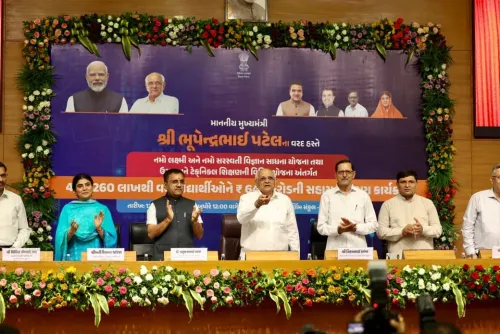
Chief Minister Bhupendra Patel personally presided over the disbursement event.
Funds were channelled through the Namo Lakshmi Yojana , targeting girl students, and the Namo Saraswati Vigyan Sadhana Yojana , supporting science students.
Several other state scholarship programmes were also part of the disbursement.
The event follows Gujarat's established pattern of high-value, single-day scholarship distribution ceremonies held at the state capital.
Key beneficiaries are girl students and science students across Gujarat.
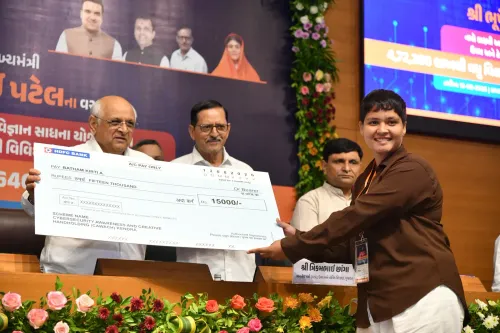
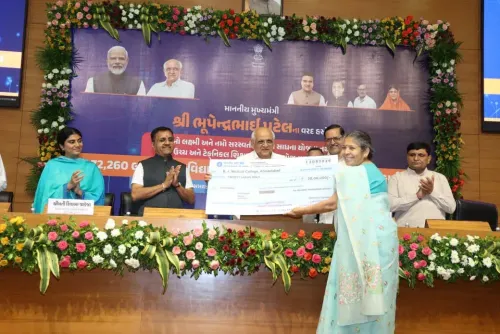
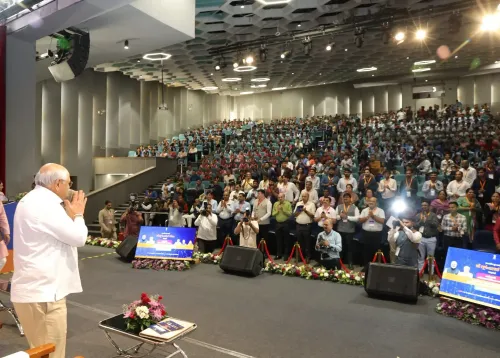
More than half a billion rupees in scholarships reached students across Gujarat on Wednesday, 12 August 2026, as Chief Minister Bhupendra Patel personally presided over a mass disbursement ceremony in Gandhinagar — channelling Rs 646 crore to beneficiaries under two flagship state schemes and several allied scholarship programmes.
Two Schemes, One Sweeping Transfer
The funds flowed through the Namo Lakshmi Yojana and the Namo Saraswati Vigyan Sadhana Yojana, alongside a range of other state scholarships. Namo Lakshmi is designed to provide direct financial support to girl students, reducing the economic pressure that pushes many families to pull daughters out of school early. Namo Saraswati targets science students, aiming to build a pipeline of scientifically literate youth from Gujarat's schools upward.
Together, the two schemes represent Gujarat's bet that named, targeted cash transfers — delivered in high-visibility ceremonies at the state capital — translate into measurable gains in enrolment and retention among the groups most likely to drop out.
A Pattern of High-Value Disbursement Ceremonies
The Gandhinagar event is not a one-off. Gujarat has made a habit of holding large, single-day scholarship distribution drives, consolidating funds that might otherwise trickle out through bureaucratic channels into a single public moment. The approach serves a dual purpose: it accelerates actual delivery to beneficiaries and creates a visible accountability moment for the government.
CM Patel, who has led the state since September 2021, has continued and expanded the scholarship architecture built into Gujarat's annual education budgets. The Rs 646 crore figure makes this one of the larger single-event scholarship disbursements the state has conducted — covering girl students and science aspirants as the primary beneficiaries.
Why Rs 646 Crore Matters for Gujarat's Students
Direct financial transfers to students are among the most evidence-backed tools for improving school retention, particularly for girls in semi-urban and rural settings. By routing money through named schemes with clear eligibility criteria, the state government creates a trackable intervention — one that subsequent budget cycles and enrolment data can test against real outcomes.
The next measure of success will come in Gujarat's own figures: whether dropout rates in the targeted categories fall, and whether science enrolment at the secondary level rises in districts where Namo Saraswati beneficiaries are concentrated.
Half a billion rupees disbursed in a single afternoon is a headline number — but the real story will be written in classrooms across Gujarat over the next academic year.
Point of View
Direct-benefit transfer schemes to signal both welfare intent and administrative efficiency. High-visibility ceremonies in Gandhinagar serve as political accountability moments — the government is publicly staking its reputation on delivery, not just policy design. The dual focus on girl students and science aspirants reflects national-level priorities around gender parity and STEM promotion, localised into state-branded programmes. Whether the outlay produces durable gains in retention and enrolment — rather than a one-cycle boost — will depend on how consistently these allocations are sustained in future budgets.
NationPress
26 Sept 2026
Frequently Asked Questions
What is the Namo Lakshmi Yojana in Gujarat?
Namo Lakshmi Yojana is a Gujarat government scholarship scheme that provides direct financial assistance to girl students to support their education and reduce dropout rates.
What is the Namo Saraswati Vigyan Sadhana Yojana?
Namo Saraswati Vigyan Sadhana Yojana is a Gujarat state scholarship programme specifically designed to encourage and financially support students pursuing science education.
How much scholarship money was distributed at Gandhinagar on 12 August 2026?
Chief Minister Bhupendra Patel distributed Rs 646 crore in scholarships at Gandhinagar on 12 August 2026 under multiple state schemes.
Who are the beneficiaries of the Namo Lakshmi and Namo Saraswati schemes?
The primary beneficiaries are girl students under Namo Lakshmi Yojana and science students under Namo Saraswati Vigyan Sadhana Yojana, along with recipients of other allied Gujarat state scholarships.
Who is the Chief Minister of Gujarat?
Bhupendra Patel has served as the Chief Minister of Gujarat since September 2021 and presided over the scholarship disbursement ceremony on 12 August 2026.