CM Bhupendra Patel's Namo Lakshmi, Namo Saraswati Schemes Boost Girl, Science Enrolment
Synopsis
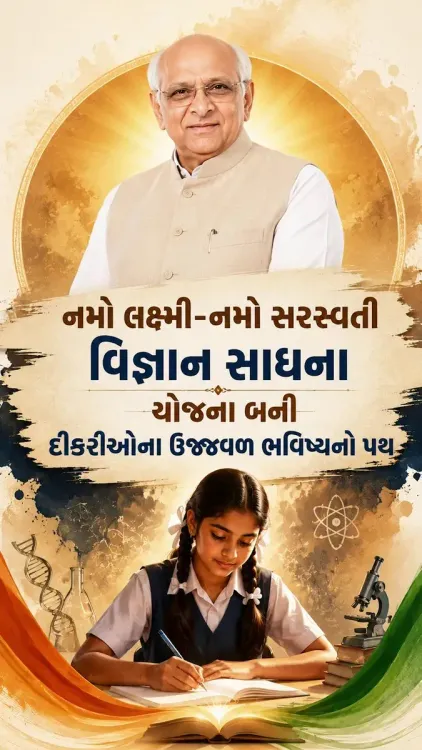
The Chief Minister's Office of Gujarat says the Namo Lakshmi Yojana and Namo Saraswati Vigyan Sadhana Yojana have produced a notable rise in girl student enrolment and science stream uptake, marking a key milestone during Shala Pravesh Utsav 2026 under CM Bhupendrabhai Patel.
Key Takeaways
The CMO Gujarat announced a notable increase in girl student enrolment and science stream uptake on 24 June 2026 , during Shala Pravesh Utsav 2026 .
The Namo Lakshmi Yojana promotes education, nutrition, and health for adolescent girls in Gujarat .
The Namo Saraswati Vigyan Sadhana Yojana aims to widen access to science education for school students across the state.
Both schemes operate under the leadership of Chief Minister Bhupendrabhai Patel , who has been in office since 2021 .
The initiatives align with the state's stated goal of building a scientifically tempered workforce for a Viksit Gujarat .
Enrolment data from 2026-27 will be the next key indicator of scheme effectiveness.
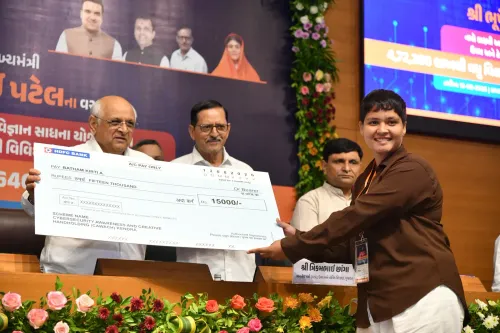
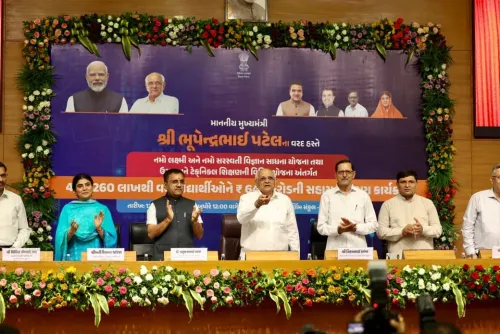
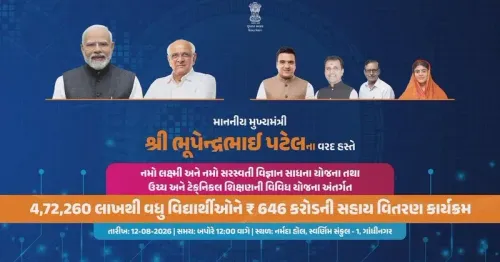
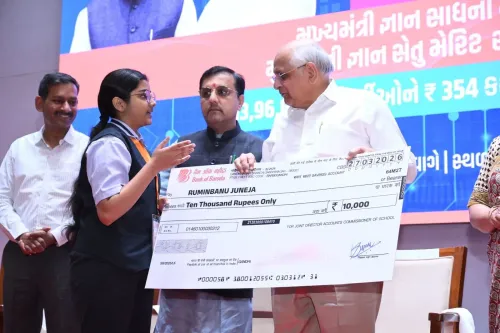
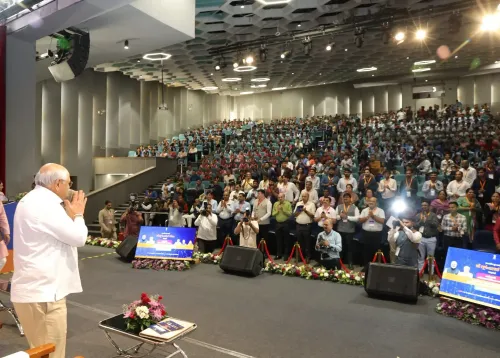
The Chief Minister's Office of Gujarat announced on Wednesday, 24 June 2026 that the Namo Lakshmi Yojana and the Namo Saraswati Vigyan Sadhana Yojana have driven a notable rise in enrolment among girl students and students entering the science stream across the state, coinciding with Shala Pravesh Utsav 2026.
The post, shared on the occasion of Shala Pravesh Utsav 2026 — Gujarat's annual school enrolment drive held at the start of the academic year — credited the two flagship schemes with accelerating the state's twin goals of kanya kelavani (girl-child education) and the building of a scientifically minded Viksit Gujarat (Developed Gujarat). The official communication stated that the schemes are together realising 'the resolve to build a Viksit Gujarat with a scientific approach.'
Context
The Namo Lakshmi Yojana is a Gujarat government scheme designed to promote the education, nutrition, and health of adolescent girls at the secondary and higher-secondary level. The Namo Saraswati Vigyan Sadhana Yojana targets school students more broadly, aiming to widen access to science education and encourage enrolment in the science stream. Both schemes were introduced under the leadership of Chief Minister Bhupendrabhai Patel, who has held office since 2021.
The Shala Pravesh Utsav is an annual celebration organised by the Gujarat government to mark the beginning of the school year and to drive fresh enrolments, particularly in rural and semi-urban areas where dropout rates have historically been higher among girls.
Policy Backdrop
The two schemes sit within a broader national and state policy framework for girls' education. At the national level, the Beti Bachao Beti Padhao initiative, launched in 2015, set the template for state-level efforts to improve child sex ratios and promote female literacy. Gujarat has built on this foundation with targeted financial and institutional support for girls at the secondary level, where dropout rates tend to spike.
The push to expand science stream enrolment reflects the state's longer-term economic ambition: building a technically skilled workforce aligned with Gujarat's industrial and manufacturing base. Schemes that lower the financial and social barriers to science education are seen as a prerequisite for sustaining that growth trajectory.
Stakeholders and Impact
The primary beneficiaries are adolescent girl students in Gujarat's government and grant-in-aid secondary schools, who gain access to financial support for education, nutrition, and health under Namo Lakshmi. Students — both boys and girls — seeking to enter the science stream at the higher-secondary level are the core audience of Namo Saraswati Vigyan Sadhana Yojana, which provides resources and incentives to make science education more accessible.
Teachers, school administrators, and local government bodies are also key stakeholders, as scheme delivery depends on institutional coordination at the block and district level. Families in lower-income brackets stand to benefit most directly from the financial components embedded in these programmes.
What's Next
Enrolment data compiled after Shala Pravesh Utsav 2026 will serve as the first concrete measure of the schemes' reach in the 2026-27 academic year. Mid-term evaluation reports on scheme coverage are expected to offer a more granular picture of which districts have seen the sharpest gains and where gaps in access persist.
The Gujarat government's continued emphasis on both girl-child education and STEM access signals that these schemes are likely to remain central to the state's human development agenda — and could serve as a model for other states looking to raise secondary-level science enrolment.
Point of View
The other STEM access — reflects a calculated effort to address both social equity and economic productivity in a single policy cycle. By anchoring the announcement to Shala Pravesh Utsav, the CMO maximises symbolic resonance at the moment when enrolment decisions are being made. The framing around 'Viksit Gujarat' ties these ground-level schemes to a larger developmental narrative, mirroring the Centre's 'Viksit Bharat' vocabulary and reinforcing the BJP government's brand continuity across state and national levels. Whether the reported enrolment gains translate into sustained retention — particularly for girls at the higher-secondary stage — will be the real test of these schemes' long-term impact.
NationPress
23 Sept 2026
Frequently Asked Questions
What is the Namo Lakshmi Yojana in Gujarat?
The Namo Lakshmi Yojana is a Gujarat government scheme that provides financial and institutional support to promote the education, nutrition, and health of adolescent girl students at the secondary and higher-secondary level.
What is the Namo Saraswati Vigyan Sadhana Yojana?
The Namo Saraswati Vigyan Sadhana Yojana is a Gujarat state scheme designed to expand access to science education for school students and encourage greater enrolment in the science stream at the higher-secondary level.
What is Shala Pravesh Utsav in Gujarat?
Shala Pravesh Utsav is an annual school enrolment celebration organised by the Gujarat government at the start of the academic year to drive fresh admissions, especially among girls and students in underserved areas.
Who is the Chief Minister of Gujarat in 2026?
Bhupendrabhai Patel is the Chief Minister of Gujarat, having held the post since 2021. He is credited with implementing both the Namo Lakshmi and Namo Saraswati Vigyan Sadhana schemes.
Have Gujarat's girl student enrolment numbers increased due to government schemes?
The Chief Minister's Office of Gujarat stated on 24 June 2026 that a notable increase in girl student enrolment and science stream enrolment has been observed since the implementation of the Namo Lakshmi and Namo Saraswati Vigyan Sadhana Yojana schemes.