CM Bhupendra Patel Backs Gujarat's 23-Year School Fest
Synopsis
Gujarat Chief Minister Bhupendra Patel has renewed the state's pledge on universal school enrollment, marking 23 years of the Modi-initiated Shala Praveshotsav and Kanya Kelavani Mahotsav drives, and highlighting Namo Lakshmi and Namo Saraswati schemes for girl-child education.
Key Takeaways
Shala Praveshotsav and Kanya Kelavani Mahotsav were launched in 2003 by then Gujarat Chief Minister Narendra Modi .
CM Bhupendra Patel stated the drives have been held continuously for 23 years .
The state government claims school enrollment has reached 100 per cent and the dropout ratio is nearly negligible.
Namo Lakshmi Yojana and Namo Saraswati Yojana provide financial support to encourage girls' education at school and higher levels.
CM Patel called on citizens to treat the annual drive as a social festival and ensure no child is denied the right to education.
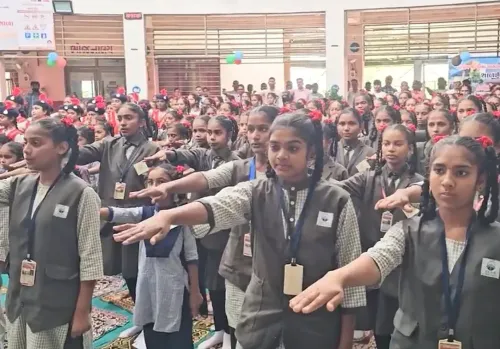
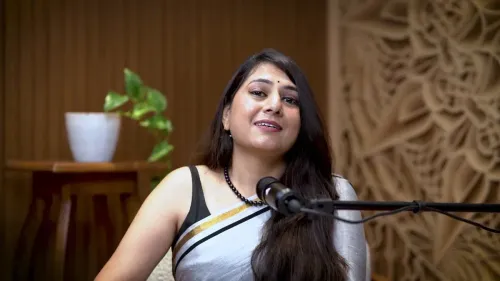
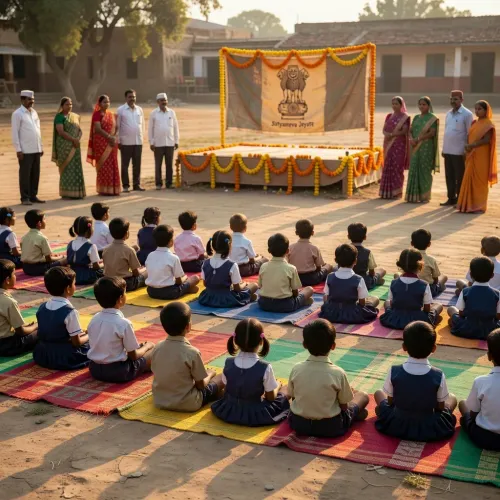
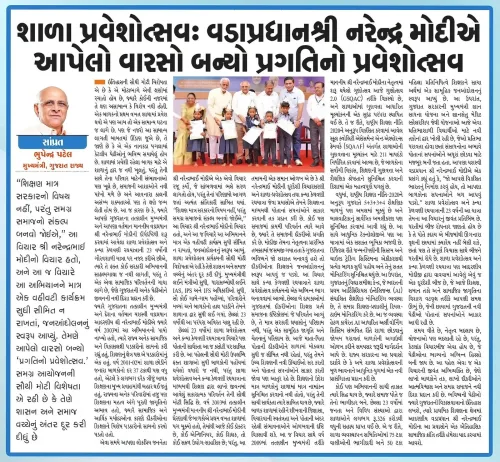
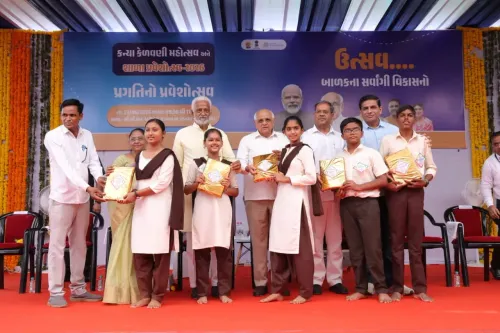
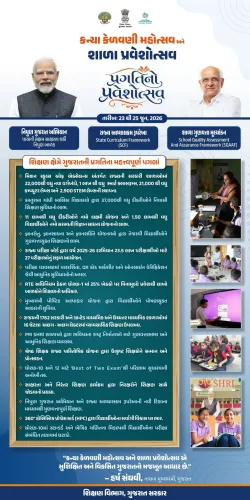
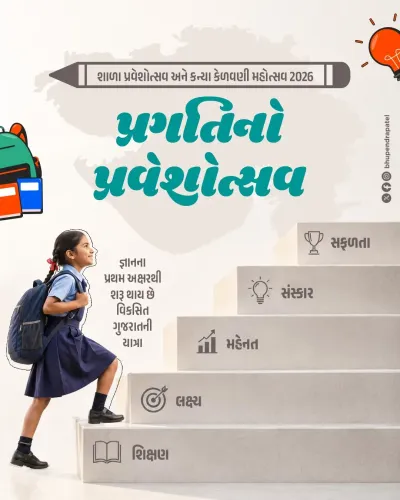
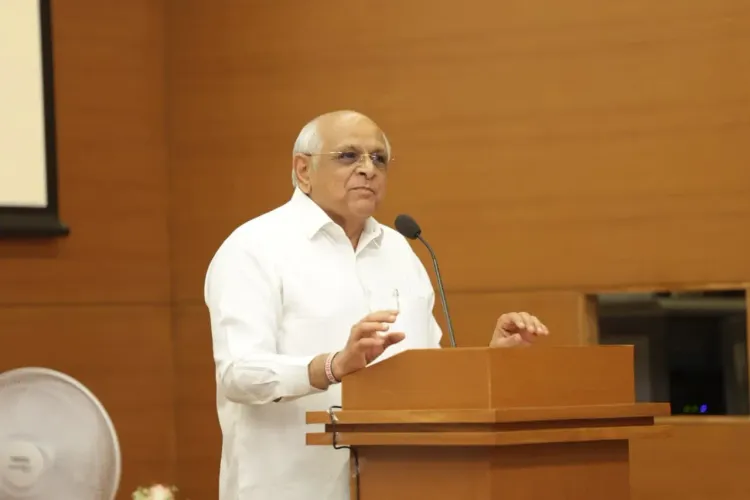
The post accompanied four images , signalling broad outreach ahead of the 2026-27 academic year .
Gujarat Chief Minister Bhupendra Patel on Wednesday, June 17, 2026 invoked the legacy of Prime Minister Narendra Modi's landmark education drives — Shala Praveshotsav and Kanya Kelavani Mahotsav — urging citizens to recommit to universal schooling and girl-child empowerment as the state marks 23 consecutive years of the annual enrollment festival.
Context
Posting in Gujarati on June 17, CM Patel recalled that Narendra Modi, as Chief Minister of Gujarat, launched both campaigns in 2003 to transform the state's education landscape. The post declared that through these uninterrupted efforts, school enrollment rates in the state have reached 100 per cent and the dropout ratio has become 'lagbhag nahivat' [almost negligible]. Patel called on the public to treat the education drive as a 'samajik utsav' [social festival] and pledged that not a single child in Gujarat should be denied the right to education.
The post accompanied four images, underlining the government's intent to give the annual event wide visual reach on social media ahead of the new academic year.
Policy Backdrop
Shala Praveshotsav and Kanya Kelavani Mahotsav were conceived in 2003 under then Chief Minister Modi as community-mobilisation drives to pull out-of-school children — particularly girls — into classrooms at the start of each academic year. Senior officials and ministers would visit villages, personally escorting children to school, turning enrollment into a public event rather than a bureaucratic exercise.
The model later informed the expansion of national programmes such as Sarva Shiksha Abhiyan, with Gujarat's blend of festive community outreach and targeted financial incentives cited as a replicable template. Successive BJP governments in the state have built on this base, adding schemes such as Namo Lakshmi Yojana and Namo Saraswati Yojana — both referenced explicitly by CM Patel — which provide financial assistance and scholarships to encourage girls from economically weaker sections to stay in school and pursue higher education.
Stakeholders and Impact
The primary beneficiaries of these overlapping programmes are school-going children across Gujarat, with a pronounced focus on girls in rural and semi-urban areas. Namo Lakshmi Yojana targets girls from economically weaker sections with direct financial support, while Namo Saraswati Yojana extends assistance into higher secondary and collegiate education, aiming to close the gender gap at each successive stage of schooling.
Parents, local self-government bodies, and school teachers are active participants in the annual Shala Praveshotsav, making it as much a community accountability mechanism as a government scheme. The sustained political attention to enrollment — now spanning nearly a quarter-century — has institutionalised the expectation that every child entering the school-going age will be formally admitted.
What's Next
CM Patel's post signals the formal mobilisation phase for the 2026-27 academic year enrollment drive, with Shala Praveshotsav events expected to be held across Gujarat's districts in the coming weeks. Observers will watch for any fresh budget allocations or coverage expansions under Namo Lakshmi and Namo Saraswati schemes, which the state government has positioned as the financial backbone of its girl-education push.
With the 23rd edition of Shala Praveshotsav underway, the Gujarat government's ability to sustain near-universal enrollment while improving learning outcomes — not just headcounts — will define the next chapter of the state's education story.
Point of View
Reinforcing the BJP's narrative of unbroken educational progress in Gujarat over nearly a quarter-century. By invoking 100 per cent enrollment and negligible dropouts, the government frames the Shala Praveshotsav not merely as an annual event but as proof of systemic transformation. The simultaneous mention of Namo Lakshmi and Namo Saraswati signals that the state intends to deepen financial incentives for girls rather than rely solely on community mobilisation. Ahead of the 2026-27 academic year, the post also functions as a soft launch of the enrollment season, priming local administrators and community leaders for ground-level action.
NationPress
19 Sept 2026
Frequently Asked Questions
What is Shala Praveshotsav in Gujarat?
Shala Praveshotsav is an annual school admission festival launched in Gujarat in 2003 by then Chief Minister Narendra Modi. It mobilises communities, officials, and parents to formally enroll children — especially girls — at the start of each academic year, and has been held continuously for 23 years.
What is Kanya Kelavani Mahotsav?
Kanya Kelavani Mahotsav is a parallel girl-child education campaign started alongside Shala Praveshotsav in 2003 in Gujarat. It focuses specifically on reducing gender gaps in school enrollment and encouraging families to send daughters to school.
What are Namo Lakshmi and Namo Saraswati Yojana?
Namo Lakshmi Yojana and Namo Saraswati Yojana are Gujarat government schemes that provide financial assistance and scholarships to girls from economically weaker sections, supporting them through school-level and higher education respectively.
What did Gujarat CM Bhupendra Patel say about school enrollment?
CM Bhupendra Patel stated on June 17, 2026 that Gujarat's school enrollment rate has reached 100 per cent and the dropout ratio is nearly negligible, crediting 23 years of Shala Praveshotsav and the guidance of PM Narendra Modi.
When did Gujarat achieve 100 percent school enrollment?
According to CM Bhupendra Patel's June 2026 post, Gujarat's school enrollment rate has reached 100 per cent over the course of 23 years of the Shala Praveshotsav initiative launched in 2003. Independent verification of the current figure has not been provided separately.