Gujarat CM Patel to Lead 24th Shala Praveshotsav on June 23-25
Synopsis
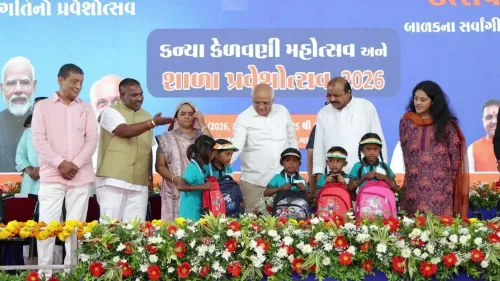
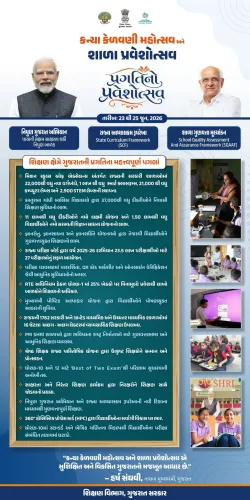
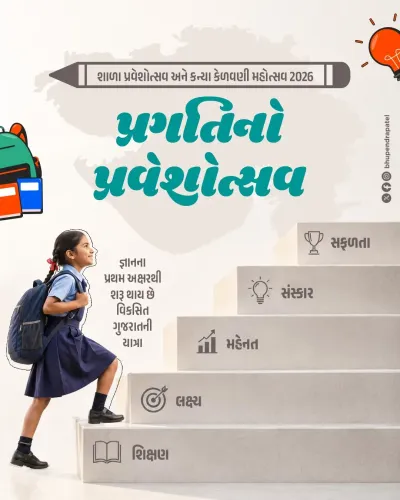
Gujarat's Chief Minister's Office has announced the 24th Shala Praveshotsav and Kanya Kelavani Mahotsav, a statewide school enrollment drive running June 23-25, 2026. Launched by Narendra Modi in 2003, the annual campaign focuses on boosting school admissions, especially for girls, under CM Bhupendra Patel and Deputy CM Harsh Sanghvi.
Key Takeaways
The 24th Shala Praveshotsav and Kanya Kelavani Mahotsav will be held from June 23 to 25, 2026 across Gujarat.
The initiative was originally launched in 2003 by Narendra Modi during his tenure as Chief Minister of Gujarat.
The 2026 edition will be led by Chief Minister Bhupendra Patel and Deputy Chief Minister Harsh Sanghvi .
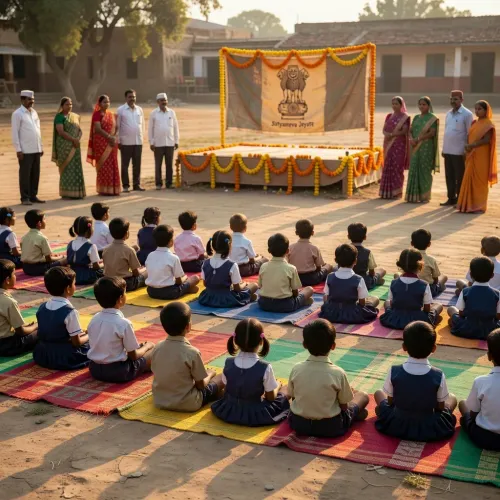
The campaign targets school-age children with a special focus on girls' education and enrollment in rural areas.
The CMO framed the event as a samajutsav (community celebration) aligned with the vision of 'Educated Gujarat, Developed Gujarat' and 'Educated India, Developed India'.
This is one of Gujarat's longest-running state education drives , now in its 24th consecutive year.
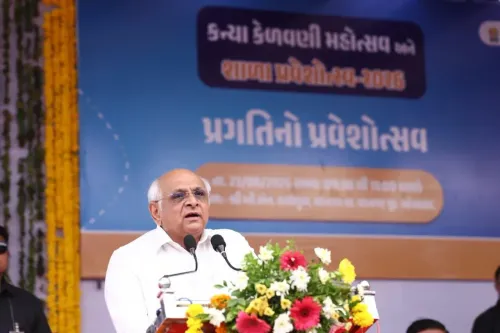
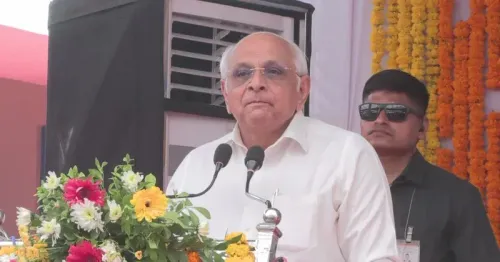
The Chief Minister's Office of Gujarat announced on Wednesday, June 17, 2026 that the 24th statewide Shala Praveshotsav — an annual school enrollment festival — will be held from June 23 to 25, 2026, under the leadership of Chief Minister Bhupendra Patel and Deputy Chief Minister Harsh Sanghvi.
Context
The post, written in Gujarati, describes the initiative as a 'gyanyagna' (a 'yajna of knowledge') — a phrase that underscores the campaign's cultural framing as a collective societal offering. The CMO called on citizens to transform the enrollment festival into a 'samajutsav' (a community celebration), in service of the vision of an 'Shikshit Gujarat, Viksit Gujarat' (Educated Gujarat, Developed Gujarat) contributing to an 'Shikshit Bharat, Viksit Bharat' (Educated India, Developed India).
The event is formally titled Shala Praveshotsav and Kanya Kelavani Mahotsav — combining a school enrollment drive with a festival specifically focused on girls' education. This dual mandate has been central to the programme since its inception.
Policy Backdrop
The initiative was launched in 2003 by Narendra Modi, who was then Chief Minister of Gujarat. Modi served in that role from 2001 to 2014 before becoming Prime Minister of India. The CMO's post explicitly credits him as the originator, calling the programme his 'gyanyagna'.
Over more than two decades, successive Gujarat governments have continued the annual drive, which targets school-age children — particularly girls from rural families — to boost first-day enrollment and reduce dropout rates. The programme sits within a broader national framework of universal elementary education and gender parity in schooling.
Stakeholders and Impact
The primary beneficiaries are school-age children across Gujarat, with a particular emphasis on girl students and rural families who have historically faced barriers to formal education. Senior political leadership personally participating in enrollment drives at the local level has been a defining feature of the campaign, lending it visibility and administrative momentum.
Community participation is central to the programme's design. By framing enrollment as a 'samajutsav', the state government signals that responsibility for children's education is shared between the government and civil society — a message directed at parents, village leaders, and local institutions alike.
What's Next
The three-day event spanning June 23 to 25, 2026 will be watched for enrollment figures, participation rates, and any new targets or announcements related to girls' retention in schools or educational infrastructure. This edition marks the 24th consecutive year of the campaign, making it one of Gujarat's longest-running state-level education initiatives. The outcomes will also be read as a signal of the state's progress toward its stated vision of a fully educated and developed Gujarat feeding into national education goals.
Point of View
Reinforcing a political continuity narrative that connects the current state government to the national leadership's legacy. The dual branding — 'Shikshit Gujarat, Viksit Gujarat' feeding into 'Shikshit Bharat, Viksit Bharat' — mirrors the rhetorical architecture of national schemes, suggesting Gujarat is positioning itself as a model state for education reform. With Deputy CM Harsh Sanghvi co-leading the drive, the event also signals a deliberate distribution of political visibility ahead of what are typically high-profile district-level appearances. The persistence of this campaign across 24 years and multiple administrations speaks to its institutional entrenchment, but enrollment quality and retention data — not just first-day figures — will determine its real policy weight.
NationPress
20 Sept 2026
Frequently Asked Questions
What is Shala Praveshotsav in Gujarat?
Shala Praveshotsav is an annual statewide school enrollment festival in Gujarat, launched in 2003 by then-Chief Minister Narendra Modi. It is held to boost first-day school admissions and is paired with the Kanya Kelavani Mahotsav, which focuses specifically on girls' education.
When is Shala Praveshotsav 2026 in Gujarat?
The 24th Shala Praveshotsav will be held from June 23 to 25, 2026, across Gujarat, as announced by the Chief Minister's Office.
Who started Shala Praveshotsav in Gujarat?
Shala Praveshotsav was started by Narendra Modi in 2003 when he was the Chief Minister of Gujarat. The programme has continued annually under successive state governments.
What is Kanya Kelavani Mahotsav?
Kanya Kelavani Mahotsav is a component of Gujarat's annual school enrollment drive that focuses on encouraging the enrollment and retention of girl students, particularly in rural areas. It runs alongside the Shala Praveshotsav each year.
Who is leading Shala Praveshotsav 2026?
The 24th Shala Praveshotsav will be led by Gujarat Chief Minister Bhupendra Patel and Deputy Chief Minister Harsh Sanghvi, according to the Chief Minister's Office.